Pulmonary Hypertension Pump: Revolutionizing Treatment for Pulmonary Arterial Hypertension
Introduction
Pulmonary hypertension (PH) is a serious and progressive cardiovascular condition that affects the blood vessels connecting the heart and lungs. For many patients, everyday activities such as climbing stairs, walking short distances, or carrying groceries can become increasingly difficult due to breathlessness, fatigue, and reduced exercise capacity. As the disease progresses, the right side of the heart must work much harder to pump blood through narrowed or damaged pulmonary arteries, eventually leading to right-sided heart failure if left untreated.
- Continuous infusion pumps deliver prostacyclin-based medications to maintain stable drug levels, improving symptom control, exercise tolerance, and reducing hospitalizations.
- External ambulatory pumps avoid major surgery but require visible tubing and daily maintenance; implantable pumps reduce infection risk and improve quality of life.
- Pump therapy suits advanced PAH, WHO class III and IV, and demands patient commitment, education, multidisciplinary evaluation, regular follow-up, and device management readiness.
Although many individuals with pulmonary hypertension benefit from oral medications, inhaled therapies, oxygen supplementation, and lifestyle modifications, some patients develop more advanced disease that requires specialized treatment. In these cases, maintaining consistent medication levels in the bloodstream becomes critical for controlling symptoms and slowing disease progression.
One of the most significant advances in the treatment of pulmonary arterial hypertension (PAH) is the development of pulmonary hypertension pumps. These sophisticated devices deliver life-sustaining medications continuously, helping maintain stable drug concentrations and improving symptom control around the clock.
For many patients with severe pulmonary arterial hypertension, pump therapy has transformed both survival rates and quality of life. By providing uninterrupted delivery of prostacyclin-based medications, these systems can reduce symptoms, improve exercise tolerance, decrease hospitalization rates, and support greater independence.
This comprehensive guide explores pulmonary hypertension pumps in detail, including how they work, who may benefit from them, the types available, their advantages and risks, and what daily life looks like for patients using these devices.
Understanding Pulmonary Hypertension
What Is Pulmonary Hypertension?
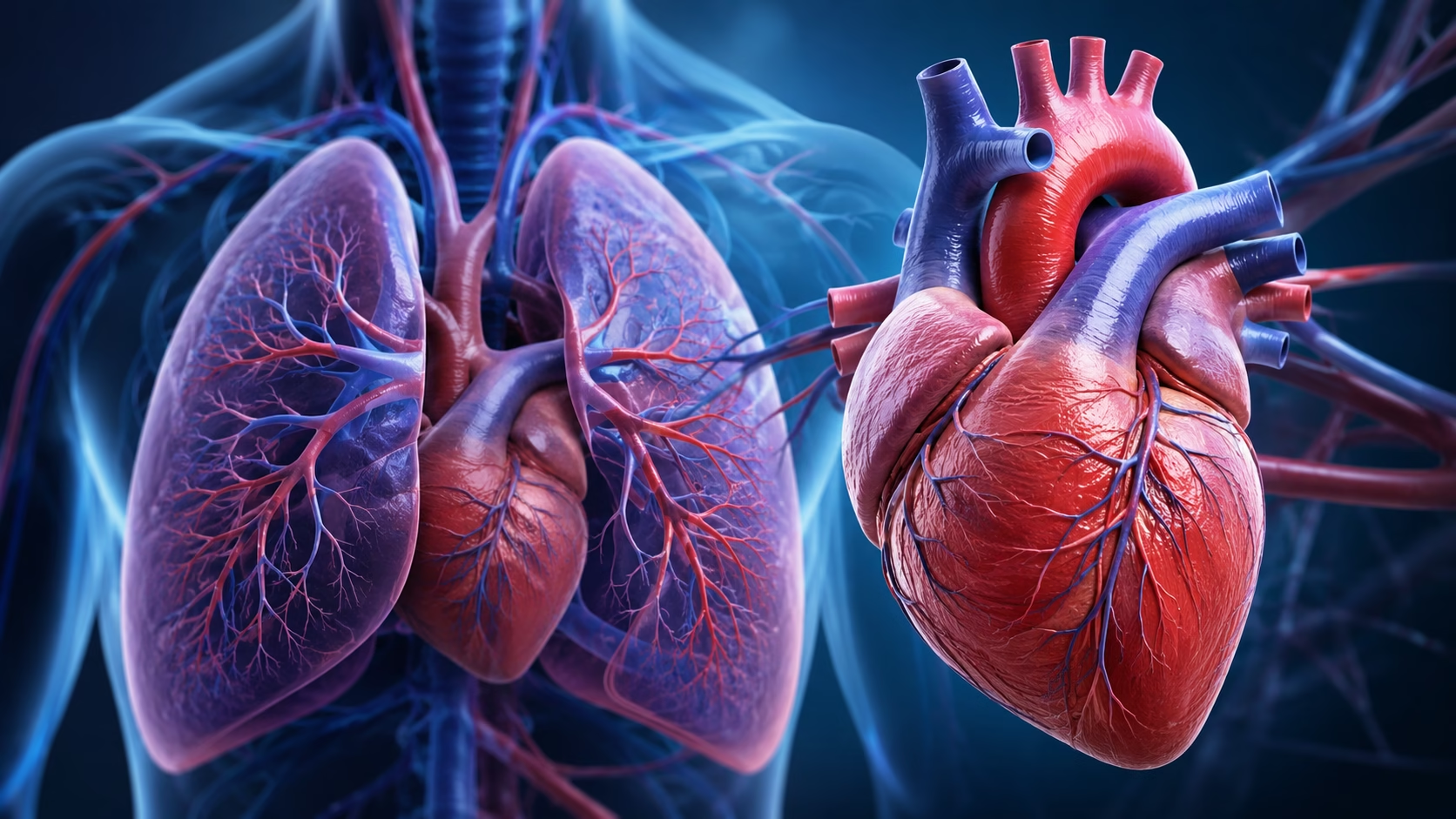
Pulmonary hypertension is a condition characterized by abnormally high blood pressure within the pulmonary arteries, the blood vessels responsible for carrying blood from the right side of the heart to the lungs.
Under normal circumstances, blood flows easily through the pulmonary circulation, allowing oxygen exchange to occur efficiently. In pulmonary hypertension, the pulmonary arteries become narrowed, stiffened, blocked, or damaged.
As a result:
- Blood flow becomes restricted.
- Pulmonary artery pressure rises.
- The right ventricle must work harder.
- The heart becomes strained over time.
Eventually, this increased workload can lead to enlargement and weakening of the right ventricle, a condition known as right-sided heart failure.
Common Symptoms of Pulmonary Hypertension
Because pulmonary hypertension often develops gradually, symptoms may initially be mild and easily overlooked.
Shortness of Breath
Shortness of breath is often the first symptom patients notice.
Activities that were once easy may become difficult due to inadequate oxygen delivery and reduced cardiac output.
Patients may experience breathlessness during:
- Walking
- Climbing stairs
- Exercising
- Daily household activities
As the disease progresses, breathlessness may occur even at rest.
Fatigue
The heart’s reduced ability to deliver oxygen-rich blood throughout the body often causes persistent tiredness and low energy levels.
Many patients report:
- Reduced stamina
- Difficulty completing routine tasks
- Excessive exhaustion after minimal exertion
Chest Pain
Some individuals experience chest discomfort due to strain on the heart and reduced oxygen supply to cardiac tissue.
The pain may feel like:
- Pressure
- Tightness
- Heaviness
- Discomfort during physical activity
Dizziness and Fainting
Reduced blood flow can impair oxygen delivery to the brain.
Patients may experience:
- Lightheadedness
- Dizziness
- Near-fainting episodes
- Complete fainting (syncope)
Swelling
Fluid accumulation may occur in:
- Legs
- Ankles
- Feet
- Abdomen
This swelling often indicates advancing disease and right heart dysfunction.
Classification of Pulmonary Hypertension
Pulmonary hypertension is divided into five major groups based on underlying cause.
Group 1: Pulmonary Arterial Hypertension (PAH)
This group involves disease affecting the pulmonary arteries themselves.
Causes include:
- Idiopathic PAH
- Heritable PAH
- Connective tissue diseases
- Congenital heart disease
- Certain medications and toxins
Pump therapy is most commonly used in this group.
Group 2: PH Due to Left Heart Disease
This form develops when left-sided heart conditions increase pressure within the pulmonary circulation.
Common causes include:
- Heart failure
- Valve disease
- Cardiomyopathy
Group 3: PH Associated With Lung Disease and Hypoxia
Chronic lung disorders can lead to pulmonary hypertension.
Examples include:
- Chronic obstructive pulmonary disease (COPD)
- Interstitial lung disease
- Sleep apnea
Group 4: Chronic Thromboembolic Pulmonary Hypertension (CTEPH)
This type results from chronic blood clots obstructing pulmonary arteries.
Group 5: PH With Unclear or Multifactorial Mechanisms
These cases involve complex causes that do not fit neatly into other categories.
The Role of Continuous Infusion Therapy
Why Prostacyclin Matters
In healthy individuals, blood vessel lining cells produce important substances that regulate blood flow and vascular health.
Two of the most important are:
- Nitric oxide
- Prostacyclin
These substances help:
- Relax blood vessels
- Improve circulation
- Prevent clot formation
- Reduce inflammation
In pulmonary arterial hypertension, prostacyclin production decreases significantly.
This contributes to:
- Vessel narrowing
- Increased pressure
- Progressive vascular damage
Prostacyclin Analogs
Prostacyclin analog medications help replace the body’s missing prostacyclin.
Common medications include:
- Epoprostenol
- Treprostinil
- Iloprost
These medications work by:
Dilating Pulmonary Arteries
They relax smooth muscle within blood vessel walls, reducing pulmonary artery pressure.
Preventing Clot Formation
Prostacyclins reduce platelet aggregation, lowering the risk of small clot formation.
Slowing Disease Progression
They help slow harmful structural changes occurring within pulmonary blood vessels.
Challenges of Intermittent Dosing
Many medications can be taken once or twice daily.
Prostacyclin therapy is different.
Extremely Short Half-Life
Some prostacyclin medications remain active in the body for only minutes.
Without continuous delivery:
- Drug levels fall rapidly.
- Symptoms may worsen.
- Serious complications may occur.
Fluctuating Drug Levels
Intermittent dosing can produce:
- High drug peaks
- Low drug troughs
These fluctuations may increase side effects while reducing effectiveness.
Treatment Burden
Without pump systems, patients may require:
- Frequent injections
- Complex dosing schedules
- Repeated hospital visits
Continuous infusion pumps solve many of these challenges.
What Is a Pulmonary Hypertension Pump?
Definition
A pulmonary hypertension pump is a specialized medical device designed to deliver a continuous, precisely controlled dose of medication directly into the bloodstream.
The pump maintains stable medication levels around the clock.
This allows consistent treatment without interruptions.
Key Components of a Pulmonary Hypertension Pump
Medication Reservoir
The reservoir stores the prescribed medication.
Depending on the system, this may be:
- A refillable chamber
- A medication cartridge
- An implanted reservoir
Programmable Pump Mechanism
The pump controls exactly how much medication is delivered.
Healthcare providers can adjust infusion rates based on:
- Symptoms
- Disease severity
- Side effects
Catheter or Infusion Line
The catheter serves as the pathway through which medication enters the bloodstream.
Power Source
External pumps typically use batteries.
Implantable pumps contain internal mechanisms that operate without visible external power systems.
Types of Pulmonary Hypertension Pumps
External (Ambulatory) Pumps
External pumps are worn outside the body.
How They Work
The medication reservoir and pump remain outside the body.
Medication travels through tubing connected to a central venous catheter.
Advantages
External pumps offer:
- No major surgery
- Easier replacement
- Adjustable settings
Considerations
Patients must manage:
- Tubing
- Medication cartridges
- Battery changes
- Daily maintenance
The device is visible and must be carried continuously.
Implantable Pumps
Implantable pumps are surgically placed beneath the skin.
How They Work
The pump is implanted in the:
- Abdomen
- Chest wall
Medication is delivered directly into the bloodstream through an internal catheter.
Advantages
Implantable systems offer several benefits.
Lower Infection Risk
Because no external tubing is exposed, infection risk is significantly reduced.
Improved Quality of Life
Patients often enjoy:
- Greater freedom
- Improved body image
- Less daily maintenance
Nearly Invisible
Once healed, the pump is generally not noticeable beneath clothing.
Considerations
Implantable systems require:
- Surgical placement
- Periodic refills
- Monitoring for mechanical issues
Benefits of Pulmonary Hypertension Pumps
Continuous Drug Delivery
Continuous infusion maintains stable medication levels throughout the day and night.
This avoids fluctuations associated with intermittent dosing.
Improved Symptom Control
Patients often experience:
- Less shortness of breath
- Improved exercise tolerance
- Increased energy
- Better overall functioning
Reduced Hospitalizations
Stable medication delivery helps reduce disease exacerbations and emergency visits.
Greater Independence
Many patients are able to participate more fully in:
- Family activities
- Work
- Travel
- Exercise programs
Potential Risks and Complications
Infection
External pumps carry a risk of catheter-related infections.
Symptoms may include:
- Fever
- Redness
- Swelling
- Drainage
Surgical Complications
Implantable pumps may involve risks such as:
- Bleeding
- Infection
- Device malfunction
Catheter Occlusion
The catheter may become blocked, interrupting medication delivery.
Pump Malfunction
Although uncommon, mechanical problems can occur.
Prompt medical attention is essential.
Medication Side Effects
Common side effects include:
Headache
Blood vessel dilation frequently causes headaches, particularly during dose adjustments.
Jaw Pain
Some patients experience jaw discomfort when chewing.
Flushing
Skin warmth and redness may occur due to vasodilation.
Diarrhea
Gastrointestinal side effects are relatively common with prostacyclin therapy.
Who Is a Candidate for Pump Therapy?
Ideal Candidates
Pump therapy is often recommended for:
- WHO Functional Class III PAH patients
- WHO Functional Class IV PAH patients
- Patients with persistent symptoms despite oral therapy
- Individuals requiring advanced disease management
Importance of Patient Commitment
Successful pump therapy requires:
- Education
- Adherence
- Monitoring
- Communication with healthcare providers
Caregiver support is often beneficial.
Evaluation Before Pump Placement
Right Heart Catheterization
This procedure confirms pulmonary hypertension and measures disease severity.
Echocardiography
Ultrasound imaging evaluates:
- Heart function
- Right ventricular size
- Pulmonary pressures
CT Imaging
Imaging may identify underlying lung or vascular abnormalities.
Multidisciplinary Assessment
Specialists often involved include:
- Pulmonologists
- Cardiologists
- Nurses
- Pharmacists
- Surgeons
Living With a Pulmonary Hypertension Pump
Daily Monitoring
Patients should regularly check:
- Medication levels
- Battery status
- Infusion settings
Travel Planning
Before travel, patients should carry:
- Extra medication
- Spare batteries
- Emergency contact information
- Physician documentation
Emergency Preparedness
Family members should understand:
- Alarm systems
- Troubleshooting steps
- Emergency procedures
Long-Term Follow-Up
Regular follow-up appointments help ensure optimal therapy.
Healthcare providers monitor:
- Symptoms
- Exercise tolerance
- Blood tests
- Device performance
Medication doses may be adjusted over time.
Frequently Asked Questions
How Long Does an Implantable Pump Last?
Many implantable pumps function effectively for two to five years before replacement becomes necessary.
Do External Pumps Require Surgery?
No.
Only catheter placement is required, usually under local anesthesia.
Can Patients Shower or Swim?
External pumps generally must remain connected continuously.
Implantable systems may permit greater flexibility, but patients should always follow manufacturer and physician guidelines.
Conclusion
Pulmonary hypertension pumps have transformed the treatment landscape for patients with moderate to severe pulmonary arterial hypertension. By delivering continuous, precisely controlled prostacyclin therapy, these devices help maintain stable drug levels, reduce symptoms, improve exercise capacity, and enhance quality of life.
Although pump therapy requires education, commitment, and ongoing monitoring, the benefits often outweigh the challenges for appropriately selected patients. Whether using an external ambulatory pump or a fully implantable system, continuous infusion therapy provides an important treatment option for individuals whose disease remains active despite standard medications.
For patients living with pulmonary arterial hypertension, early diagnosis, personalized treatment plans, and close collaboration with specialized healthcare teams remain essential. Pulmonary hypertension pumps represent one of the most powerful tools available today for helping patients breathe easier, stay active, and live longer, healthier lives despite this challenging condition.