













Is COPD the Same as Congestive Heart Failure
Shortness of breath, fatigue, chronic coughing, and reduced ability to perform everyday activities are symptoms that affect millions of people worldwide....
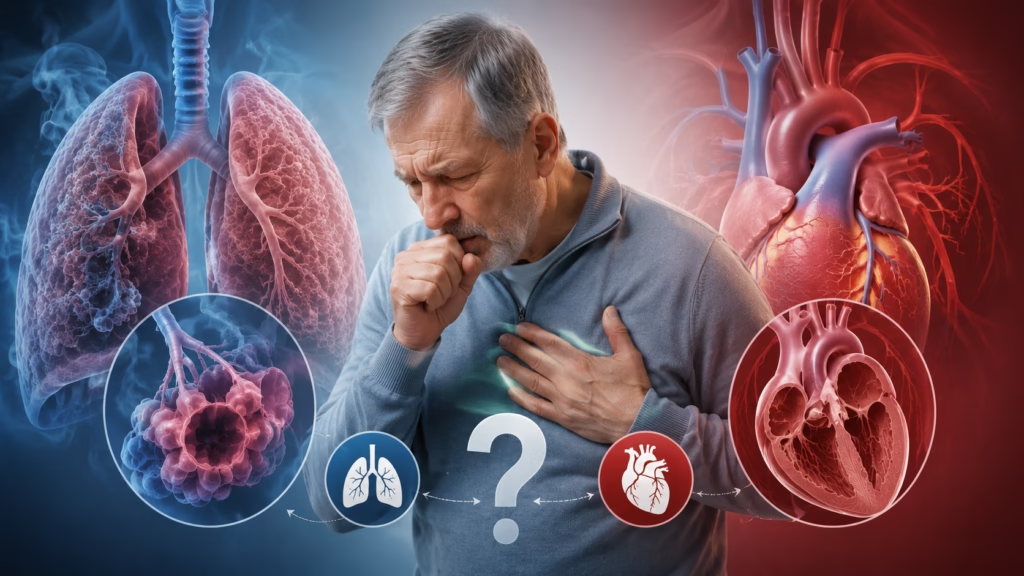
Table of Contents
Introduction
Shortness of breath, fatigue, chronic coughing, and reduced ability to perform everyday activities are symptoms that affect millions of people worldwide. When these symptoms develop, healthcare providers often investigate serious conditions involving either the lungs or the heart. Two of the most commonly confused conditions are Chronic Obstructive Pulmonary Disease (COPD) and Congestive Heart Failure (CHF).
Because both diseases can cause breathing difficulties and exercise intolerance, many patients wonder whether they are actually the same condition. The answer is no. Although COPD and congestive heart failure share several symptoms and may even occur together in some individuals, they are fundamentally different diseases that affect different organs and require different treatment approaches.
COPD is primarily a lung disease that restricts airflow and impairs breathing, while congestive heart failure is a heart condition that reduces the heart’s ability to pump blood effectively throughout the body. Understanding the differences between these conditions is essential because an accurate diagnosis leads to appropriate treatment, improved symptom control, and better long-term health outcomes.
This article explores what COPD and congestive heart failure are, how they differ, why their symptoms overlap, and what patients need to know about diagnosis, treatment, and prevention.
Understanding COPD
What Is COPD?
Chronic Obstructive Pulmonary Disease, commonly known as COPD, is a progressive lung disease that makes it increasingly difficult to breathe. The condition causes long-term inflammation and damage within the airways and lung tissue, resulting in persistent airflow limitation that cannot be fully reversed.
COPD is generally considered an umbrella term that includes two major conditions: chronic bronchitis and emphysema. Many patients have features of both conditions simultaneously.
Chronic bronchitis occurs when the airways become inflamed and produce excessive mucus. This inflammation narrows the airways and makes it difficult for air to move freely in and out of the lungs.
Emphysema involves destruction of the tiny air sacs known as alveoli. These air sacs are responsible for exchanging oxygen and carbon dioxide. When they become damaged, oxygen transfer becomes less efficient, leading to breathlessness and reduced oxygen delivery throughout the body.
COPD typically develops gradually over many years and tends to worsen over time if not properly managed.
Causes of COPD
The leading cause of COPD is cigarette smoking. Long-term exposure to tobacco smoke damages the airways and lung tissue, leading to chronic inflammation and irreversible lung injury.
However, smoking is not the only cause. Individuals who are regularly exposed to secondhand smoke, industrial dust, chemical fumes, air pollution, or biomass fuel smoke may also develop COPD.
In some cases, genetics play a role. A rare inherited condition called alpha-1 antitrypsin deficiency can increase the risk of developing emphysema, even in individuals who have never smoked.
Symptoms of COPD
The symptoms of COPD usually develop slowly and become more noticeable as lung function declines.
Many patients experience a chronic cough that produces mucus or phlegm. The cough often persists for months or years before a formal diagnosis is made.
Shortness of breath is another hallmark symptom. Initially, breathing difficulties may only occur during physical activity. As the disease progresses, breathlessness can develop during routine daily tasks and eventually even at rest.
Additional symptoms include wheezing, chest tightness, frequent respiratory infections, reduced exercise tolerance, fatigue, and difficulty recovering from colds or flu.
Because COPD progresses gradually, many individuals mistakenly attribute their symptoms to aging or lack of fitness, delaying medical evaluation and treatment.
Diagnosis and Treatment of COPD
Diagnosing COPD typically involves a combination of medical history, physical examination, and lung function testing.
Spirometry is the most important diagnostic test. This simple breathing test measures how much air a person can exhale and how quickly it can be expelled from the lungs. A reduced FEV1/FVC ratio confirms airflow obstruction consistent with COPD.
Additional testing may include chest X-rays, CT scans, oxygen saturation measurements, and arterial blood gas analysis.
Treatment focuses on reducing symptoms, slowing disease progression, and improving quality of life.
Smoking cessation is the most effective intervention. Quitting smoking can significantly slow further lung damage and improve long-term outcomes.
Bronchodilator medications help relax airway muscles and improve airflow. Inhaled corticosteroids may be prescribed to reduce inflammation in selected patients.
Pulmonary rehabilitation programs combine exercise training, education, and breathing techniques to improve physical function and symptom management.
In advanced cases, supplemental oxygen therapy may be necessary to maintain adequate oxygen levels.
Understanding Congestive Heart Failure
What Is Congestive Heart Failure?
Congestive heart failure is a chronic condition that occurs when the heart cannot pump blood efficiently enough to meet the body’s needs.
Despite the name, heart failure does not mean that the heart has stopped working. Instead, it means that the heart’s pumping ability has become weakened or impaired.
As blood flow slows and pressure builds within the circulatory system, fluid may accumulate in the lungs, abdomen, legs, and other tissues. This fluid buildup is responsible for the term “congestive” heart failure.
Heart failure can affect the left side of the heart, the right side of the heart, or both sides simultaneously.
Causes of Congestive Heart Failure
Several conditions can damage the heart muscle and lead to heart failure.
Coronary artery disease is one of the most common causes. Narrowed or blocked coronary arteries reduce blood flow to the heart muscle and increase the risk of heart attacks, which can permanently weaken the heart.
Long-standing high blood pressure forces the heart to work harder over time, eventually leading to muscle thickening and reduced pumping efficiency.
Cardiomyopathy, a disease affecting the heart muscle itself, can also impair cardiac function.
Other causes include heart valve disorders, congenital heart defects, severe arrhythmias, myocarditis, and certain metabolic conditions.
Symptoms of Congestive Heart Failure
The symptoms of congestive heart failure develop because the heart can no longer circulate blood effectively.
Shortness of breath is one of the most common complaints. Initially, breathing difficulties occur during exertion. As heart failure worsens, patients may experience breathlessness even while resting.
Many individuals develop orthopnea, which refers to difficulty breathing when lying flat. As a result, they often need multiple pillows to sleep comfortably.
Another characteristic symptom is paroxysmal nocturnal dyspnea, which causes individuals to wake suddenly at night gasping for air.
Fluid retention frequently leads to swelling of the ankles, feet, legs, or abdomen. Some patients notice rapid weight gain due to fluid accumulation.
Fatigue, weakness, dizziness, reduced exercise tolerance, and persistent coughing may also occur.
Diagnosis and Treatment of Congestive Heart Failure
Diagnosing heart failure requires evaluation of heart structure and function.
An echocardiogram is one of the most important tests because it allows physicians to assess heart chambers, valve function, and ejection fraction, which measures how effectively the heart pumps blood.
Blood tests such as BNP or NT-proBNP help identify increased pressure and stress within the heart.
Additional testing may include electrocardiograms, chest X-rays, stress testing, and cardiac catheterization.
Treatment focuses on improving heart function, reducing symptoms, and preventing disease progression.
Patients are often advised to follow a low-sodium diet, monitor fluid intake, maintain a healthy weight, and engage in appropriate physical activity.
Common medications include ACE inhibitors, ARBs, beta-blockers, diuretics, mineralocorticoid receptor antagonists, and newer heart failure therapies such as SGLT2 inhibitors.
Advanced cases may require implantable defibrillators, cardiac resynchronization therapy, ventricular assist devices, or heart transplantation.
Why COPD and CHF Are Often Confused
One reason COPD and congestive heart failure are frequently confused is that both conditions commonly cause shortness of breath and fatigue.
However, the mechanisms behind these symptoms differ significantly.
In COPD, breathing difficulties occur because damaged airways and alveoli limit airflow and impair oxygen exchange.
In congestive heart failure, breathing problems arise because fluid backs up into the lungs when the heart cannot pump blood effectively.
Although the symptom may feel similar to the patient, the underlying cause is entirely different.
Both conditions can also reduce exercise capacity and contribute to chronic fatigue. This overlap sometimes makes diagnosis challenging, particularly in older adults with multiple medical conditions.
Key Differences Between COPD and CHF
Despite their similarities, several features help distinguish COPD from congestive heart failure.
The cough associated with COPD is usually chronic and productive, meaning it produces mucus. In contrast, heart failure often causes a dry cough that may worsen at night.
During a physical examination, healthcare providers may hear wheezing and prolonged expiration in COPD patients. In heart failure, crackles or rales caused by fluid in the lungs are more common.
Fluid retention is another important distinction. Swelling of the legs, ankles, and abdomen is frequently seen in congestive heart failure but is much less common in COPD unless heart failure is also present.
Diagnostic testing also differs significantly. COPD is primarily diagnosed using spirometry and lung imaging, while heart failure relies on echocardiography, BNP testing, and cardiac evaluations.
Treatment approaches reflect these differences. COPD management focuses on improving airflow, reducing inflammation, and supporting lung function. Heart failure treatment centers on improving cardiac performance and reducing fluid overload.
When COPD and Congestive Heart Failure Occur Together
It is not uncommon for individuals to have both COPD and congestive heart failure at the same time.
Older adults, smokers, and individuals with multiple cardiovascular risk factors are particularly vulnerable to developing both conditions.
When COPD and CHF coexist, diagnosis becomes more complex because symptoms often overlap and may worsen one another.
For example, low oxygen levels associated with COPD can place additional strain on the heart. Conversely, fluid accumulation from heart failure can worsen breathing difficulties and lung congestion.
Managing both conditions typically requires collaboration between pulmonologists, cardiologists, primary care physicians, respiratory therapists, and rehabilitation specialists.
Treatment plans must be carefully coordinated to avoid medication interactions and ensure optimal management of both the lungs and heart.
Prevention and Lifestyle Strategies
Although not all cases of COPD or heart failure can be prevented, many risk factors are modifiable.
Avoiding smoking remains one of the most important preventive measures for both diseases. Smoking damages the lungs directly while also increasing cardiovascular risk.
Maintaining healthy blood pressure and cholesterol levels can reduce the likelihood of developing heart failure.
Regular physical activity supports both heart and lung health. Even moderate exercise can improve endurance, circulation, and overall well-being.
A diet rich in fruits, vegetables, whole grains, lean proteins, and healthy fats supports cardiovascular health while helping maintain a healthy weight.
Routine medical checkups allow for early detection of high blood pressure, diabetes, lung disease, and other risk factors before complications develop.
Vaccinations against influenza and pneumonia are also important, particularly for individuals with chronic lung or heart conditions.
Conclusion
COPD and congestive heart failure are not the same condition, even though they often produce similar symptoms. COPD is a chronic lung disease that restricts airflow and impairs oxygen exchange, while congestive heart failure is a heart condition that reduces the body’s ability to circulate blood effectively.
Because both conditions can cause shortness of breath, fatigue, and reduced exercise tolerance, accurate diagnosis is essential. The treatments that improve COPD are very different from those used to manage heart failure, and misdiagnosis can delay effective care.
Understanding the distinctions between these diseases empowers patients to seek appropriate medical evaluation and treatment. If you or a loved one experiences persistent breathing difficulties, chronic coughing, swelling, fatigue, or unexplained exercise intolerance, consult a healthcare professional promptly. Early diagnosis and comprehensive management can significantly improve symptoms, reduce complications, and enhance quality of life.
Disclaimer
This article is for educational purposes only and does not replace professional medical advice, diagnosis, or treatment. Seizures, severe headache, confusion, visual changes, or blood pressure readings in the hypertensive crisis range require urgent medical evaluation.
Was this page helpful?
Thanks for your feedback! What could we improve?
Thank you! Your feedback helps us improve our articles.
True Impact Health articles are written by our editorial team and based on reliable sources such as public health agencies, clinical guidelines and peer-reviewed research. This article has not yet been medically reviewed. Read our editorial process.
This content is for general information and is not a substitute for professional medical advice, diagnosis or treatment.