













Pulmonary Hypertension and Scleroderma Life Expectancy
Receiving a diagnosis of scleroderma can be overwhelming, particularly when complications begin to affect vital organs. One of the most serious...
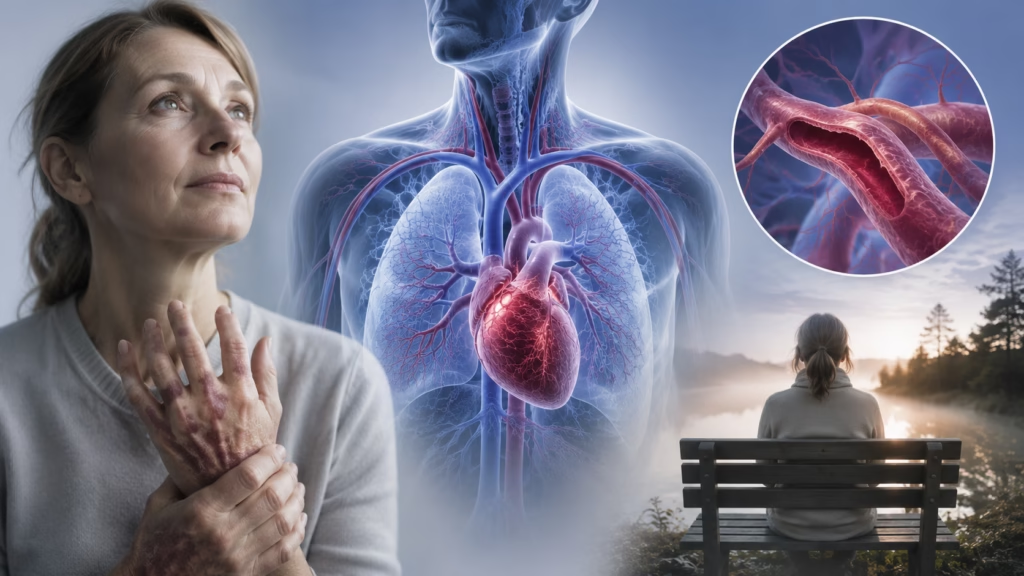
Table of Contents
Introduction
Receiving a diagnosis of scleroderma can be overwhelming, particularly when complications begin to affect vital organs. One of the most serious complications associated with scleroderma is pulmonary hypertension, a condition that places significant strain on the heart and lungs. For many patients and their families, one of the first questions that arises after diagnosis is about life expectancy and long-term outcomes.
Although pulmonary hypertension associated with scleroderma remains a serious medical condition, the outlook for patients has improved considerably over the past two decades. Advances in screening programs, earlier diagnosis, specialized medications, and multidisciplinary treatment approaches have helped many individuals live longer and enjoy a better quality of life than was previously possible.
Understanding how pulmonary hypertension develops in scleroderma, what factors influence prognosis, and which treatment options are available can help patients make informed decisions and take a more active role in managing their health. While every case is unique, knowledge and early intervention remain among the most powerful tools for improving outcomes.
Understanding Scleroderma
Scleroderma, also known as systemic sclerosis, is a chronic autoimmune disease that affects connective tissues throughout the body. In autoimmune conditions, the immune system mistakenly attacks healthy tissues, leading to inflammation and damage. In scleroderma, this process causes excessive production of collagen, which leads to thickening and hardening of the skin and internal organs.
The condition exists in several forms, but the two primary categories are limited cutaneous systemic sclerosis and diffuse cutaneous systemic sclerosis. Limited cutaneous disease primarily affects the hands, face, and lower arms, while diffuse disease can involve larger areas of the body and is often associated with more extensive internal organ involvement.
Although skin changes are the most recognizable feature of scleroderma, the disease can affect many organs, including the lungs, heart, kidneys, gastrointestinal tract, and blood vessels. Pulmonary complications are among the leading causes of illness and mortality in people living with scleroderma.
What Is Pulmonary Hypertension?
Pulmonary hypertension refers to abnormally high blood pressure within the arteries that carry blood from the heart to the lungs. Unlike systemic hypertension, which affects the body’s general circulation, pulmonary hypertension specifically involves the pulmonary vascular system.
Under normal circumstances, the right side of the heart pumps blood through the pulmonary arteries to the lungs, where oxygen is absorbed. When pulmonary arteries become narrowed, stiffened, or damaged, blood encounters greater resistance as it flows through these vessels. As a result, the right ventricle must work much harder to maintain blood flow.
Over time, this increased workload can cause enlargement and weakening of the right side of the heart, eventually leading to right-sided heart failure if left untreated.
In patients with scleroderma, pulmonary hypertension most commonly occurs as pulmonary arterial hypertension (PAH), which belongs to Group 1 in the World Health Organization classification system for pulmonary hypertension.
Why Pulmonary Hypertension Develops in Scleroderma
The development of pulmonary hypertension in scleroderma is primarily related to damage within the small blood vessels of the lungs.
Chronic inflammation and immune system dysfunction cause injury to the lining of pulmonary blood vessels. This damage triggers abnormal repair processes, leading to thickening of vessel walls and narrowing of the arterial lumen. As the blood vessels become progressively smaller, resistance to blood flow increases.
The exact reasons why some patients develop pulmonary hypertension while others do not remain under investigation. However, researchers believe that genetic susceptibility, immune abnormalities, vascular dysfunction, and environmental factors all contribute to disease development.
One of the major challenges is that symptoms often develop gradually and may initially be attributed to other aspects of scleroderma. This frequently delays diagnosis and treatment.
Symptoms of Pulmonary Hypertension in Scleroderma
Pulmonary hypertension often develops slowly, and early symptoms can be subtle. Many patients initially notice a gradual decline in their ability to perform everyday activities.
Shortness of breath during physical activity is usually the first symptom. Tasks that were once easy, such as climbing stairs, walking long distances, or carrying groceries, may become increasingly difficult. As the condition progresses, breathlessness may occur even during routine daily activities.
Fatigue is another common complaint. Because the heart struggles to deliver oxygen-rich blood efficiently throughout the body, patients often experience persistent tiredness and reduced stamina.
Some individuals develop chest discomfort, dizziness, fainting episodes, or palpitations. Swelling in the legs, ankles, or abdomen may occur when the right side of the heart begins to weaken.
Because these symptoms overlap with other manifestations of scleroderma, healthcare providers must maintain a high degree of suspicion when evaluating patients.
How Pulmonary Hypertension Affects Life Expectancy
Pulmonary hypertension is one of the most significant factors influencing survival in patients with scleroderma. Historically, the diagnosis carried a poor prognosis because effective treatments were limited and diagnosis often occurred late in the disease course.
Several decades ago, median survival following diagnosis was commonly reported to be between three and five years. Many patients were diagnosed only after substantial damage had already occurred within the pulmonary circulation and the right side of the heart.
Today, the situation is considerably different. Earlier screening programs and modern treatment options have significantly improved outcomes. Current studies show that five-year survival rates frequently exceed 60% to 70%, with some patients living considerably longer depending on disease severity and response to treatment.
While pulmonary hypertension remains a serious complication, it is no longer viewed as an immediate terminal diagnosis. Many individuals successfully manage the condition for years with appropriate medical care.
Factors That Influence Prognosis
Life expectancy varies widely among patients because numerous factors influence disease progression and treatment response.
One of the most important predictors is the severity of pulmonary hypertension at the time of diagnosis. Patients diagnosed during earlier stages generally experience better outcomes because treatment can begin before significant heart damage occurs.
Right ventricular function is another critical factor. The ability of the right side of the heart to adapt to increased pressure plays a major role in determining survival. Patients with preserved right ventricular function typically have a more favorable prognosis.
The type of scleroderma also matters. Diffuse cutaneous systemic sclerosis is often associated with more aggressive disease and may carry a higher risk of complications.
Functional status at diagnosis provides valuable prognostic information. Individuals who can still perform normal daily activities generally fare better than those who already experience severe limitations.
Age, additional medical conditions, kidney involvement, lung fibrosis, and treatment adherence can also influence outcomes.
Screening and Early Detection
Because pulmonary hypertension can develop silently, routine screening is strongly recommended for patients with systemic sclerosis.
Annual echocardiography is often used to estimate pulmonary artery pressures and evaluate heart function. Although echocardiograms cannot definitively diagnose pulmonary hypertension, they provide valuable screening information and help identify patients who require additional testing.
Pulmonary function testing is another important tool. A declining diffusing capacity for carbon monoxide (DLCO) may signal developing pulmonary vascular disease before symptoms become severe.
The six-minute walk test helps evaluate exercise tolerance and functional capacity. Changes in walking distance over time may indicate disease progression.
The gold standard for diagnosis remains right heart catheterization. This procedure directly measures pressures within the pulmonary arteries and confirms the diagnosis with precision.
Early detection allows treatment to begin sooner, which can significantly improve long-term outcomes.
Current Treatment Options
Treatment strategies focus on reducing pressure within the pulmonary arteries, improving symptoms, slowing disease progression, and preserving heart function.
Several classes of medications specifically target pathways involved in pulmonary arterial hypertension. Endothelin receptor antagonists such as bosentan and ambrisentan help relax blood vessels and reduce vascular remodeling. Phosphodiesterase-5 inhibitors such as sildenafil and tadalafil improve blood flow through the pulmonary circulation. Prostacyclin therapies, including epoprostenol, treprostinil, and selexipag, provide powerful vasodilatory and anti-proliferative effects.
Many patients receive combination therapy because targeting multiple pathways often produces better results than single-drug treatment.
Supportive treatments may include supplemental oxygen for patients with low oxygen levels, diuretics to manage fluid retention, and anticoagulant therapy in selected cases.
Treatment plans are highly individualized and should be managed by specialists experienced in pulmonary hypertension.
The Importance of Multidisciplinary Care
Managing pulmonary hypertension associated with scleroderma requires collaboration among multiple healthcare professionals.
Rheumatologists oversee the underlying autoimmune disease and monitor systemic complications. Pulmonary hypertension specialists, cardiologists, and pulmonologists manage cardiovascular and respiratory aspects of the condition.
Physical therapists can help maintain mobility and exercise tolerance. Dietitians provide nutritional guidance, while mental health professionals assist patients in coping with the emotional challenges of chronic illness.
Research consistently demonstrates that patients receiving care at specialized centers often experience better outcomes than those managed in non-specialized settings.
Lifestyle Measures That Support Better Outcomes
Although medications form the cornerstone of treatment, lifestyle choices also play an important role in maintaining health.
Regular physical activity tailored to the individual’s capabilities can help preserve endurance and muscle strength. Many patients benefit from supervised exercise programs designed specifically for pulmonary hypertension.
A balanced, low-sodium diet may help reduce fluid retention and decrease strain on the heart. Smoking cessation is essential because tobacco use can worsen lung and vascular damage.
Adequate sleep, stress management, and maintaining social connections contribute significantly to overall well-being and quality of life.
Patients should also remain vigilant about routine medical appointments and promptly report any worsening symptoms to their healthcare team.
Emerging Research and Future Hope
The outlook for patients with scleroderma-associated pulmonary hypertension continues to improve as research advances.
Scientists are investigating new medications that target additional biological pathways involved in vascular remodeling and inflammation. Personalized medicine approaches aim to identify which treatments are most likely to benefit specific patients based on genetic and molecular characteristics.
Clinical trials are exploring earlier intervention strategies, combination therapies, and novel biologic agents that may further improve survival and quality of life.
These developments provide genuine optimism for the future of pulmonary hypertension care.
Conclusion
Pulmonary hypertension is one of the most serious complications of scleroderma, but it is no longer associated with the uniformly poor outcomes seen in the past. Advances in screening, earlier diagnosis, specialized medications, and comprehensive multidisciplinary care have transformed the outlook for many patients.
Life expectancy depends on numerous factors, including disease severity, heart function, timing of diagnosis, and response to treatment. However, many individuals now live significantly longer and maintain a meaningful quality of life through proactive disease management.
For anyone living with scleroderma, regular screening for pulmonary hypertension is essential. Early detection provides the greatest opportunity for successful treatment and improved outcomes. By working closely with experienced healthcare providers, staying informed about new developments, and maintaining a healthy lifestyle, patients can approach the future with greater confidence, resilience, and hope.
Disclaimer
This article is for educational purposes only and does not replace professional medical advice, diagnosis, or treatment. Seizures, severe headache, confusion, visual changes, or blood pressure readings in the hypertensive crisis range require urgent medical evaluation.
Was this page helpful?
Thanks for your feedback! What could we improve?
Thank you! Your feedback helps us improve our articles.
True Impact Health articles are written by our editorial team and based on reliable sources such as public health agencies, clinical guidelines and peer-reviewed research. This article has not yet been medically reviewed. Read our editorial process.
This content is for general information and is not a substitute for professional medical advice, diagnosis or treatment.