










Hypertension Nursing Diagnosis
Introduction Hypertension, often dubbed the “silent killer,” affects nearly one in three adults globally. As a nurse, you’re on the front lines of...
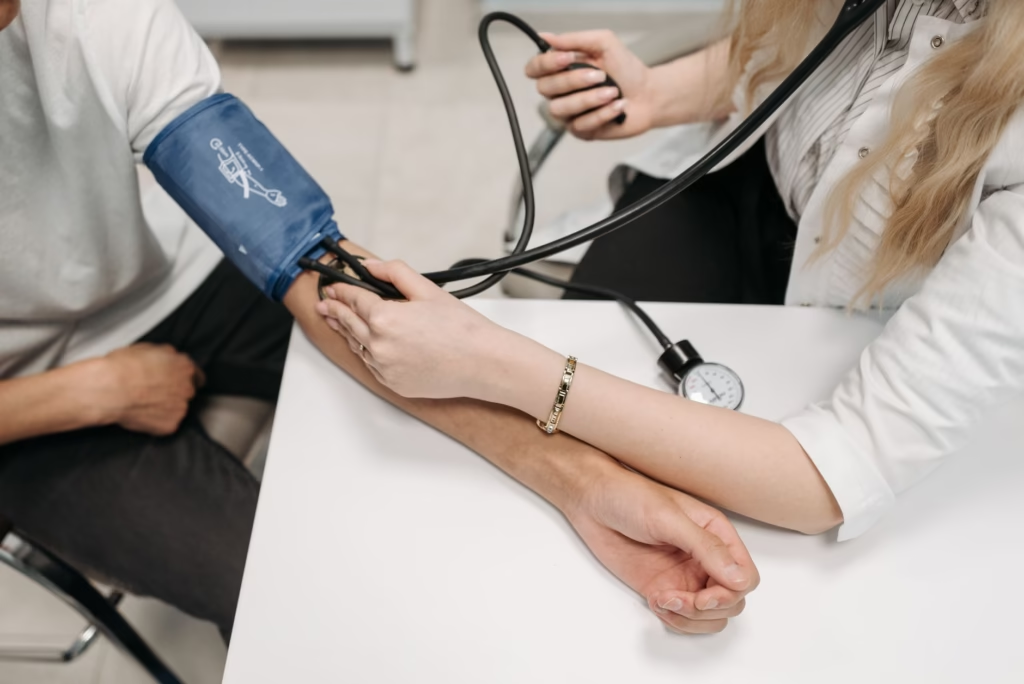
Table of Contents
Introduction
Hypertension, often dubbed the “silent killer,” affects nearly one in three adults globally. As a nurse, you’re on the front lines of identifying and managing high blood pressure—making accurate nursing diagnoses absolutely essential. In this post, we’ll explore how to assess patients with hypertension, craft targeted nursing diagnoses, implement evidence-based interventions, and evaluate outcomes. Whether you’re a new graduate or a seasoned clinician, this guide will help you strengthen your hypertensive care plan and improve patient outcomes.
Understanding Hypertension
Before diving into nursing diagnoses, let’s quickly review what hypertension is and why it matters in nursing practice.
- Definition: Systolic blood pressure ≥ 130 mm Hg or diastolic ≥ 80 mm Hg (per AHA/ACC guidelines)
- Risk factors: Family history, obesity, sedentary lifestyle, high-sodium diet, stress, advanced age
- Complications: Coronary artery disease, stroke, kidney failure, vision loss
Role of Nursing Diagnosis in Hypertensive Care
A nursing diagnosis identifies the patient’s actual or potential health problems that nurses can address independently. In hypertension management, a well-formulated diagnosis:
- Provides a roadmap for individualized care
- Bridges assessment findings with focused interventions
- Enhances patient safety and promotes positive outcomes
Common Nursing Diagnoses for Patients with Hypertension
Here are several nursing diagnoses you’ll frequently encounter in hypertensive patients:
Ineffective Health Maintenance
– Related to: Knowledge deficit about hypertension management
– As evidenced by: Missed medication doses, minimal lifestyle changes
– Related to: Complex medication regimens, financial constraints
– As evidenced by: Skipped follow-up appointments, uncontrolled BP readings
– Related to: Fear of complications, uncertainty about prognosis
– As evidenced by: Restlessness, tachycardia, patient statements
– Related to: Increased afterload, ventricular hypertrophy
– As evidenced by: Elevated blood pressure, S3 heart sounds
– Related to: Lack of information about diet, exercise, medication side effects
– As evidenced by: Patient’s questions, incorrect self-monitoring techniques
Assessment and Data Collection
Accurate nursing diagnoses start with thorough assessment:
– Vital signs: Multiple BP readings (sitting, standing, ambulatory)
– Medical history: Co-morbidities, family history of cardiovascular disease
– Lifestyle review: Diet, physical activity, tobacco/alcohol use
– Psychosocial factors: Stress levels, social support, financial barriers
– Laboratory and diagnostics: Lipid profile, renal function tests, ECG
Formulating the Nursing Diagnosis (PES Format)
Use the PES format to structure your diagnosis statement:
- P (Problem): The health issue (e.g., “Ineffective Health Maintenance”)
- E (Etiology): Contributing factors (e.g., “related to knowledge deficit about lifestyle modifications”)
- S (Signs/Symptoms): Evidence (e.g., “as evidenced by reported difficulty in following a low-sodium diet”)
Example:
“Nursing Diagnosis: Ineffective Health Maintenance related to knowledge deficit about dietary changes, as evidenced by patient’s continued intake of high-sodium foods.”
Nursing Interventions and Care Planning
Once your diagnosis is clear, select evidence-based interventions:
Patient Education
– Teach accurate home BP monitoring techniques
– Explain the DASH diet (Dietary Approaches to Stop Hypertension)
– Review medication schedules and potential side effects
– Collaborate with dietitians for personalized meal plans
– Encourage gradual increase in aerobic activity (e.g., 30 minutes/day)
– Offer smoking cessation resources and stress-management techniques
– Assist with medication reconciliation
– Monitor for hypotension after initiating or increasing antihypertensives
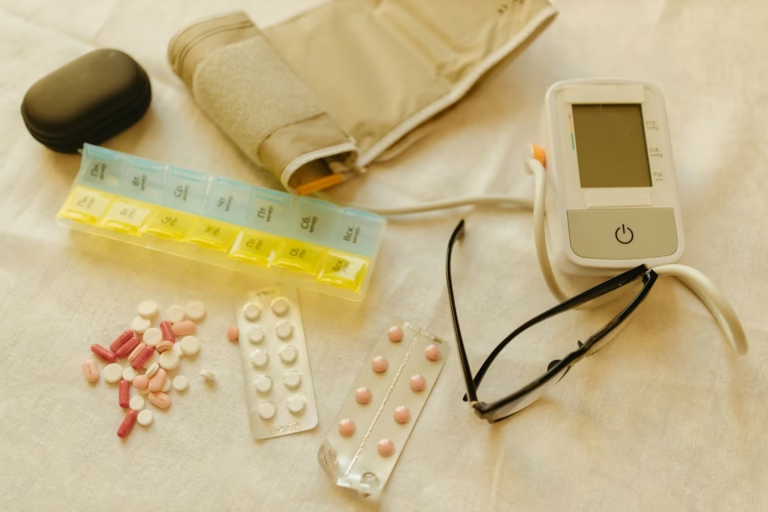
– Provide reminders or pill organizers to improve adherence
– Use therapeutic communication to address patient anxiety
– Refer to support groups or counseling services
– Involve family members in care planning
Patient Education Strategies
Empowering patients is at the heart of successful hypertension management. Consider these educational approaches:
- Teach-back method: Ask patients to demonstrate or explain what they’ve learned
- Written & digital resources: Provide easy-to-read pamphlets or app recommendations
- Goal setting: Help patients set SMART goals (Specific, Measurable, Achievable, Relevant, Time-bound)
- Follow-up: Arrange regular check-ins, either in person or via telehealth
Evaluating Outcomes
Outcomes evaluation ensures your interventions are working and helps you adjust the care plan as needed. Track:
- Blood pressure trends over days/weeks
- Patient adherence to medications and lifestyle changes
- Patient-reported understanding and confidence in self-care
- Biochemical markers (e.g., improved lipid profile, stabilized renal function)
Conclusion
A precise nursing diagnosis is the cornerstone of high-quality hypertension care. By combining thorough assessment, targeted diagnoses, and evidence-based interventions—coupled with patient education and ongoing evaluation—you can significantly reduce hypertension-related complications. Remember, every patient’s journey is unique. Stay curious, keep learning, and tailor your care plans to meet individual needs. Armed with these strategies, you’ll be well-equipped to make a lasting impact on your patients’ cardiovascular health.
Keywords: hypertension nursing diagnosis, nursing interventions for hypertension, hypertension care plan, nursing diagnosis for hypertension, patient education hypertension.
For more information, see the MedlinePlus.
Was this page helpful?
Thanks for your feedback! What could we improve?
Thank you! Your feedback helps us improve our articles.
True Impact Health articles are written by our editorial team and based on reliable sources such as public health agencies, clinical guidelines and peer-reviewed research. This article has not yet been medically reviewed. Read our editorial process.
This content is for general information and is not a substitute for professional medical advice, diagnosis or treatment.