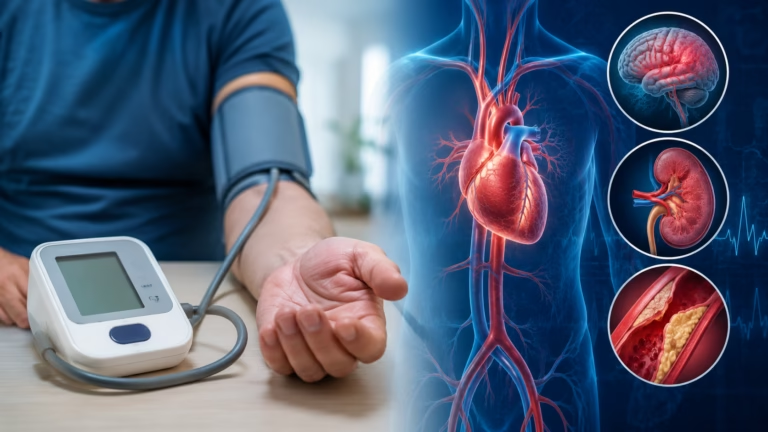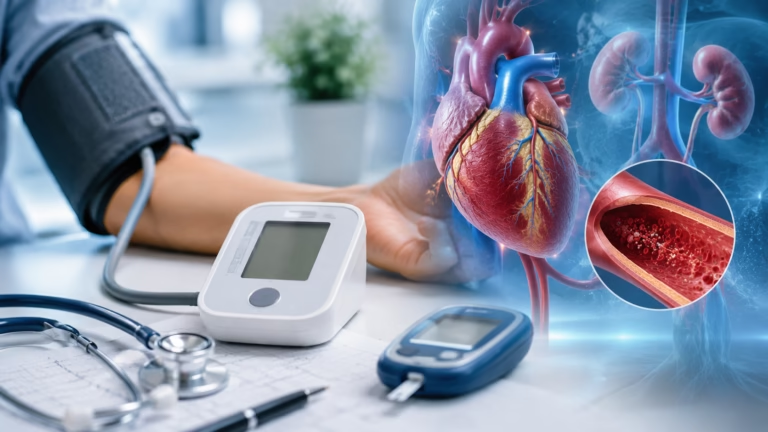













Mountain Kidney and Hypertension
Altitude can raise blood pressure via sympathetic, hormonal and vascular changes; watch for symptoms if you have hypertension or kidney disease.
By True Impact Health Editorial Team

Dr. Bernard ReynoldsMedical Reviewer, True Impact Health
Physician with experience in patient care and preventive medicine, focused on early detection, disease prevention and long-term wellness.
Reviewed this article on October 10, 2026.
View profile How we reviewUpdated on October 10, 2026 13 min read
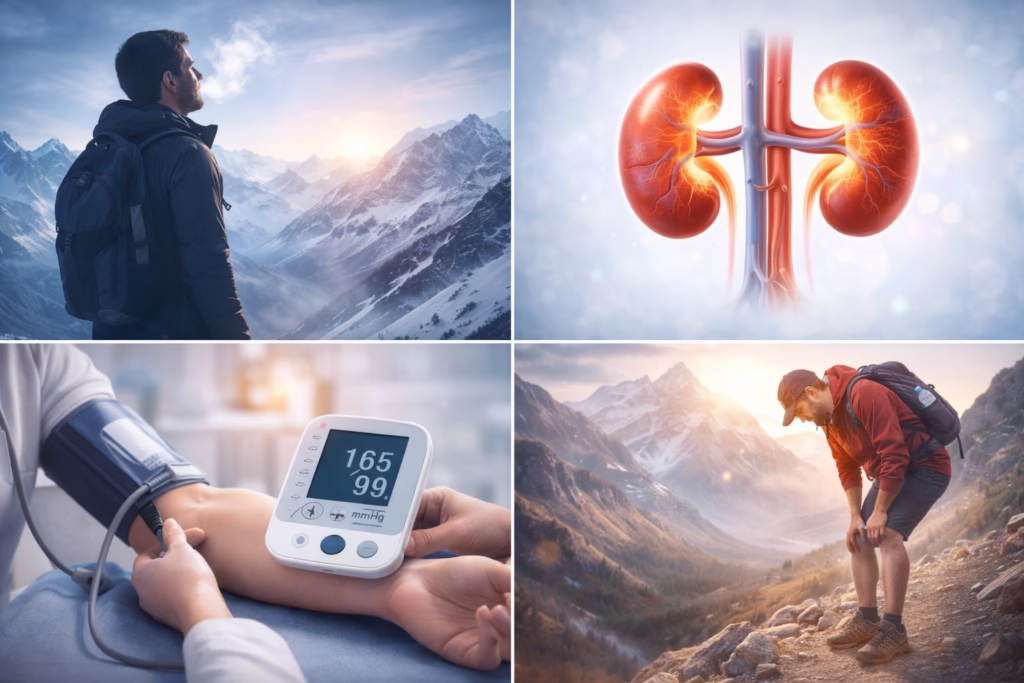
Table of Contents
Quick answer
Key takeaways
- Early renal adaptation: respiratory alkalosis causes renal bicarbonate and water excretion (altitude diuresis) aiding acclimatization but risking plasma volume loss.
- Erythropoietin response: hypoxia increases EPO, raising hemoglobin, which can increase blood viscosity and contribute to hypertension in chronic high altitude residents.
- Altered sodium and fluid handling: initial diuresis may shift to sodium retention, volume expansion, edema, and paradoxical blood pressure elevation.
- Mechanisms of altitude hypertension include sympathetic activation, RAAS changes, and endothelial dysfunction reducing vasodilation and raising peripheral resistance.
- Prevention and management: pretravel evaluation, gradual ascent, monitored hydration, medication review, and prompt descent or care for persistent severe symptoms.
Altitude can raise blood pressure through increased sympathetic activity, hormonal changes and reduced nitric‑oxide‑mediated vessel relaxation. Most people adapt, but those with pre‑existing hypertension or kidney disease may develop clinically significant hypertension at high altitude.
Introduction
High altitude exerts important effects on human physiology, and the kidneys are among the organs that respond earliest. As elevation rises, atmospheric pressure falls, which lowers the partial pressure of inspired oxygen. The body then activates a range of compensatory mechanisms to maintain oxygen delivery, acid base balance, and fluid homeostasis. These changes involve the lungs, heart, nervous system, blood vessels, and kidneys.
In popular discussion, some people use the phrase “mountain kidney” to describe kidney related changes that occur at altitude. However, this is not a standard diagnostic label in mainstream clinical guidance. A more precise description is altitude related renal adaptation for short term exposure, and in long term high altitude residents, some authors describe High Altitude Renal Syndrome (HARS), a syndrome characterized by hypertension, albuminuria, hyperuricemia, and polycythemia.
This distinction matters because not every person who develops altered urine output, fluid shifts, or higher blood pressure at altitude has a kidney disease. In many trekkers and climbers, the kidneys are participating in normal acclimatization. In others, especially those with preexisting hypertension, chronic kidney disease, cardiovascular disease, or poor acclimatization, the same physiologic responses may contribute to clinically important blood pressure elevation or volume imbalance.
The Physiology of “Mountain Kidney”
Hypoxia induced diuresis
One of the earliest renal responses to high altitude is altitude diuresis. When a person ascends, low oxygen stimulates increased ventilation. This lowers carbon dioxide in the blood and produces respiratory alkalosis. The kidneys then compensate by excreting bicarbonate and water, which helps restore acid base balance and supports continued hyperventilation. This is why some travelers notice increased urination soon after arrival at altitude.
This process is not merely an inconvenience. It is part of acclimatization. By allowing bicarbonate excretion, the kidneys help the body tolerate sustained overbreathing, which improves oxygen uptake in a low oxygen environment. However, the resulting fluid loss may also reduce plasma volume. If fluid intake is inadequate, dehydration can develop, and this can worsen fatigue, headaches, and circulatory stress.
Erythropoietin release
The kidneys also play a central role in longer term oxygen adaptation through erythropoietin (EPO) production. Hypoxia stimulates cells in the kidney to increase EPO release, which promotes red blood cell production in the bone marrow. Over time, this raises hemoglobin mass and improves oxygen carrying capacity.
This mechanism is beneficial when it remains within physiologic limits. However, with prolonged or excessive stimulation, especially in chronic high altitude residents, marked erythrocytosis may increase blood viscosity. Thicker blood can contribute to vascular resistance and may interact with renal and vascular mechanisms that favor hypertension. This is one reason HARS has been discussed mainly in chronic high altitude populations rather than short term visitors.
Altered sodium and fluid handling
Altitude also changes how the kidneys manage sodium, water, and renal blood flow. Early exposure may produce diuresis, but this is not the whole story. As acclimatization progresses, the balance between fluid loss and fluid retention can shift depending on sympathetic activity, hormonal signaling, hydration status, exertion, and individual susceptibility. In some people, sodium retention and relative volume expansion may emerge, particularly when neurohormonal systems are activated.
This explains why altitude related kidney responses can appear paradoxical. A climber may initially urinate more, yet later develop swelling, elevated blood pressure, or signs of fluid redistribution. The kidney is not responding in one fixed direction. Rather, it is continuously adjusting to hypoxia, ventilation changes, hydration, and hormonal signals.
How High Altitude Can Trigger Hypertension
Not everyone develops hypertension at altitude. Many healthy travelers acclimatize with only modest, temporary changes in blood pressure. However, a meaningful subset experience elevated readings, and the effect may be more pronounced in those with preexisting hypertension or abnormal vascular responses. Several mechanisms help explain this pattern.
1. Sympathetic nervous system activation
Hypoxia activates the sympathetic nervous system, increasing heart rate, vasoconstriction, and circulating catecholamines. This is part of the body’s attempt to preserve oxygen delivery to vital organs. However, increased sympathetic tone also raises peripheral vascular resistance and may elevate both daytime and nighttime blood pressure.
This mechanism is especially important because it can persist beyond the first few hours of ascent. In susceptible people, repeated sympathetic activation during exertion, poor sleep, cold exposure, and hypoxia may sustain higher blood pressure throughout the trek or stay. Thus, altitude hypertension is not simply a hydration issue. It is also a neurovascular response to low oxygen.
2. Renin angiotensin aldosterone system effects
The renin angiotensin aldosterone system (RAAS) regulates blood pressure, sodium balance, and extracellular fluid volume. At altitude, early diuresis and changes in perfusion may alter RAAS activity. In some individuals, compensatory RAAS activation contributes to sodium retention, water retention, and increased vascular tone. Aldosterone in particular favors renal sodium reabsorption, which can support blood pressure elevation when combined with sympathetic activation.
This is clinically relevant because a person may begin a climb with volume loss from altitude diuresis, but later shift toward a pattern of hormonal compensation that raises blood pressure. The body is attempting to defend circulating volume, yet the combined effect can become maladaptive in someone predisposed to hypertension.
3. Endothelial dysfunction and nitric oxide imbalance
Healthy blood vessels depend on the endothelium to produce nitric oxide, a mediator that promotes vasodilation. Hypoxia can impair endothelial function in some settings, reducing vasodilatory capacity and increasing arterial stiffness or peripheral resistance. When vasodilation is blunted, blood pressure may rise more easily.
This vascular effect interacts with sympathetic activation and RAAS signaling. In other words, altitude related hypertension is often not due to a single pathway. It reflects the combined effects of low oxygen, vascular reactivity, autonomic stimulation, and renal fluid regulation.
When Kidney Related Altitude Changes Become Clinically Important
Short term renal adaptation is common and often benign. However, kidney related altitude effects become clinically important when they lead to persistent hypertension, albuminuria, reduced kidney function, fluid overload, or acute kidney injury. This risk is higher in people who already have chronic kidney disease, hypertension, diabetes, or cardiovascular disease.
In chronic high altitude exposure, the syndrome most often discussed in the literature is HARS. This is characterized by polycythemia, hyperuricemia, hypertension, and albuminuria, and it appears to be more relevant to long term residence at high elevations than to short recreational exposure. Therefore, trekkers should not assume that every blood pressure rise at altitude means they have HARS. At the same time, persistent or progressive abnormalities should not be dismissed as “normal mountain effects.”
Identifying and Diagnosing High Altitude Hypertension
Common red flags
Symptoms of altitude related hypertension can be subtle because they overlap with general altitude illness. Morning headache is common at altitude and may reflect acute mountain sickness, poor sleep, dehydration, or elevated blood pressure. Persistent headache, especially when accompanied by high blood pressure readings, deserves closer attention.
Shortness of breath at rest is another warning sign. This is not specific to blood pressure, but it can indicate more serious altitude illness such as high altitude pulmonary edema, which is a medical emergency. If dyspnea occurs at rest, it should never be attributed casually to simple deconditioning.
Peripheral edema, such as ankle swelling, may suggest fluid redistribution or retention, especially if accompanied by weight gain or rising blood pressure. Although mild swelling can occur for benign reasons during travel, persistent edema in the setting of hypertension should prompt evaluation of fluid balance, medication use, and renal status.
Repeated blood pressure readings above 140/90 mmHg at altitude deserve attention, particularly if the person is symptomatic or has known cardiovascular or kidney disease. One isolated reading is less informative than a series of measurements taken under similar conditions.
Diagnostic approach
A validated portable blood pressure monitor is useful for people with known hypertension or prior altitude related symptoms. Twice daily readings, ideally taken after several minutes of rest, provide more meaningful information than irregular spot checks performed after exertion. Recording symptoms alongside readings helps identify patterns.
If symptoms suggest kidney stress, fluid overload, or acute kidney injury, laboratory assessment of serum creatinine, electrolytes, and urinalysis or urine albumin may be warranted. These tests help determine whether the kidneys are simply adapting or whether clinically important injury or dysfunction is developing.
In expedition or remote medical settings, point of care ultrasound may assist with fluid assessment, though this depends on equipment and expertise. It is an adjunct, not a substitute, for clinical judgment. The more important message for nonmedical travelers is that persistent hypertension, dyspnea, marked edema, declining urine output, or severe fatigue at altitude should trigger a low threshold for descent and professional evaluation.
Prevention and Management Strategies
1. Pre ascent preparation
Before significant altitude exposure, people with a history of hypertension, chronic kidney disease, heart disease, or prior altitude illness should undergo baseline assessment. This includes reviewing blood pressure control, kidney function, usual medications, and previous responses to altitude. Preexisting disease does not automatically prohibit ascent, but it changes the risk calculation and the need for planning.
Medication review is particularly important. Some travelers may already be taking antihypertensives, diuretics, or drugs that affect kidney perfusion or potassium balance. These medications can interact with dehydration, exertion, and hypoxia. Acetazolamide is commonly discussed before ascent, but its primary role is prevention of acute mountain sickness by accelerating acclimatization, not treatment of systemic hypertension.
2. Acclimatization best practices
The most effective preventive strategy is gradual ascent. The CDC Yellow Book recommends avoiding a direct ascent from low altitude to a sleeping altitude above about 2,750 meters in one day when possible. Once above 3,000 meters, sleeping altitude should generally increase by no more than 500 meters per day, with an extra acclimatization day for every additional 1,000 meters gained in sleeping altitude.
The principle of “climb high, sleep low” is also well recognized. This means a person may spend part of the day at a higher elevation but return to a lower camp to sleep. The approach reduces physiologic stress during the night, when hypoxia and sleep related breathing instability can otherwise worsen symptoms and sympathetic activation.
3. Hydration and nutrition on the trek
Fluid intake matters, but overhydration is not safer than dehydration. A practical goal is steady hydration with attention to urine color, thirst, exertion, temperature, and symptoms. Many travelers do well with roughly 2 to 3 liters per day, though actual needs vary with body size, temperature, and workload.
Electrolyte intake also matters. Exclusive reliance on plain water, especially during heavy exertion, may not adequately support fluid balance. Oral rehydration solutions or balanced electrolyte beverages can be useful in some situations. At the same time, excessive salt intake may worsen fluid retention in susceptible individuals, so a moderate approach is preferable rather than aggressive salt loading.
4. Pharmacologic considerations
Acetazolamide is well established for prevention and treatment support of acute mountain sickness because it improves acclimatization. It is not a primary blood pressure drug, although by facilitating acclimatization it may indirectly reduce some altitude related physiologic stressors. It should be used under medical guidance, especially in people with kidney disease or complex medication regimens.
Nifedipine has an established role in prevention and treatment of high altitude pulmonary edema (HAPE) because it reduces pulmonary artery pressure. It is not routinely recommended solely for uncomplicated altitude related systemic hypertension in the general traveler, though clinicians may sometimes consider calcium channel blockers in selected patients who already need blood pressure treatment. Therefore, it should not be treated as a universal preventive drug for all trekkers.
ACE inhibitors and ARBs may be appropriate for some patients who already use them at baseline, but caution is required because hypovolemia, reduced renal perfusion, and potassium imbalance can become more problematic at altitude. Any adjustment should be individualized by a clinician familiar with the traveler’s kidney function and medication history. This is an inference based on how these drugs affect renal hemodynamics and potassium handling, rather than a specific trekking guideline recommendation.
Loop or thiazide diuretics deserve similar caution. Altitude already promotes diuresis early on, and additional diuretic therapy can worsen dehydration or electrolyte disturbances if used inappropriately. For this reason, medication plans should be reviewed before travel rather than improvised on the mountain.
A Practical Example
Consider a middle aged trekker with borderline sea level hypertension who develops morning headaches, ankle swelling, and repeated blood pressure readings in the 150 to 160 over 95 to 100 mmHg range after rapid ascent to around 5,000 meters. The likely contributors could include hypoxia related sympathetic activation, poor acclimatization, sleep disturbance, fluid imbalance, and preexisting vascular susceptibility. In that situation, the safest first steps would typically include rest, reassessment, hydration review, repeated blood pressure monitoring, and descent if symptoms persist or worsen.
If symptoms improve after descent and blood pressure normalizes, that pattern supports an altitude related physiologic trigger rather than isolated essential hypertension alone. If symptoms do not improve, or if there is dyspnea at rest, falling urine output, severe headache, neurologic change, or worsening edema, urgent medical evaluation becomes necessary because more serious altitude illness or renal compromise must be considered.
When to Descend or Seek Urgent Care
Immediate descent and medical assessment should be strongly considered when any of the following occur:
- shortness of breath at rest
- confusion, severe weakness, or altered mental status
- chest pain
- persistent severe headache with high blood pressure
- rapidly worsening edema
- marked decline in urine output
- signs of high altitude pulmonary edema or cerebral edema
At altitude, delayed response can be dangerous because symptoms may progress quickly. In travel medicine and wilderness medicine, descent remains the definitive intervention for serious altitude illness.
Conclusion
High altitude challenges kidney physiology and blood pressure regulation in ways that are both adaptive and potentially harmful. Early renal responses such as bicarbonate excretion and altitude diuresis help acclimatization, while longer term responses such as erythropoietin release support oxygen delivery. However, the same environment can also promote sympathetic activation, altered RAAS activity, endothelial dysfunction, sodium handling changes, and blood pressure elevation in susceptible individuals.
The phrase “mountain kidney” can be a useful informal way to describe this connection, but medically it is better to distinguish between normal altitude related renal adaptation and clinically important entities such as high altitude renal syndrome, acute kidney injury, or altitude associated hypertension. That distinction helps avoid both overreaction and false reassurance.
For most trekkers, the best protection is careful preparation, gradual ascent, thoughtful hydration, symptom monitoring, and early response to warning signs. For those with preexisting hypertension or kidney disease, pre travel medical review is particularly important. In mountain medicine, informed caution is not a barrier to adventure. It is part of climbing safely.
When to see a doctor
- Severe headache, visual changes, or confusion
- Chest pain or shortness of breath at rest
- Sudden swelling of the legs or face
- Blood pressure >180/110 mmHg measured twice
- Persistent dizziness or fainting episodes
- If emergency, call the local emergency number
If symptoms are severe or come on suddenly, call your local emergency number.
Frequently asked questions
Why do I urinate more when I first arrive at altitude?
Low oxygen triggers faster breathing, causing respiratory alkalosis. The kidneys compensate by excreting bicarbonate and water, leading to increased urine output during early acclimatisation.
Can staying well‑hydrated prevent altitude‑related hypertension?
Adequate fluids help maintain plasma volume, but hypertension at altitude is also driven by nervous‑system and hormonal responses that are not fully prevented by hydration alone.
Is the “mountain kidney” a recognised medical condition?
No. The term is informal. The recognised entities are altitude‑related renal adaptation and, in long‑term residents, high‑altitude renal syndrome, which includes hypertension, albuminuria and hyperuricemia.
Should I adjust my blood‑pressure medication before a high‑altitude trek?
Any medication changes should be discussed with a healthcare professional. Some drugs may need dose adjustment, but decisions must be personalised and based on a medical review.
Sources and further reading
Was this page helpful?
Thanks for your feedback! What could we improve?
Thank you! Your feedback helps us improve our articles.
Medically reviewed by
Dr. Bernard ReynoldsPhysician with experience in patient care and preventive medicine, focused on early detection, disease prevention and long-term wellness.
True Impact Health articles are written by our editorial team and based on reliable sources such as public health agencies, clinical guidelines and peer-reviewed research. This article has been checked by a doctor on our review panel. Read our editorial process.
This content is for general information and is not a substitute for professional medical advice, diagnosis or treatment.