
Congestive Heart Failure With Preserved Ejection Fraction ICD-10: A Comprehensive Guide
Introduction
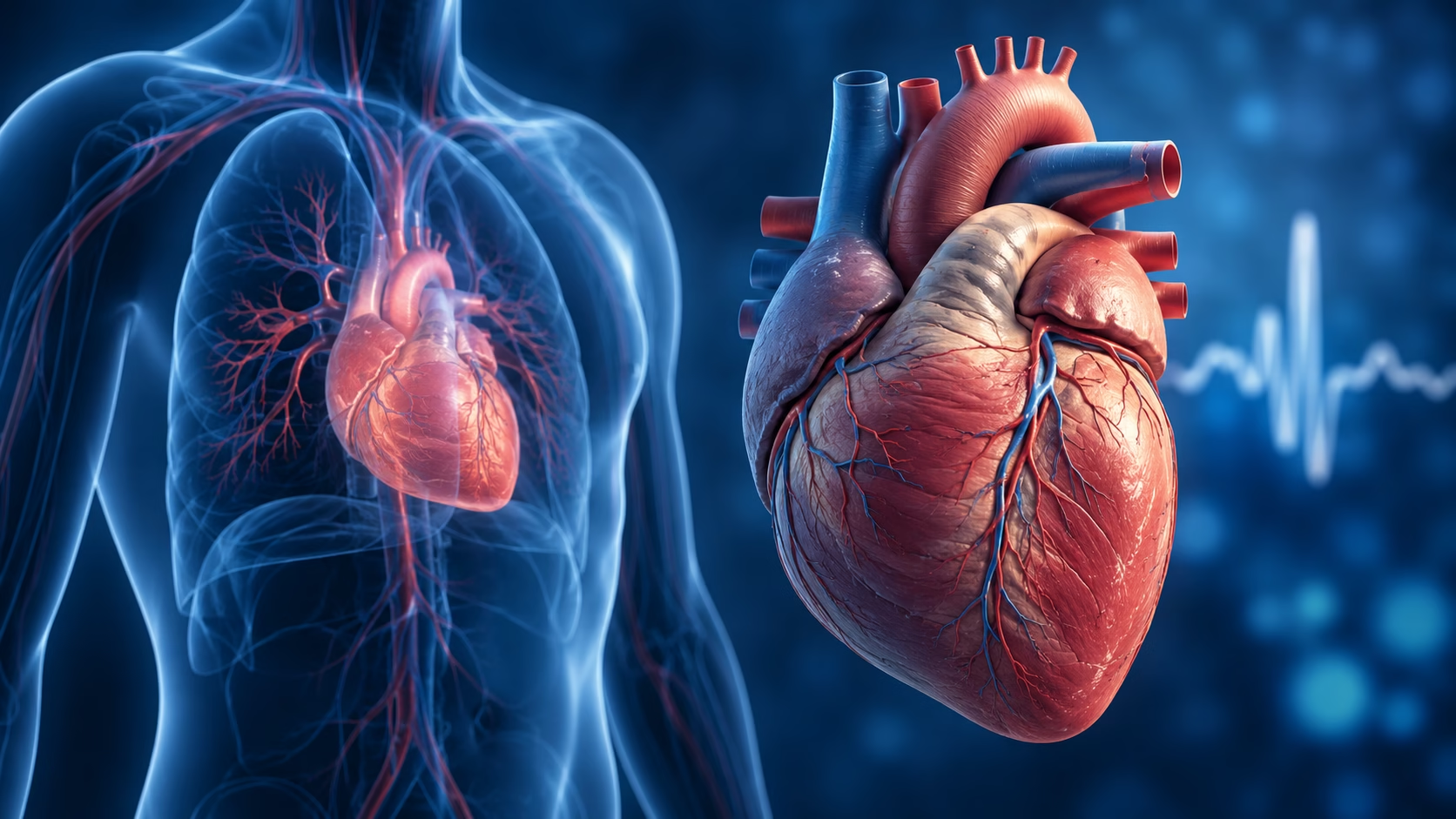
Heart failure is one of the most common chronic cardiovascular conditions worldwide and remains a major cause of hospitalization, disability, healthcare expenditure, and mortality. While many healthcare professionals and patients traditionally associate heart failure with a weakened heart that cannot pump blood effectively, a substantial proportion of heart failure cases occur despite normal pumping function. This condition is known as Heart Failure with Preserved Ejection Fraction (HFpEF), commonly referred to as diastolic congestive heart failure.
- HFpEF: diastolic dysfunction where ventricular stiffness impairs filling despite preserved ejection fraction, causing elevated filling pressures and congestive symptoms.
- Use ICD-10 I50.30-I50.33 to code diastolic heart failure, distinguishing unspecified, acute, chronic, and acute on chronic presentations.
- Document EF percentage, specify diastolic versus systolic, state acuity, describe symptoms, and record comorbidities to support accurate code selection.
- Management focuses on volume and blood pressure control, atrial fibrillation treatment, lifestyle changes, and monitoring with echocardiography and BNP to reduce readmissions.
HFpEF occurs when the heart muscle becomes stiff and loses its ability to relax properly during the filling phase of the cardiac cycle. Although the heart can still eject a normal percentage of blood with each contraction, it cannot fill adequately between beats. This leads to increased pressures within the heart and lungs, causing symptoms of congestion and reduced exercise capacity.
The prevalence of HFpEF has increased significantly over the past several decades. Aging populations, rising rates of obesity, hypertension, diabetes, and improved survival following heart attacks have all contributed to the growing number of patients diagnosed with this condition.
From a medical coding perspective, accurate ICD-10 coding for HFpEF is critically important. Proper coding affects reimbursement, quality reporting, healthcare analytics, clinical research, and care coordination. Selecting the correct ICD-10 code requires a clear understanding of the condition, its clinical presentation, and documentation requirements.
This comprehensive guide explores HFpEF in detail, including its pathophysiology, symptoms, risk factors, ICD-10 coding guidelines, documentation requirements, treatment approaches, and common coding pitfalls.
Understanding HFpEF: The Basics
What Is Heart Failure With Preserved Ejection Fraction?
Heart Failure with Preserved Ejection Fraction (HFpEF) is a type of heart failure in which the heart’s pumping function remains relatively normal, but the heart muscle cannot relax and fill properly.
Related Posts:


To understand this condition, it is helpful to review the cardiac cycle.
The heart functions through two primary phases:
- Systole
- Diastole
During systole, the heart contracts and pumps blood out to the body.
During diastole, the heart relaxes and fills with blood in preparation for the next contraction.
In HFpEF, the problem occurs primarily during diastole.
The ventricular muscle becomes:
- Thickened
- Stiff
- Less compliant
As a result, the ventricle cannot expand adequately to accommodate incoming blood.
This causes pressure to build within the heart and lungs, leading to symptoms of heart failure despite preserved pumping strength.
What Does Preserved Ejection Fraction Mean?
Ejection fraction (EF) measures the percentage of blood ejected from the left ventricle with each heartbeat.
A normal ejection fraction generally ranges between:
55% and 70%
Patients with HFpEF usually have an ejection fraction of:
50% or greater
Because the pumping function remains relatively intact, the condition is referred to as “preserved ejection fraction.”
This distinguishes HFpEF from Heart Failure with Reduced Ejection Fraction (HFrEF), where the heart’s pumping ability is significantly impaired.
What Sets HFpEF Apart?
Diastolic Dysfunction
The hallmark feature of HFpEF is diastolic dysfunction.
Diastolic dysfunction occurs when the ventricle cannot relax normally after contraction.
This impaired relaxation results in:
- Reduced ventricular filling
- Increased filling pressures
- Pulmonary congestion
- Symptoms of heart failure
Although the heart pumps normally, it cannot fill efficiently.
Common Risk Factors
Several conditions contribute to the development of HFpEF.
Hypertension
Long-standing high blood pressure is one of the most important risk factors.
Over time, elevated blood pressure forces the heart to work harder, causing thickening of the ventricular wall.
This thickened muscle becomes less flexible and more resistant to filling.
Obesity
Obesity contributes to systemic inflammation, increased cardiac workload, and metabolic abnormalities that promote ventricular stiffness.
Patients with obesity frequently develop HFpEF later in life.
Atrial Fibrillation
Atrial fibrillation is a common arrhythmia associated with HFpEF.
The irregular rhythm impairs ventricular filling and often worsens symptoms.
Diabetes Mellitus
Diabetes contributes to:
- Vascular dysfunction
- Inflammation
- Fibrosis of heart tissue
These changes impair cardiac relaxation.
Clinical Presentation
Patients with HFpEF often present with symptoms similar to those seen in other forms of heart failure.
Exertional Dyspnea
Shortness of breath during physical activity is often the earliest symptom.
Patients may notice difficulty climbing stairs, walking long distances, or performing routine activities.
Fatigue
Because cardiac filling is impaired, less blood is delivered to tissues during activity.
This often causes persistent fatigue and reduced stamina.
Lower-Extremity Edema
Fluid retention may cause swelling in:
- Ankles
- Feet
- Legs
This swelling is often worse at the end of the day.
Exercise Intolerance
Patients frequently report reduced ability to participate in physical activities they previously enjoyed.
Why HFpEF Is Becoming More Common
Aging Population
As people live longer, age-related changes in cardiac structure become more prevalent.
Aging naturally reduces ventricular compliance and contributes to diastolic dysfunction.
Improved Survival After Heart Attacks
Advances in cardiovascular medicine allow more individuals to survive myocardial infarctions.
Many survivors later develop ventricular remodeling and diastolic dysfunction.
Rising Rates of Obesity and Diabetes
The growing prevalence of obesity and diabetes has significantly increased the number of HFpEF cases worldwide.
These conditions contribute directly to myocardial stiffness and impaired relaxation.
Importance of Early Recognition
Early diagnosis allows healthcare providers to implement therapies that improve symptoms and reduce hospitalizations.
These therapies may include:
- Diuretics
- Blood pressure control
- Weight management
- Exercise programs
- Mineralocorticoid receptor antagonists
Why Accurate ICD-10 Coding Matters
Compliance
Healthcare organizations must comply with payer requirements and government reporting standards.
Accurate coding supports regulatory compliance.
Reimbursement
Heart failure patients often require complex care involving medications, imaging studies, specialist consultations, and hospital admissions.
Correct coding ensures appropriate reimbursement.
Data Quality
Accurate coding improves the reliability of:
- Clinical research
- Epidemiological studies
- Public health reporting
Care Coordination
Specific coding helps healthcare providers communicate effectively across settings, including:
- Hospitals
- Clinics
- Home health agencies
- Rehabilitation centers
ICD-10 Codes for HFpEF
HFpEF is classified under the ICD-10 category for diastolic heart failure.
I50.30 – Unspecified Diastolic (Congestive) Heart Failure
This code is used when documentation confirms diastolic heart failure but does not specify whether the condition is acute or chronic.
Examples include:
- HFpEF
- Diastolic CHF
- Diastolic heart failure
without additional acuity information.
I50.31 – Acute Diastolic (Congestive) Heart Failure
This code applies when documentation indicates a sudden onset or acute exacerbation of diastolic heart failure.
Patients may present with:
- Severe dyspnea
- Pulmonary edema
- Rapid fluid accumulation
Acute episodes often require hospitalization.
I50.32 – Chronic Diastolic (Congestive) Heart Failure
This code is used when the condition is long-standing and relatively stable.
Patients may experience:
- Chronic exercise intolerance
- Mild fluid retention
- Ongoing medication therapy
I50.33 – Acute on Chronic Diastolic (Congestive) Heart Failure
This code applies when a patient with chronic HFpEF experiences an acute worsening of symptoms.
Examples include:
- Acute fluid overload
- Sudden worsening of shortness of breath
- Hospital admission for decompensated heart failure
This is one of the most frequently assigned HFpEF codes in inpatient settings.
Documentation Requirements
Ejection Fraction Percentage
Documentation should clearly include the patient’s ejection fraction.
Example:
“Left ventricular ejection fraction 60% by echocardiogram.”
Recording the EF supports the diagnosis of HFpEF.
Specify Diastolic Versus Systolic Heart Failure
Providers should clearly state:
- Diastolic heart failure
- Systolic heart failure
- Combined systolic and diastolic heart failure
Failure to specify the type may lead to less accurate coding.
Document Acuity
The record should indicate whether the condition is:
- Acute
- Chronic
- Acute on chronic
This information directly determines code selection.
Include Clinical Signs and Symptoms
Documentation should describe manifestations such as:
- Dyspnea
- Orthopnea
- Edema
- Fatigue
These findings support medical necessity and clinical severity.
Record Comorbid Conditions
Important associated conditions include:
- Hypertension
- Diabetes
- Obesity
- Atrial fibrillation
- Coronary artery disease
These conditions frequently contribute to HFpEF development.
Documentation Example
A well-documented note might read:
“A 72-year-old female with a history of long-standing hypertension presents with worsening exertional dyspnea and lower-extremity edema. Echocardiogram demonstrates left ventricular ejection fraction of 60% with grade II diastolic dysfunction. Diagnosis: chronic diastolic congestive heart failure (HFpEF).”
This documentation supports assignment of:
I50.32 Chronic Diastolic Congestive Heart Failure
Coding Tips and Common Pitfalls
Avoid Using I50.9 When Specific Information Exists
I50.9 (Heart Failure, Unspecified) should not be used when documentation clearly identifies HFpEF or diastolic heart failure.
Specific codes provide more accurate clinical information.
Query Missing Documentation
If the provider documents heart failure but does not specify:
- Systolic versus diastolic
- Acute versus chronic
a query may be necessary.
Do Not Ignore Acuity
Acute and chronic forms have different codes.
Failure to capture acuity may affect reimbursement and quality reporting.
Link Associated Conditions When Documented
For example:
I11.0 Hypertensive Heart Disease with Heart Failure
may be assigned when provider documentation establishes the relationship.
Clinical Management and Implications
Volume Management
Loop diuretics are commonly used to reduce fluid overload.
Examples include:
- Furosemide
- Torsemide
- Bumetanide
These medications help relieve congestion and edema.
Blood Pressure Control
Strict blood pressure control is critical.
Common medications include:
- ACE inhibitors
- ARBs
- Beta-blockers
- Calcium channel blockers
Management of Atrial Fibrillation
Rate and rhythm control improve cardiac filling and symptom control.
Lifestyle Modifications
Patients benefit from:
- Sodium restriction
- Weight management
- Regular exercise
- Smoking cessation
- Alcohol moderation
Monitoring and Follow-Up
Echocardiography
Periodic echocardiograms evaluate:
- Ejection fraction
- Ventricular function
- Disease progression
BNP Monitoring
B-type natriuretic peptide levels may help assess heart failure severity.
Functional Assessments
Exercise tolerance and symptom burden should be evaluated regularly.
Prevention of Readmissions
Early identification of worsening symptoms can reduce hospitalization risk and improve outcomes.
Conclusion
Congestive heart failure with preserved ejection fraction (HFpEF) represents a growing and increasingly important category of heart failure. Although patients maintain normal or near-normal ejection fractions, impaired ventricular relaxation leads to elevated filling pressures, congestion, and significant symptoms that affect quality of life.
Accurate ICD-10 coding for HFpEF requires detailed clinical documentation, including ejection fraction values, identification of diastolic dysfunction, and specification of whether the condition is acute, chronic, or acute on chronic. Proper code selection from the I50.3 series improves reimbursement accuracy, strengthens quality reporting, supports research efforts, and enhances care coordination.
By combining comprehensive documentation with evidence-based clinical management, healthcare providers can improve outcomes for patients living with HFpEF while ensuring coding accuracy and regulatory compliance. Precise coding is not merely an administrative task; it is an essential component of delivering high-quality cardiovascular care.