












Facetite: Tighten Skin Without Surgery
FaceTite, a minimally invasive treatment for tightening loose or sagging facial skin without the downtime of a surgical facelift. What Is FaceTite?...
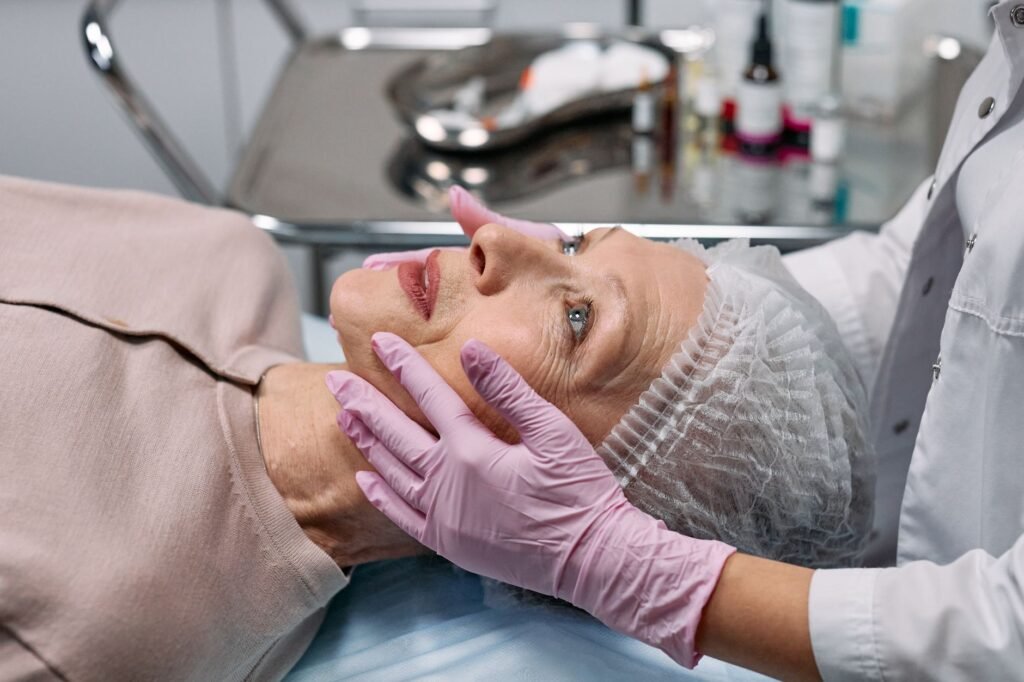
Table of Contents
Today we will be talking about FaceTite, a minimally invasive treatment for tightening loose or sagging facial skin without the downtime of a surgical facelift.
What Is FaceTite?
FaceTite is an FDA-approved treatment that uses radiofrequency (RF) energy to tighten facial skin and reduce fat, most commonly around the jawline, chin, and neck. It is sometimes described as a non-surgical alternative to a facelift, since it can produce visible tightening without the incisions or recovery time surgery requires.
How It Works
During the procedure, a provider inserts a thin cannula beneath the skin while holding an electrode on the skin’s surface. An electrical current passes between the two, generating controlled heat. This heat does two things at once: it liquefies targeted fat (which can then be gently suctioned out) and heats the deeper layer of skin to trigger new collagen production.
Why Collagen Matters Here
Collagen is the protein that gives skin its firmness and structure, and natural collagen production slows as we age. By stimulating new collagen growth, FaceTite encourages skin to tighten gradually over the following months, rather than only through the immediate physical effect of the treatment itself.
What to Expect During Recovery
FaceTite is performed under local anesthesia and typically takes under an hour. Because the incisions are tiny, there is minimal scarring, and most people experience only mild swelling or redness afterward — often attributed more to the numbing injections than the treatment itself. Full results build gradually over three to six months as collagen remodeling continues.
Who Might Consider It
FaceTite tends to suit people with mild to moderate skin laxity — for example, early jowls or a beginning “turkey neck” — who want a noticeable improvement without surgery. People with more significant excess skin may find a traditional facelift produces more dramatic results.
Frequently Asked Questions
How long do FaceTite results last?
With proper skin care, results can last several years, though this varies by individual and how skin continues to age afterward.
Is FaceTite painful?
The area is numbed with local anesthesia beforehand, and providers monitor skin temperature throughout to keep the treatment comfortable and safe.
How is FaceTite different from a facelift?
A facelift is surgical, involving larger incisions, general anesthesia, and a longer recovery. FaceTite is minimally invasive, uses only tiny incisions, and involves much less downtime, though results are generally more subtle than surgery.
For more information, see the MedlinePlus.
Was this page helpful?
Thanks for your feedback! What could we improve?
Thank you! Your feedback helps us improve our articles.
True Impact Health articles are written by our editorial team and based on reliable sources such as public health agencies, clinical guidelines and peer-reviewed research. This article has not yet been medically reviewed. Read our editorial process.
This content is for general information and is not a substitute for professional medical advice, diagnosis or treatment.