














Health A–Z guide
Telehealth
Telehealth: How Virtual Healthcare Is Transforming Access to Medical Care
Telehealth has become an increasingly important component of modern healthcare because it connects patients and healthcare professionals through digital

Table of Contents
Healthcare is no longer limited to a hospital, clinic, or doctor’s office. With the rapid development of digital technology, patients can now consult healthcare professionals, receive medical advice, monitor certain health conditions, and access follow-up care without physically visiting a healthcare facility. This approach is known as telehealth.
Telehealth has become an increasingly important component of modern healthcare because it connects patients and healthcare professionals through digital communication technologies. Although it cannot replace every form of in-person medical care, telehealth can make healthcare more accessible, convenient, and efficient when used appropriately.
What Is Telehealth?
Telehealth refers to the delivery of healthcare-related services through digital communication and information technologies. It allows patients and healthcare professionals to communicate remotely using tools such as smartphones, computers, tablets, video-conferencing platforms, secure messaging systems, and remote monitoring devices.
Telehealth can involve a real-time video consultation between a patient and a doctor, a telephone conversation with a healthcare professional, the transmission of health information for evaluation, or the remote monitoring of a patient’s condition.
It is important to distinguish telehealth from telemedicine. Telemedicine generally refers specifically to the remote provision of clinical medical services, such as diagnosing or treating a patient. Telehealth is broader and can include clinical care as well as health education, professional training, administrative services, preventive health programs, and other healthcare activities delivered remotely.
How Does Telehealth Work?
The process is relatively straightforward. A patient typically schedules an appointment through a healthcare provider’s online system or application. At the agreed time, the patient connects with a healthcare professional through a video call, telephone call, or secure messaging platform.
During the consultation, the healthcare professional may ask questions about symptoms, medical history, medications, lifestyle, and other relevant information. Where appropriate, the patient may also provide measurements obtained through a home monitoring device, such as blood pressure, blood glucose, heart rate, oxygen saturation, or body temperature.
Based on the available information, the healthcare professional may provide medical guidance, recommend self-care, prescribe medication where legally and clinically appropriate, request laboratory or imaging tests, arrange a referral, or determine that an in-person examination is necessary.
Telehealth therefore does not necessarily mean that healthcare is delivered entirely online. In many cases, it functions as a complementary system that connects virtual and physical healthcare.
Major Types of Telehealth
Telehealth can take several forms depending on the healthcare service being provided.
1. Video Consultations
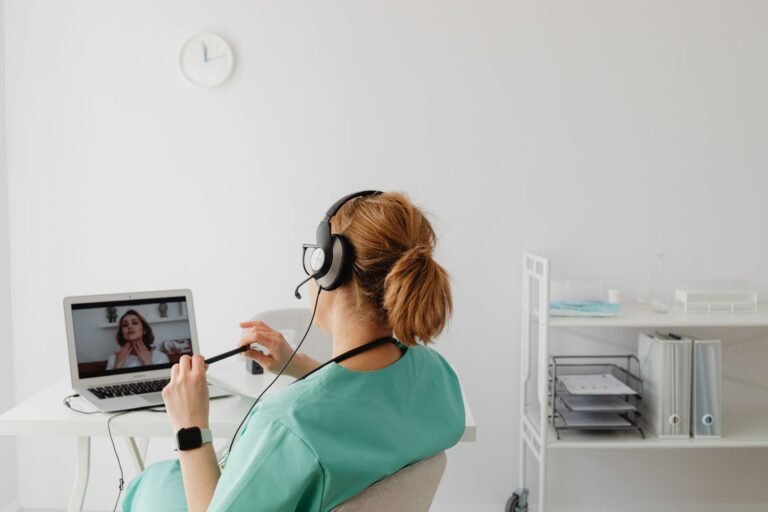
Video consultations allow patients and healthcare professionals to communicate face-to-face through a digital platform.
This can be useful for follow-up appointments, discussions about symptoms, medication reviews, mental health consultations, and certain conditions that can be assessed visually.
However, a video consultation cannot provide all the information obtained through a physical examination. Some conditions therefore still require an in-person appointment.
2. Telephone Consultations
Telephone consultations are among the simplest forms of telehealth. They can be particularly useful when a patient does not have reliable internet access or when video is unnecessary.
A healthcare professional can use a telephone consultation to discuss symptoms, provide follow-up advice, review medications, or determine whether the patient needs further evaluation.
3. Secure Messaging
Some healthcare systems allow patients to communicate with healthcare professionals through secure messaging platforms.
Patients may use these systems to ask non-urgent questions, request clarification about treatment instructions, discuss test results, or communicate information relevant to ongoing care.
Secure healthcare messaging should not be confused with ordinary social media messaging because medical information requires appropriate privacy and security safeguards.
4. Remote Patient Monitoring
Remote patient monitoring involves collecting health information from a patient outside a conventional healthcare facility and transmitting the information to healthcare professionals.
For example, a patient managing a chronic condition may regularly record blood pressure or blood glucose levels at home. These measurements can then be reviewed by a healthcare professional as part of ongoing care.
Wearable technologies and connected medical devices are expanding the possibilities for this type of healthcare.
5. Store-and-Forward Telehealth
In some cases, the patient and healthcare professional do not need to communicate simultaneously.
Relevant medical information, photographs, test results, images, or other clinical data can be securely collected and transmitted to a healthcare professional for later assessment.
This approach can be useful when immediate communication is unnecessary and when specialist review is required.
Why Is Telehealth Important?
One of the most significant advantages of telehealth is that it can reduce geographical barriers to healthcare.
Patients living in rural or underserved communities may have limited access to specialists or healthcare facilities. Telehealth can connect such patients with healthcare professionals who may be located in another city or region.
This can be particularly valuable for individuals who have difficulty travelling because of age, disability, mobility limitations, work responsibilities, transportation problems, or other circumstances.
Telehealth can also reduce the time associated with routine healthcare appointments. Instead of spending significant time travelling to a clinic and waiting for an appointment, some patients can communicate with their healthcare provider from home.
Benefits of Telehealth
Improved Access to Healthcare
Telehealth can expand access to healthcare services, particularly for populations that experience geographical or logistical barriers.
A patient who lives far from a specialist may be able to receive an initial consultation remotely before travelling for any examination or procedure that requires physical presence.
Greater Convenience
Virtual appointments can reduce travel time and make certain healthcare interactions easier to integrate into daily life.
This convenience can be particularly valuable for routine follow-ups and consultations that do not require physical examination.
Support for Chronic Disease Management
Patients with long-term health conditions often require regular monitoring and communication with healthcare professionals.
Telehealth can facilitate this process by allowing patients to submit measurements, discuss symptoms, review medications, and receive ongoing guidance without attending a healthcare facility for every interaction.
Potential Reduction in Healthcare Costs
Telehealth may reduce some costs associated with transportation, unnecessary emergency department visits, and certain routine appointments.
For healthcare providers, virtual consultations may also improve the allocation of clinical resources when appropriate.
However, the economic benefits vary depending on the healthcare system, technology, reimbursement arrangements, patient population, and type of service.
Continuity of Care
Telehealth can make it easier for healthcare professionals to maintain contact with patients between physical appointments.
This continuity can be important when monitoring recovery, reviewing treatment responses, or identifying changes in a patient’s condition.
Access to Specialists
A major potential benefit is improved access to specialist expertise.
A patient may be able to consult a specialist remotely without immediately travelling to a distant medical centre. In some cases, telehealth can therefore help connect patients with expertise that would otherwise be difficult to access.
Telehealth in Mental Healthcare
Mental healthcare is one area in which telehealth has become particularly relevant.
Psychologists, psychiatrists, counsellors, and other qualified professionals may provide certain forms of mental healthcare through video or telephone consultations where appropriate and permitted by local regulations.
Remote care can reduce some barriers associated with visiting a mental healthcare facility, including transportation difficulties, geographical limitations, and concerns about privacy.
Nevertheless, not every mental health situation is appropriate for remote care. Emergencies and situations involving immediate danger require appropriate urgent or emergency services.
Telehealth and Preventive Healthcare
Telehealth is not limited to treating existing illnesses. It can also contribute to preventive healthcare.
Healthcare professionals can use digital platforms to provide information about nutrition, physical activity, vaccination, screening, medication adherence, and other health-related behaviours.
Digital health programs can also help patients become more engaged in managing their own health.
This is particularly important because healthcare outcomes are influenced not only by medical treatment but also by prevention, early detection, lifestyle, and sustained engagement with healthcare services.
Limitations of Telehealth
Despite its advantages, telehealth is not a complete replacement for traditional healthcare.
The most important limitation is the absence of direct physical examination in many virtual consultations.
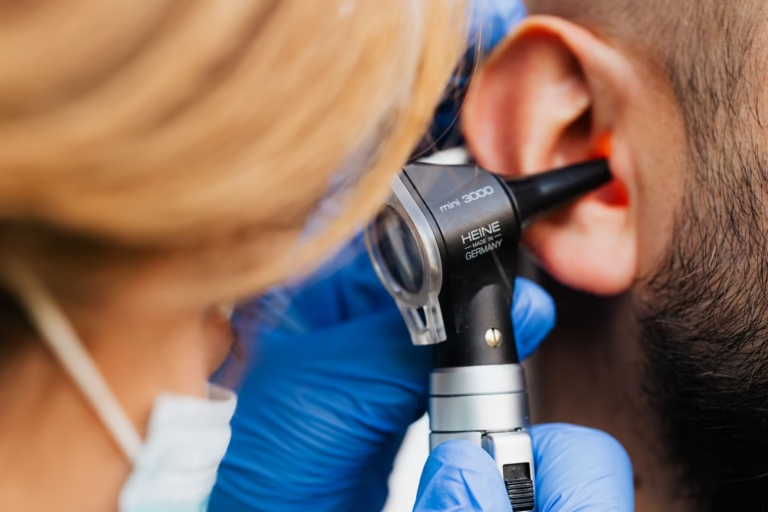
A healthcare professional may need to physically examine a patient’s abdomen, listen to the lungs or heart, assess reflexes, inspect an injury closely, perform a procedure, or conduct diagnostic testing. These activities generally require an appropriate physical healthcare setting.
Telehealth can therefore be highly useful for some situations but unsuitable for others.
Technology Barriers
Telehealth depends on technology. Patients need access to an appropriate device, reliable connectivity, and sufficient digital literacy.
Individuals without reliable internet access or suitable devices may therefore experience difficulties accessing virtual healthcare.
Privacy and Data Security
Healthcare information is highly sensitive. Telehealth systems must therefore use appropriate privacy and cybersecurity measures to protect patient information.
Patients should also avoid discussing sensitive medical information through insecure or unofficial platforms.
Diagnostic Limitations
Some medical conditions cannot be reliably assessed through a video or telephone consultation alone.
A healthcare professional may initially provide remote guidance but subsequently recommend an in-person assessment or diagnostic test.
Regulatory Differences
Telehealth regulations differ between countries and jurisdictions. Licensing requirements, prescribing rules, reimbursement policies, privacy requirements, and cross-border consultations may be governed by different legal frameworks.
Consequently, a telehealth service that is available in one country may operate differently in another.
Is Telehealth Safe?
Telehealth can be safe and effective when used for appropriate clinical situations and delivered through qualified healthcare professionals and secure systems.
However, patients should understand that remote healthcare has limitations.
A virtual consultation should not be viewed as an automatic substitute for emergency medical care. Severe symptoms or rapidly worsening conditions may require immediate physical assessment.
Patients should also provide healthcare professionals with accurate information about their symptoms, medications, medical history, and other relevant circumstances.
Most importantly, telehealth should function as part of a broader healthcare system rather than as a replacement for all physical medical services.
Telehealth and Artificial Intelligence
Artificial intelligence is increasingly becoming part of the broader digital healthcare ecosystem.
AI can potentially support healthcare professionals by assisting with administrative tasks, analysing large volumes of health information, identifying patterns, supporting clinical decision-making, and improving the efficiency of digital healthcare systems.
For example, AI-powered systems may assist with symptom assessment or patient triage. However, AI-generated information should not automatically be treated as a medical diagnosis.
Clinical decisions require appropriate professional oversight, particularly when the consequences of an incorrect assessment could be serious.
The increasing use of AI also raises important questions concerning privacy, algorithmic bias, transparency, accountability, and the quality of health data used to train and operate these systems.
The Future of Telehealth
The future of telehealth is likely to involve greater integration between virtual consultations, wearable technologies, electronic health records, remote monitoring devices, artificial intelligence, and conventional healthcare facilities.
Instead of treating telehealth as a completely separate form of medicine, healthcare systems are increasingly moving toward hybrid care models.
Under such models, patients may receive some services virtually and others in person, depending on their clinical needs.
For example, a patient could have an initial virtual consultation, complete laboratory tests at a healthcare facility, monitor certain health indicators at home, and then participate in a virtual follow-up appointment.
This integrated approach could improve convenience while preserving access to physical examination and diagnostic services when they are necessary.
What Patients Should Consider Before Using Telehealth
Before a telehealth appointment, patients should consider several practical issues:
- Ensure that the device has sufficient battery power and a functioning camera and microphone if video is required.
- Use a reliable internet connection where possible.
- Choose a private environment for confidential medical discussions.
- Prepare a list of current medications and relevant medical information.
- Write down important symptoms, including when they began and whether they have changed.
- Have recent health measurements available if they are relevant to the consultation.
- Ask the healthcare professional what should happen if an in-person examination becomes necessary.
- Confirm how prescriptions, test requests, referrals, or follow-up appointments will be handled.
- Use an appropriate healthcare platform rather than an unofficial communication channel for sensitive information.
Telehealth Does Not Mean “Healthcare Without Doctors”
One common misconception is that telehealth replaces healthcare professionals with technology.
In reality, effective telehealth still depends heavily on qualified healthcare professionals.
Technology provides the communication infrastructure, while healthcare professionals provide clinical knowledge, judgement, interpretation, diagnosis, treatment decisions, and patient care.
The purpose of telehealth is therefore not to remove the human element from healthcare. Rather, it is to use technology to make appropriate healthcare services more accessible and efficient.
Conclusion
Telehealth represents an important development in modern healthcare. By allowing patients and healthcare professionals to communicate remotely, it can reduce geographical barriers, improve convenience, support chronic disease management, facilitate specialist access, and strengthen continuity of care.
Nevertheless, telehealth has important limitations. Not every condition can be diagnosed or treated remotely, and physical examination remains essential for many medical situations. Furthermore, digital inequality, privacy concerns, cybersecurity, regulatory differences, and technological limitations must be addressed if telehealth is to deliver its full potential.
The most effective future healthcare system is therefore unlikely to be exclusively virtual or exclusively physical. Instead, it will increasingly combine digital and in-person services according to the needs of individual patients.
Telehealth should ultimately be viewed not as a replacement for traditional healthcare, but as an additional tool that can help healthcare systems become more accessible, responsive, and patient-centred.
Was this page helpful?
Thanks for your feedback! What could we improve?
Thank you! Your feedback helps us improve our guides.
Our Health A–Z guides are written by the True Impact Health Editorial Team and based on reliable sources such as public health agencies, clinical guidelines and peer-reviewed research. This guide has not yet been medically reviewed. Read our editorial process.
This content is for general information and is not a substitute for professional medical advice, diagnosis or treatment.