
Introduction
Accurate medical coding plays a vital role in modern healthcare. It supports proper reimbursement, facilitates communication among healthcare professionals, contributes to population health research, and ensures that patients receive appropriate treatment and follow-up care. Among cardiovascular and pulmonary disorders, pulmonary arterial hypertension (PAH) represents a particularly important condition that requires precise documentation and coding because of its complexity, chronic nature, and significant impact on patient outcomes.
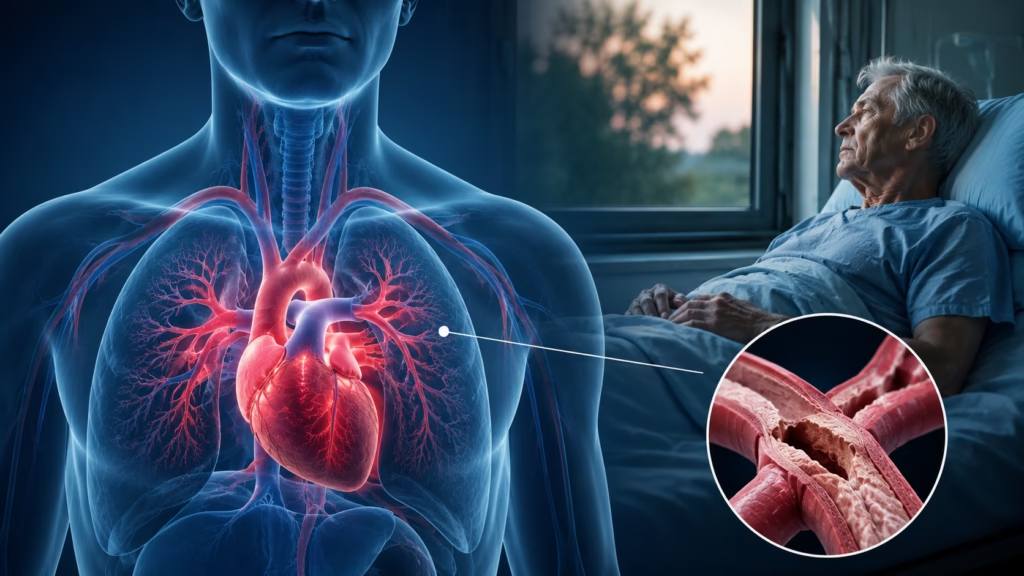
Pulmonary arterial hypertension is a progressive disease characterized by elevated pressure within the pulmonary arteries, the blood vessels responsible for carrying blood from the heart to the lungs. Over time, this increased pressure places substantial strain on the right side of the heart and may eventually lead to right-sided heart failure if not properly managed.
Because treatment options, prognosis, and reimbursement considerations often depend on the underlying cause of pulmonary hypertension, selecting the correct ICD-10-CM code is essential. Healthcare providers, coders, and billers must understand the distinctions between primary and secondary forms of pulmonary hypertension to ensure coding accuracy and compliance with current guidelines.
This comprehensive guide explores the ICD-10 codes associated with pulmonary arterial hypertension, explains how to distinguish between different categories of pulmonary hypertension, reviews documentation requirements, and provides practical coding examples to help improve coding accuracy and reduce claim denials.
Understanding Pulmonary Arterial Hypertension
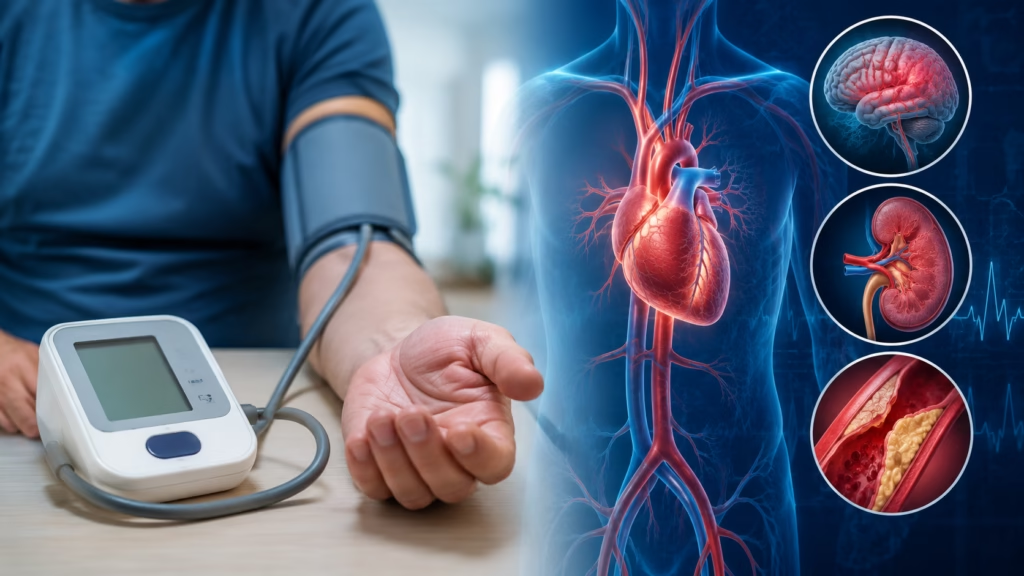
Pulmonary arterial hypertension is a condition in which blood pressure within the pulmonary arteries becomes abnormally elevated. Unlike systemic hypertension, which affects the arteries throughout the body, pulmonary hypertension specifically affects the circulation between the heart and the lungs.
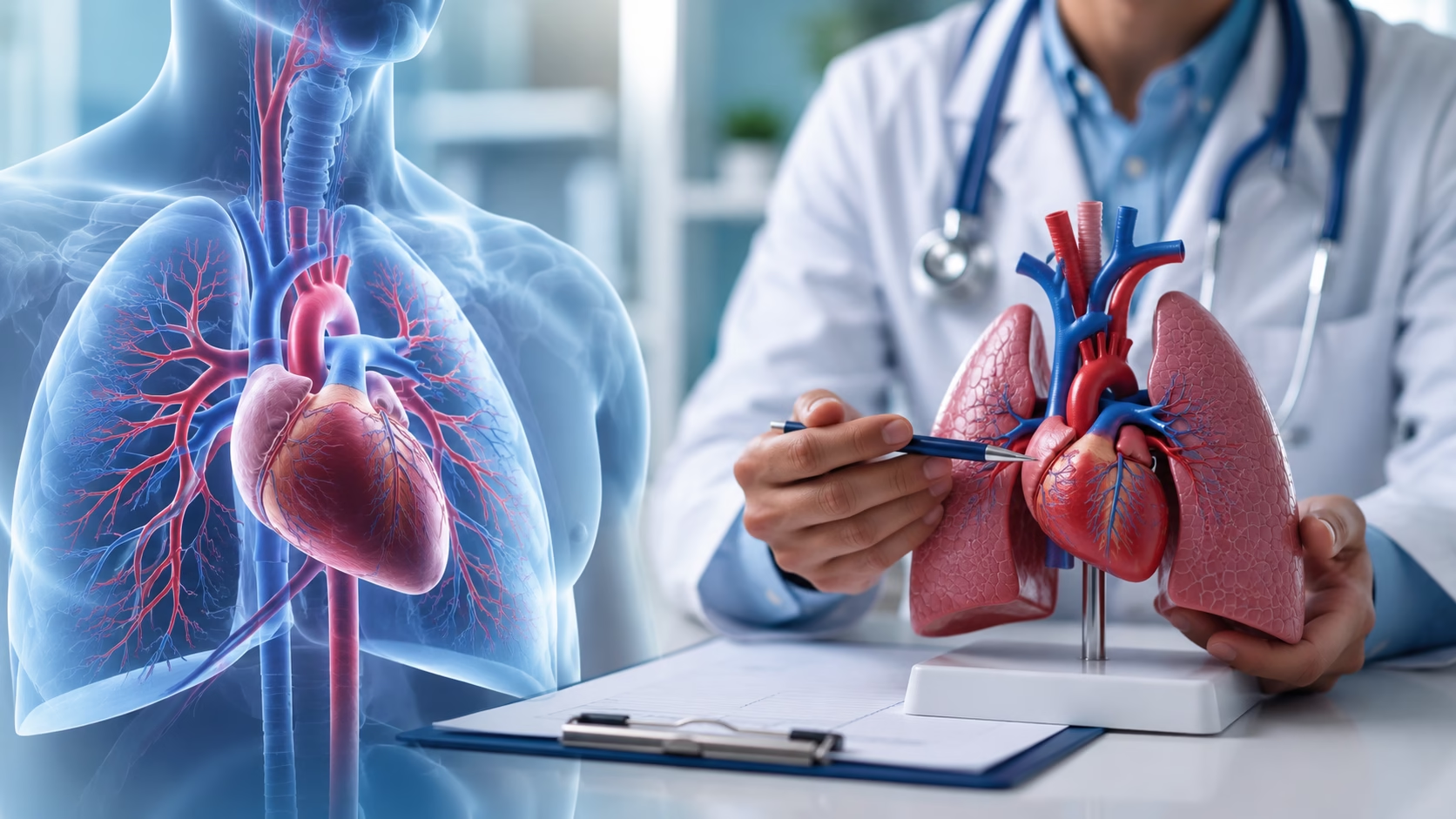
Under normal circumstances, the right ventricle pumps blood through the pulmonary arteries into the lungs, where oxygen exchange occurs. When these arteries become narrowed, stiffened, or obstructed, resistance to blood flow increases. As a result, the heart must work harder to push blood through the lungs.
Related Posts:


Over time, this increased workload can cause enlargement and weakening of the right ventricle, eventually leading to right-sided heart failure, also known as cor pulmonale.
Pulmonary arterial hypertension is considered a serious and potentially life-threatening disease that requires early diagnosis and ongoing management.
Common Symptoms of Pulmonary Arterial Hypertension
Many patients with pulmonary arterial hypertension experience symptoms that develop gradually and worsen over time. Because the early signs are often subtle and nonspecific, diagnosis is frequently delayed.
Common symptoms include:
- Shortness of breath, especially during physical activity
- Persistent fatigue and weakness
- Dizziness or lightheadedness
- Chest pain or chest pressure
- Fainting episodes (syncope)
- Rapid heartbeat or palpitations
- Swelling of the ankles, legs, or abdomen
- Reduced exercise tolerance
As the disease progresses, symptoms often become more severe and may significantly affect quality of life.
Why Accurate ICD-10 Coding Matters
Accurate coding extends far beyond reimbursement. Proper ICD-10 code assignment serves multiple important purposes within the healthcare system.
Supports Appropriate Reimbursement
Insurance carriers rely on diagnosis codes to determine medical necessity and approve treatments, procedures, medications, and hospital admissions. Incorrect coding may result in claim denials, payment delays, or audits.
Improves Clinical Documentation
Precise coding encourages thorough clinical documentation and helps ensure that the patient’s medical record accurately reflects disease severity and complexity.
Enhances Population Health Reporting
Healthcare organizations use coded data to track disease prevalence, monitor outcomes, and identify trends within patient populations.
Facilitates Research and Clinical Trials
Researchers frequently use diagnosis codes to identify patients eligible for studies involving pulmonary hypertension therapies and interventions.
Assists Risk Adjustment
Many quality reporting programs and value-based reimbursement models rely on diagnosis codes to assess patient complexity and predict healthcare resource utilization.
Because pulmonary hypertension often involves significant morbidity and specialized treatment, accurate coding is particularly important.
ICD-10-CM Classification of Pulmonary Hypertension
Pulmonary hypertension codes are primarily found within Category I27, which is located in Chapter 9 of the ICD-10-CM classification system covering diseases of the circulatory system.
The specific code selected depends on whether the condition is primary (idiopathic) or secondary to another disease process.
I27.0 – Primary Pulmonary Hypertension
Definition
ICD-10-CM code I27.0 is used for primary pulmonary hypertension.
Primary pulmonary hypertension is also known as idiopathic pulmonary arterial hypertension (IPAH). In this form of the disease, no identifiable underlying cause can be found despite comprehensive evaluation.
The condition may occur sporadically or as a result of inherited genetic mutations.
When to Use I27.0
Assign I27.0 when documentation indicates:
- Idiopathic pulmonary arterial hypertension
- Primary pulmonary hypertension
- Familial pulmonary arterial hypertension without a documented secondary cause
Example
A 42-year-old woman presents with progressive shortness of breath. Right heart catheterization confirms pulmonary arterial hypertension. Extensive testing reveals no connective tissue disease, congenital heart disease, thromboembolic disease, or other identifiable cause.
Correct ICD-10-CM Code: I27.0
I27.2 Category – Secondary Pulmonary Hypertension
When pulmonary hypertension develops because of another medical condition, the appropriate code falls within the I27.2 category.
Secondary pulmonary hypertension is more common than primary pulmonary hypertension and may arise from a variety of cardiovascular, pulmonary, autoimmune, infectious, or thromboembolic disorders.
The specific cause should be documented whenever possible.
I27.20 – Pulmonary Hypertension, Unspecified
This code is used when documentation confirms secondary pulmonary hypertension but does not specify the underlying cause.
Because unspecified codes provide less clinical detail, providers should be encouraged to document the underlying etiology whenever possible.
Example
A patient is diagnosed with pulmonary hypertension, but the physician has not yet determined the underlying cause.
Correct ICD-10-CM Code: I27.20
I27.21 – Secondary Pulmonary Arterial Hypertension
This code is used when pulmonary arterial hypertension occurs as a consequence of a known underlying condition affecting the pulmonary vasculature.
Common causes include:
- Systemic sclerosis
- Lupus
- Rheumatoid arthritis
- HIV infection
- Portal hypertension
- Congenital heart disease
- Connective tissue disorders
Example
A patient with systemic sclerosis develops pulmonary arterial hypertension confirmed through right heart catheterization.
Correct ICD-10-CM Code: I27.21
Additional codes should also be assigned for the underlying connective tissue disease.
I27.22 – Chronic Thromboembolic Pulmonary Hypertension (CTEPH)
This code is assigned when pulmonary hypertension results from chronic obstruction of pulmonary arteries by organized blood clots.
Chronic thromboembolic pulmonary hypertension develops when previous pulmonary emboli fail to resolve completely, leading to persistent vascular obstruction and increased pulmonary vascular resistance.
Example
A patient with multiple prior pulmonary emboli develops persistent pulmonary hypertension despite anticoagulation therapy.
Correct ICD-10-CM Code: I27.22
I27.29 – Other Secondary Pulmonary Hypertension
This code is used for secondary pulmonary hypertension that does not fit into another specified category.
Examples may include pulmonary hypertension resulting from:
- Drug-induced causes
- Toxin exposure
- Rare vascular disorders
- Other documented etiologies
Example
A patient develops pulmonary hypertension following prolonged exposure to an appetite suppressant known to increase pulmonary vascular resistance.
Correct ICD-10-CM Code: I27.29
Choosing the Correct ICD-10 Code
Selecting the appropriate code requires careful review of clinical documentation.
A useful approach is to ask the following questions:
Is the Pulmonary Hypertension Idiopathic?
If no underlying cause is identified after diagnostic evaluation, assign:
I27.0 – Primary pulmonary hypertension
Is There a Documented Secondary Cause?
If pulmonary hypertension is linked to another medical condition, select the most specific code from the I27.2 category.
Has the Physician Identified Chronic Thromboembolic Disease?
If pulmonary hypertension is caused by unresolved pulmonary emboli, assign:
I27.22 – Chronic thromboembolic pulmonary hypertension
Is Documentation Incomplete?
If the underlying cause has not yet been determined or documented, use:
I27.20 – Pulmonary hypertension, unspecified
Documentation Requirements for Accurate Coding
Proper code selection depends heavily on detailed provider documentation.
Documentation should clearly include:
Type of Pulmonary Hypertension
The provider should specify whether the condition is:
- Primary
- Idiopathic
- Familial
- Secondary
Underlying Cause
For secondary pulmonary hypertension, documentation should identify the specific condition responsible.
Examples include:
- Systemic sclerosis
- HIV infection
- Congenital heart disease
- Chronic pulmonary embolism
- Drug-induced disease
Diagnostic Evidence
Clinical records should include relevant findings from:
- Echocardiography
- Right heart catheterization
- Pulmonary function testing
- CT angiography
- Ventilation-perfusion scanning
- Cardiac MRI
Associated Conditions
Many patients with pulmonary hypertension also have:
- Right-sided heart failure
- Cor pulmonale
- Pulmonary fibrosis
- Chronic obstructive pulmonary disease
- Connective tissue disease
These conditions should be coded separately when documented.
Common Coding Mistakes to Avoid
Several coding errors occur frequently in pulmonary hypertension cases.
Using Unspecified Codes When More Specific Information Exists
If documentation identifies the underlying cause, a specific secondary pulmonary hypertension code should be assigned rather than I27.20.
Failing to Code Associated Conditions
Heart failure, pulmonary fibrosis, connective tissue disorders, and other related diagnoses often require separate coding.
Not Reviewing Diagnostic Reports
Diagnostic testing frequently contains important information that clarifies the etiology of pulmonary hypertension.
Assuming Etiology Without Documentation
Coders should never infer the cause of pulmonary hypertension unless the provider explicitly documents the relationship.
Best Practices for Coders and Providers
To improve coding accuracy:
- Encourage physicians to document primary versus secondary disease.
- Specify the underlying etiology whenever known.
- Include results from right heart catheterization and imaging studies.
- Capture all associated cardiovascular and pulmonary conditions.
- Review coding updates annually.
- Query providers when documentation lacks specificity.
These practices improve reimbursement accuracy and support quality reporting initiatives.
Conclusion
Pulmonary arterial hypertension is a complex and potentially life-threatening condition that requires careful clinical evaluation and precise ICD-10 coding. The correct code depends primarily on whether the disease is primary (idiopathic) or secondary to another medical condition.
In most cases, coders will choose among:
- I27.0 for primary pulmonary hypertension
- I27.21 for secondary pulmonary arterial hypertension
- I27.22 for chronic thromboembolic pulmonary hypertension
- I27.29 for other specified secondary pulmonary hypertension
- I27.20 when the cause remains unspecified
Accurate coding begins with detailed documentation, thorough review of clinical records, and careful adherence to ICD-10-CM guidelines. By selecting the most specific code available and capturing all relevant comorbidities, healthcare professionals can improve reimbursement accuracy, support clinical research, enhance population health reporting, and ultimately contribute to better patient care outcomes.
Disclaimer
This article is for educational purposes only and does not replace professional medical advice, diagnosis, or treatment. Seizures, severe headache, confusion, visual changes, or blood pressure readings in the hypertensive crisis range require urgent medical evaluation.