














Hypertension Dx Code
Hypertension, commonly referred to as high blood pressure, is one of the most frequently diagnosed chronic medical conditions worldwide. It affects...
By True Impact Health Editorial Team

Dr. Daniel HarringtonMedical Reviewer, True Impact Health
Medical doctor and clinical researcher focused on preventive medicine, chronic disease and clear, evidence-based health communication.
Reviewed this article on October 15, 2026.
View profile How we reviewUpdated on June 12, 2026 8 min read

Table of Contents
Introduction
Hypertension, commonly referred to as high blood pressure, is one of the most frequently diagnosed chronic medical conditions worldwide. It affects millions of individuals and remains a major contributor to cardiovascular disease, stroke, kidney failure, heart failure, and premature mortality. Because hypertension is so prevalent, healthcare providers, medical coders, and billing professionals encounter hypertension-related diagnoses on a daily basis.
Accurate diagnosis coding plays a critical role in healthcare delivery. Proper ICD-10 coding ensures that medical records accurately reflect the patient’s condition, supports appropriate reimbursement, improves communication among healthcare professionals, and contributes to public health reporting and quality measurement programs. Incorrect coding can lead to claim denials, compliance issues, inaccurate clinical data, and missed opportunities for appropriate treatment monitoring.
Understanding hypertension diagnosis codes is therefore essential for coders, billers, healthcare administrators, and clinicians. This guide provides a comprehensive overview of ICD-10 hypertension diagnosis codes, documentation requirements, common coding mistakes, and best practices for ensuring coding accuracy.
Understanding Hypertension and Its Clinical Significance
Before examining specific diagnosis codes, it is important to understand the clinical condition being coded.
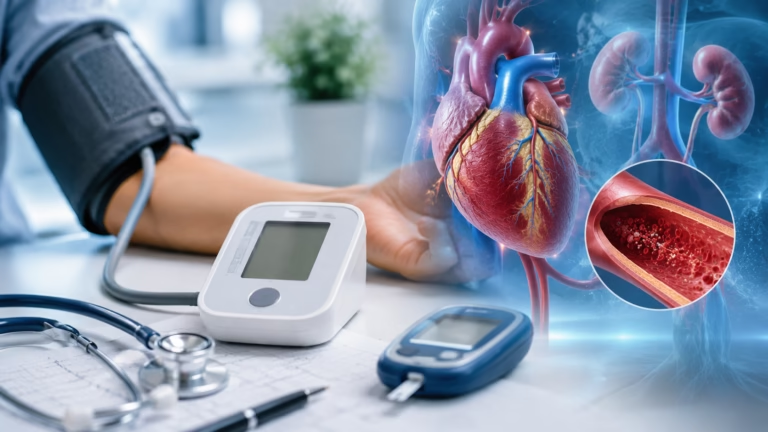
Hypertension occurs when blood pressure remains consistently elevated over time. Blood pressure measures the force exerted by circulating blood against arterial walls. When this pressure remains persistently high, the cardiovascular system experiences increased strain, which can gradually damage blood vessels and organs throughout the body.
Historically, hypertension was diagnosed when blood pressure readings consistently reached or exceeded 140/90 mm Hg. However, more recent guidelines from the American College of Cardiology and the American Heart Association define hypertension as blood pressure readings consistently equal to or greater than 130/80 mm Hg.
Many individuals with hypertension experience no symptoms during the early stages of the condition. For this reason, hypertension is often referred to as the “silent killer.” Without proper diagnosis and treatment, elevated blood pressure can silently damage the heart, kidneys, brain, and eyes over many years.
The consequences of uncontrolled hypertension can be severe. High blood pressure significantly increases the risk of coronary artery disease, heart attacks, congestive heart failure, stroke, peripheral arterial disease, chronic kidney disease, and cognitive decline. Because of these risks, accurate identification and documentation of hypertension are essential for both patient care and healthcare reporting.
From a coding perspective, hypertension diagnosis codes serve multiple purposes. They support reimbursement for healthcare services, facilitate population health analysis, contribute to quality reporting programs, and provide valuable data for healthcare research and public health initiatives.
Overview of ICD-10 Hypertension Diagnosis Codes
The ICD-10-CM classification system organizes hypertension into several categories based on the presence of complications, associated diseases, and underlying causes.
Selecting the appropriate code requires careful review of provider documentation and a clear understanding of the patient’s clinical condition.
Essential (Primary) Hypertension
The most frequently assigned hypertension diagnosis code is:
I10 – Essential (Primary) Hypertension
This code is used when a patient has hypertension without an identified secondary cause and without documentation linking hypertension to heart disease, chronic kidney disease, or other complications requiring combination coding.
Essential hypertension accounts for the vast majority of hypertension cases encountered in clinical practice. The exact cause is usually multifactorial and may involve genetic factors, aging, obesity, dietary habits, stress, and lifestyle influences.
Whenever documentation simply states “hypertension” without further specification or associated conditions, I10 is typically the appropriate code.
Hypertensive Heart Disease
Long-standing hypertension can place excessive strain on the heart. Over time, this increased workload may cause structural and functional changes, including left ventricular hypertrophy, cardiomegaly, and heart failure.
When documentation specifically identifies hypertensive heart disease, combination codes are required.
I11.0 – Hypertensive Heart Disease with Heart Failure
This code is assigned when a provider documents both hypertension and heart failure and indicates a causal relationship between the two conditions.
Examples include documentation such as:
- Hypertensive heart disease with heart failure
- Heart failure due to hypertension
- Hypertensive cardiomyopathy with CHF
When I11.0 is assigned, an additional code from the I50 category is generally required to identify the specific type of heart failure present, such as systolic heart failure, diastolic heart failure, or combined heart failure.
I11.9 – Hypertensive Heart Disease Without Heart Failure
This code is used when the provider documents hypertensive heart disease but does not indicate the presence of heart failure.
Examples include:
- Hypertensive cardiomegaly
- Hypertensive left ventricular hypertrophy
- Hypertensive heart disease without CHF
Accurate provider documentation is essential because the presence or absence of heart failure significantly affects code selection.
Hypertensive Chronic Kidney Disease
Hypertension is one of the leading causes of chronic kidney disease (CKD). Elevated blood pressure damages blood vessels within the kidneys, reducing their ability to filter waste and maintain fluid balance.
When hypertension and chronic kidney disease coexist, ICD-10 assumes a causal relationship unless the provider specifically states otherwise.
I12.0 – Hypertensive Chronic Kidney Disease with Stage 5 CKD or End-Stage Renal Disease
This code is used when hypertension is associated with severe kidney impairment, including:
- Stage 5 chronic kidney disease
- End-stage renal disease (ESRD)
An additional code from category N18 is required to identify the specific stage of kidney disease.
I12.9 – Hypertensive Chronic Kidney Disease with Stage 1 Through Stage 4 CKD or Unspecified CKD
This code applies when hypertension is associated with:
- Stage 1 CKD
- Stage 2 CKD
- Stage 3 CKD
- Stage 4 CKD
- Unspecified CKD
As with I12.0, an additional N18 code is necessary to capture the specific CKD stage.
Hypertensive Heart and Chronic Kidney Disease
Some patients develop both heart disease and kidney disease as a result of hypertension. In these cases, combination codes from category I13 are used.
These codes provide a more complete picture of the patient’s cardiovascular and renal complications.
I13.0
Used when the patient has:
- Hypertensive heart disease with heart failure
- Stage 1 through Stage 4 CKD or unspecified CKD
I13.2
Used when the patient has:
- Hypertensive heart disease with heart failure
- Stage 5 CKD or ESRD
I13.10 and I13.11
These codes are used when hypertensive heart and kidney disease are present without heart failure.
Additional codes remain necessary to specify heart failure type and CKD stage when applicable.
Secondary Hypertension
Unlike essential hypertension, secondary hypertension develops as a direct result of another medical condition.
Treating the underlying cause may improve or resolve elevated blood pressure.
I15.0 – Renovascular Hypertension
This code applies when hypertension results from narrowing or obstruction of the renal arteries.
Common causes include:
- Renal artery stenosis
- Fibromuscular dysplasia
I15.1 – Secondary Hypertension Due to Endocrine Disorders
This code is assigned when hormonal disorders cause elevated blood pressure.
Examples include:
- Hyperaldosteronism
- Cushing syndrome
- Pheochromocytoma
- Hyperthyroidism
I15.8 – Other Secondary Hypertension
This code covers secondary hypertension resulting from conditions not specifically classified elsewhere.
I15.9 – Secondary Hypertension, Unspecified
This code is used when secondary hypertension is documented but the specific cause has not been identified.
Hypertensive Crisis Codes
Hypertensive crises require immediate medical evaluation and treatment.
I16.0 – Hypertensive Urgency
Hypertensive urgency occurs when blood pressure becomes severely elevated but there is no evidence of acute organ damage.
Patients may experience symptoms such as headache, dizziness, or anxiety, but no immediate injury to the heart, brain, kidneys, or eyes is present.
I16.1 – Hypertensive Emergency
Hypertensive emergency involves severe blood pressure elevation accompanied by acute organ damage.
Potential complications include:
- Stroke
- Acute heart failure
- Myocardial infarction
- Aortic dissection
- Acute kidney injury
This condition requires immediate medical intervention.
I16.9 – Hypertensive Crisis, Unspecified
Used when documentation indicates a hypertensive crisis but does not specify urgency or emergency.
Documentation Requirements for Accurate Coding
Accurate coding depends entirely on accurate documentation.
Healthcare providers should clearly document:
- Type of hypertension
- Presence of heart disease
- Presence and stage of chronic kidney disease
- Evidence of heart failure
- Secondary causes of hypertension
- Hypertensive crises and associated complications
Coders should review all available clinical documentation, including physician notes, specialist consultations, laboratory results, imaging studies, and discharge summaries.
Whenever documentation is unclear or incomplete, a provider query should be initiated.
Common Coding Errors and How to Avoid Them
One of the most frequent mistakes is assigning I10 when documentation supports hypertensive heart disease or hypertensive kidney disease.
Another common error is failing to code the stage of chronic kidney disease. ICD-10 guidelines require both the hypertension code and the appropriate N18 CKD stage code.
Coders may also incorrectly distinguish hypertensive urgency from hypertensive emergency. Careful review of documentation for evidence of organ damage is essential.
Failure to identify secondary hypertension can also lead to coding inaccuracies. Providers should clearly document the underlying cause whenever known.
Regular coding education and periodic chart audits help reduce these errors.
Tips for Accurate Billing and Claims Submission
Accurate diagnosis coding improves claim acceptance and reimbursement outcomes.
Coders should:
- Use combination codes whenever appropriate.
- Follow ICD-10 sequencing rules.
- Include all required secondary diagnosis codes.
- Verify documentation supports code selection.
- Monitor annual coding updates.
- Review payer-specific requirements regularly.
Clean claims reduce denials, improve revenue cycle efficiency, and support compliance efforts.
Real-World Coding Example
Consider a patient with long-standing hypertension and newly diagnosed Stage 3A chronic kidney disease.
The provider documents:
“Essential hypertension with chronic kidney disease stage 3A.”
The correct coding would include:
- I12.9 – Hypertensive chronic kidney disease with stage 1 through stage 4 CKD or unspecified CKD
- N18.30 or appropriate Stage 3 CKD code depending on documentation specificity
Using I10 alone would be incorrect because the patient has documented chronic kidney disease associated with hypertension.
Conclusion
Hypertension diagnosis coding extends far beyond simply assigning code I10. The ICD-10-CM system contains numerous codes designed to capture the full spectrum of hypertension-related conditions, including hypertensive heart disease, chronic kidney disease, combined heart and kidney disease, secondary hypertension, and hypertensive crises.
Accurate coding requires detailed provider documentation, careful review of clinical records, and a thorough understanding of ICD-10 guidelines. Proper code selection supports reimbursement, strengthens clinical reporting, improves population health tracking, and ultimately contributes to better patient care.
Healthcare organizations that invest in coder education, provider documentation improvement, and routine coding audits are better positioned to achieve compliance, reduce claim denials, and maintain high-quality clinical data. By understanding hypertension diagnosis codes and applying them correctly, coders and healthcare professionals can ensure that every patient’s clinical story is accurately represented in the medical record.
Disclaimer
This article is for educational purposes only and does not replace professional medical advice, diagnosis, or treatment. Seizures, severe headache, confusion, visual changes, or blood pressure readings in the hypertensive crisis range require urgent medical evaluation.
Was this page helpful?
Thanks for your feedback! What could we improve?
Thank you! Your feedback helps us improve our articles.
Medically reviewed by
Dr. Daniel HarringtonMedical doctor and clinical researcher focused on preventive medicine, chronic disease and clear, evidence-based health communication.
True Impact Health articles are written by our editorial team and based on reliable sources such as public health agencies, clinical guidelines and peer-reviewed research. This article has been checked by a doctor on our review panel. Read our editorial process.
This content is for general information and is not a substitute for professional medical advice, diagnosis or treatment.