










How to Acoustically Treat a Room
Whether you are building a home recording studio, creating a dedicated home theater, setting up a podcasting space, or simply looking to improve the sound...
By True Impact Health Editorial Team

Dr. Daniel HarringtonMedical Reviewer, True Impact Health
Medical doctor and clinical researcher focused on preventive medicine, chronic disease and clear, evidence-based health communication.
Reviewed this article on October 15, 2026.
View profile How we reviewUpdated on June 13, 2026 8 min read
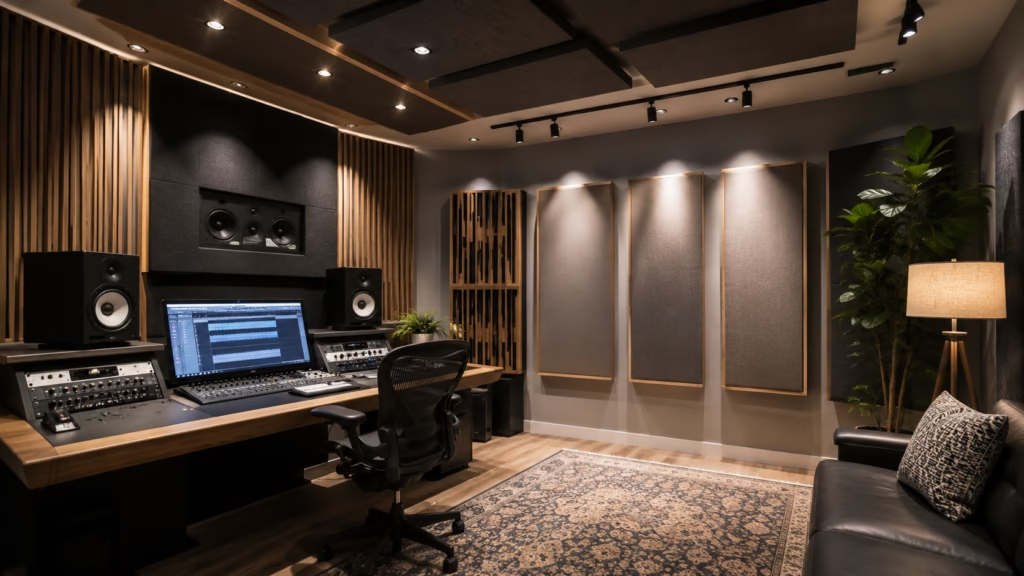
Table of Contents
Introduction
Whether you are building a home recording studio, creating a dedicated home theater, setting up a podcasting space, or simply looking to improve the sound quality in your living room, acoustic treatment can dramatically enhance your listening experience. Many people invest heavily in speakers, microphones, amplifiers, and other audio equipment, only to overlook the most important component of all: the room itself.
Even the highest-quality audio equipment can perform poorly in a room with problematic acoustics. Excessive echoes, unwanted reverberation, flutter echoes, and uneven bass response can make music sound muddy, speech difficult to understand, and recordings unprofessional. Fortunately, achieving better acoustics does not necessarily require expensive renovations or professional studio construction. By understanding how sound behaves within a room and strategically applying acoustic treatments, you can significantly improve sound clarity, balance, and accuracy.
This comprehensive guide explains how to evaluate your room, identify acoustic problems, select appropriate treatment materials, and place them effectively to create a more acoustically balanced environment.
Understanding Room Acoustics
Before applying any treatment, it is important to understand how sound interacts with a room. Whenever sound is produced, it travels outward in all directions until it encounters surfaces such as walls, ceilings, floors, furniture, and windows. Some of the sound is absorbed, while some is reflected back into the room.
In untreated spaces, these reflections can interfere with the original sound. When reflected sound reaches your ears shortly after the direct sound, it can create blurring, phase issues, and reduced clarity. Low-frequency sounds, commonly referred to as bass frequencies, are particularly difficult to control because they tend to accumulate in corners and along room boundaries.
The goal of acoustic treatment is not to eliminate sound entirely or create a completely silent room. Instead, the objective is to control reflections, reduce unwanted resonance, and create a balanced listening environment where sound remains clear, natural, and accurate.
Assessing Your Room’s Acoustic Problems
The first step in acoustic treatment is identifying the specific issues affecting your space. Every room behaves differently depending on its size, shape, construction materials, and furnishings.
One of the simplest ways to evaluate a room is through the clap test. Stand in various locations throughout the room and clap your hands sharply. Listen carefully to how the sound behaves afterward. If you hear a metallic ringing, fluttering effect, or prolonged echo, these are signs that reflections are bouncing repeatedly between hard surfaces.
You should also spend time listening to familiar music or speech recordings in the room. Pay attention to whether vocals sound clear or distant, whether bass notes seem overwhelming in certain locations, or whether some frequencies appear louder than others. These observations often reveal acoustic problems that require treatment.
For more precise analysis, measurement software such as Room EQ Wizard (REW) can be used in conjunction with a measurement microphone. This combination allows users to visualize frequency response, reverberation times, and room modes. Although this approach requires additional equipment, it provides valuable data for designing an effective treatment plan.
Common issues identified during assessment include flutter echoes between parallel walls, excessive reverberation that causes muddiness, and uneven bass response resulting from low-frequency buildup in room corners.
Understanding Acoustic Treatment Components
Effective acoustic treatment typically involves a combination of absorption, bass management, and diffusion. Each treatment serves a specific purpose and addresses different frequency ranges.
Acoustic Absorption Panels
Acoustic panels are among the most common treatment solutions. Their primary purpose is to absorb sound energy and reduce reflections. They are particularly effective at controlling midrange and high-frequency sounds, which are responsible for much of the echo and reverberation heard in untreated rooms.
Most high-quality acoustic panels are constructed using dense materials such as mineral wool, fiberglass, or specialized acoustic insulation. These materials convert sound energy into heat energy, reducing the amount of reflected sound that remains in the room.
By strategically placing absorption panels on walls and ceilings, listeners can improve speech intelligibility, enhance stereo imaging, and create a more controlled listening environment.
Bass Traps
Low frequencies behave differently from mid and high frequencies. Because bass wavelengths are much longer, they tend to accumulate in corners where multiple room surfaces intersect. This buildup often creates boomy bass, uneven frequency response, and standing waves.
Bass traps are specialized acoustic treatments designed specifically to absorb low-frequency energy. They are generally thicker and denser than standard acoustic panels and are commonly installed in vertical room corners.
Effective bass trapping is one of the most impactful improvements that can be made to a listening room or recording space. By reducing low-frequency buildup, bass traps create a tighter, more balanced sound and improve overall accuracy.
Diffusers
While absorption removes sound energy, diffusion redistributes it. Diffusers scatter sound waves in multiple directions, reducing strong reflections without making a room sound excessively dead or lifeless.
Diffusion is particularly useful in listening rooms, home theaters, and larger studios where maintaining a sense of spaciousness is important. Rather than absorbing all reflected sound, diffusers preserve acoustic energy while preventing concentrated reflections that can interfere with clarity.
Popular diffuser designs include quadratic residue diffusers (QRDs), skyline diffusers, and polycylindrical diffusers. These devices are often installed on rear walls or ceilings where reflection management is needed without excessive absorption.
Strategic Placement of Acoustic Treatments
The effectiveness of acoustic treatment depends as much on placement as it does on material quality. Even premium acoustic products will perform poorly if installed in the wrong locations.
Treating First Reflection Points
First reflection points are areas where sound from speakers reflects off nearby surfaces before reaching the listener. These reflections can interfere with the direct sound and reduce stereo imaging accuracy.
To locate side-wall reflection points, sit in your primary listening position while another person moves a mirror along the wall. Wherever you can see the speaker reflected in the mirror is a location where an acoustic panel should be installed.
The ceiling often contains important reflection points as well. Acoustic ceiling panels, commonly called acoustic clouds, can significantly reduce overhead reflections and improve overall clarity.
Installing Bass Traps in Corners
Corners are the most effective locations for bass traps because low-frequency energy naturally accumulates there. Ideally, bass traps should extend from floor to ceiling for maximum effectiveness.
If budget limitations prevent full-room treatment, prioritize the front corners behind the speakers first. Additional corner treatment can then be added gradually as resources allow.
Proper bass trapping often produces some of the most dramatic acoustic improvements, particularly in small rooms where bass problems tend to be more severe.
Treating the Rear Wall
The wall behind the listening position plays an important role in room acoustics. Strong reflections from this surface can create comb filtering and reduce clarity.
Many acousticians recommend combining absorption and diffusion on the rear wall. This approach helps control reflections while maintaining a natural sense of space and openness.
Large bookshelves filled with books of varying depths can also serve as effective low-cost diffusers in many home environments.
DIY Versus Commercial Acoustic Treatment
When planning a treatment project, many people must decide between building their own acoustic panels and purchasing commercially manufactured products.
Commercial acoustic treatments offer several advantages. They typically provide professionally tested performance specifications, attractive finishes, and consistent manufacturing quality. For individuals seeking a polished appearance and predictable results, commercial solutions may be ideal.
However, high-quality acoustic treatment can become expensive when treating an entire room. As a result, many enthusiasts choose to build their own panels.
DIY acoustic panels are often constructed using wooden frames filled with mineral wool or rigid fiberglass insulation and wrapped in acoustically transparent fabric. When built correctly, DIY panels can perform similarly to commercial products at a fraction of the cost.
A common design involves constructing a 2-foot by 4-foot wooden frame, filling it with 4 to 6 inches of mineral wool, and covering it with breathable fabric. These panels can then be mounted on walls or ceilings using standard hardware.
For many homeowners and audio enthusiasts, DIY treatment offers an excellent balance between performance and affordability.
Additional Ways to Improve Room Acoustics
Beyond dedicated acoustic products, several everyday household items can contribute to better acoustics.
Furniture placement has a surprisingly large impact on sound quality. Sofas, upholstered chairs, and bookshelves can absorb or diffuse sound naturally. Strategically positioning furniture can reduce reflections and improve room balance.
Hard flooring surfaces often reflect significant amounts of high-frequency energy. Adding a large area rug beneath the listening position can help reduce these reflections and create a more comfortable acoustic environment.
Heavy curtains placed over windows can also reduce reflections while offering a modest degree of noise isolation. This approach is particularly useful in rooms with large glass surfaces.
After installing treatment, it is beneficial to remeasure or reevaluate the room. Small adjustments in panel placement can sometimes produce substantial improvements. Acoustic treatment is often an iterative process where gradual refinements lead to optimal results.
Acoustic Treatment Versus Soundproofing
Many people mistakenly assume acoustic treatment and soundproofing are the same thing. In reality, they address different challenges.
Acoustic treatment improves sound quality within a room by controlling reflections, reverberation, and frequency balance. It enhances what you hear inside the space.
Soundproofing, on the other hand, focuses on preventing sound from entering or leaving a room. Achieving effective soundproofing typically requires structural modifications such as adding mass-loaded barriers, decoupling walls, sealing gaps, and upgrading doors and windows.
Although some treatment measures may slightly reduce sound transmission, true soundproofing is a separate and often more expensive undertaking.
Conclusion
Acoustic treatment is one of the most effective investments you can make in any listening, recording, or entertainment space. Even modest improvements can dramatically enhance sound clarity, stereo imaging, speech intelligibility, and overall listening enjoyment.
The process begins with assessing your room’s unique acoustic challenges and understanding how sound behaves within the space. From there, a combination of absorption panels, bass traps, and diffusers can be strategically placed to control reflections and create a balanced sonic environment.
Whether you choose professionally manufactured products or build your own DIY solutions, the key to success lies in thoughtful placement and gradual refinement. Remember that acoustic treatment is not about eliminating all reflections but rather creating a controlled and natural listening experience.
By taking a systematic approach and focusing on the most critical problem areas first, you can transform an ordinary room into a space that delivers clear, accurate, and enjoyable sound for years to come.
Disclaimer
This article is for educational purposes only and does not replace professional medical advice, diagnosis, or treatment. Seizures, severe headache, confusion, visual changes, or blood pressure readings in the hypertensive crisis range require urgent medical evaluation.
Was this page helpful?
Thanks for your feedback! What could we improve?
Thank you! Your feedback helps us improve our articles.
Medically reviewed by
Dr. Daniel HarringtonMedical doctor and clinical researcher focused on preventive medicine, chronic disease and clear, evidence-based health communication.
True Impact Health articles are written by our editorial team and based on reliable sources such as public health agencies, clinical guidelines and peer-reviewed research. This article has been checked by a doctor on our review panel. Read our editorial process.
This content is for general information and is not a substitute for professional medical advice, diagnosis or treatment.