












Alternating Tylenol and Motrin for Fever in Child
Learn how to safely alternate Tylenol and Motrin for a child with a fever, avoid dosing errors, and recognize warning signs that require a doctor.
By True Impact Health Editorial Team

Medical graduate of Girne American University with a focus on patient-centred care, clinical assessment and preventive health.
Reviewed this article on October 10, 2026.
View profile How we reviewUpdated on October 9, 2026 5 min read

Table of Contents
Quick answer
Alternating Tylenol and Motrin can be safe if recommended by a healthcare provider, but it carries a higher risk of dosing errors. Healthcare providers usually advise starting with a single medication. Always dose strictly by your child's weight rather than age, and carefully track the timing of every dose to prevent an accidental overdose.
Introduction
A fever in your child can be stressful, especially when it spikes high or lingers for days. While fever is often the body’s natural defense against infection, parents want safe, effective ways to bring comfort. You may have heard about alternating Tylenol (acetaminophen) and Motrin (ibuprofen) to control fever, this strategy can work well when done correctly. In this post, we’ll explore why and how healthcare providers recommend alternating these medications, discuss safety tips, and outline when to seek medical attention.
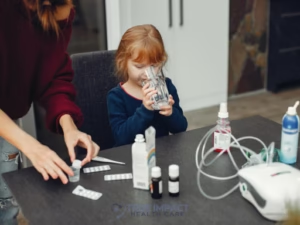
Understanding Fever in Children
What Is a Fever?
• A fever is typically defined as a body temperature above 100.4°F (38°C).
• It signals the immune system is fighting an infection, viral or bacterial.
Why Fevers Happen
• Activation of immune cells releases pyrogens, which reset the hypothalamus thermostat higher.
• Increased temperature creates an environment less hospitable to pathogens.
When to Treat a Fever
• Comfort and hydration are top priorities.
• Treat fevers above 102°F (38.9°C) or if your child is very uncomfortable, irritable, or not eating/drinking.
• Fever alone rarely causes harm, focus on how your child looks and acts.
Tylenol vs. Motrin – How They Work

Tylenol (Acetaminophen)
• Mechanism: Lowers fever by acting on the hypothalamus.
• Onset: Around 30–60 minutes.
• Duration: 4–6 hours.
• Pros: Gentler on the stomach, safe for younger infants (≥2 months).
• Cons: Overdose risk if dosing guidelines aren’t followed.
Motrin (Ibuprofen)
• Mechanism: Reduces fever and inflammation by blocking prostaglandins.
• Onset: Around 30 minutes.
• Duration: 6–8 hours.
• Pros: Longer-lasting fever control, anti-inflammatory benefits.
• Cons: Can irritate stomach lining; not recommended for infants <6 months or dehydrated children.
The Alternating Regimen Explained

Why Alternate?
• Sustains fever control by tapping into two different mechanisms.
• Prevents temperature rebound when a single medication wears off.
General Guidelines
- Start with one medication (e.g., Tylenol).
- Wait 3–4 hours, then give the other (e.g., Motrin).
- Continue alternating every 3–4 hours as needed, but do not exceed dosing limits.
Sample Schedule for a 2–5 Year-Old (Weight: 24–48 lbs)
Hour 0: Tylenol (10–15 mg/kg)
Hour 4: Motrin (5–10 mg/kg)
Hour 8: Tylenol
Hour 12: Motrin
Important Tips
• Always calculate dose by weight, not age.
• Keep a written log: time, medication, dose.
• Never exceed the maximum daily dose:
– Acetaminophen: 75 mg/kg/day (up to 4 doses in 24 hours)
– Ibuprofen: 40 mg/kg/day (up to 4 doses in 24 hours)
Safety Considerations and Best Practices
- Consult Your Pediatrician
– Before starting any regimen, especially if your child has chronic conditions. - Use the Proper Measuring Device
– Use oral syringes or dosing cups provided with medication. - Watch for Dehydration
– Offer frequent fluids: water, breast milk, formula, or electrolyte solutions. - Read Labels Carefully
– Avoid giving other over-the-counter cold/flu products that contain acetaminophen or ibuprofen. - Monitor for Side Effects
– Tylenol: Rarely causes liver damage if dosed properly.
– Motrin: Watch for stomach pain, vomiting, or dark stools.
When to Seek Medical Attention

Even with proper dosing, certain warning signs mean you should contact a healthcare provider:
• Fever lasting more than 72 hours despite treatment
• Temperature ≥104°F (40°C)
• Signs of dehydration (few wet diapers, dry mouth, sunken eyes)
• Severe headache, stiff neck, or rash
• Lethargy, difficulty waking, or inconsolability
• Seizures or repeated vomiting
Conclusion
Alternating Tylenol and Motrin can be a safe, effective way to manage fever in children, provided you follow dosing guidelines, track administration times carefully, and stay vigilant for side effects. Remember, fever management is about comfort and hydration. Always consult your pediatrician before starting an alternating regimen, especially for infants and children with underlying health issues. With the right approach, you’ll help your child rest easier, recover faster, and get back to their playful selves soon.
Disclaimer: This post is for informational purposes only and does not replace professional medical advice. Always follow the guidance of your child’s healthcare provider.
When to see a doctor
- Any fever in an infant younger than 3 months old.
- Signs of extreme lethargy, difficulty waking up, or unresponsiveness.
- Difficulty breathing, a stiff neck, or an unexplained new rash.
- Fever that lasts more than three days or does not respond to medication.
- Signs of severe dehydration, such as no wet nappies or diapers for several hours.
- Call the local emergency number immediately if the child has a seizure or trouble breathing.
If symptoms are severe or come on suddenly, call your local emergency number.
Frequently asked questions
Can I give Tylenol and Motrin at the exact same time?
Giving both medications together is generally not recommended unless a doctor explicitly directs it. Combining them increases the risk of giving an incorrect dose or causing stomach and kidney irritation. It is usually safer to use one medication consistently or space them out as advised by your paediatrician.
What should I do if I accidentally double dose my child?
Check the exact amount given and write down the time. Contact your local poison control centre, paediatrician, or emergency services immediately for instructions. Do not wait for symptoms to appear, and avoid giving any further medications until you have spoken directly with a healthcare professional.
Should I wake my sleeping child to give fever medicine?
In most cases, you should let a sleeping child rest. Sleep helps the immune system fight infection. The primary goal of fever medication is to keep your child comfortable, not to force a normal temperature. If they are resting comfortably, there is usually no need to disturb them.
Is ibuprofen safe if my child is vomiting or not drinking?
Ibuprofen is not recommended if your child is dehydrated or vomiting frequently. In a dehydrated state, ibuprofen can put extra stress on the kidneys and irritate the stomach lining. In these situations, contact your doctor and ask if acetaminophen is a safer alternative until fluids are tolerated.
Sources and further reading
Was this page helpful?
Thanks for your feedback! What could we improve?
Thank you! Your feedback helps us improve our articles.
Medically reviewed by
Dr. Oluwabusola Stella OkeMedical graduate of Girne American University with a focus on patient-centred care, clinical assessment and preventive health.
True Impact Health articles are written by our editorial team and based on reliable sources such as public health agencies, clinical guidelines and peer-reviewed research. This article has been checked by a doctor on our review panel. Read our editorial process.
This content is for general information and is not a substitute for professional medical advice, diagnosis or treatment.