















Intractable Congestive Heart Failure
Congestive heart failure (CHF) is a chronic and progressive condition that affects millions of people worldwide. Advances in medical therapy, device...

Table of Contents
Introduction
Congestive heart failure (CHF) is a chronic and progressive condition that affects millions of people worldwide. Advances in medical therapy, device technology, and patient education have significantly improved outcomes for many individuals living with heart failure. However, some patients continue to experience worsening symptoms despite receiving the best available treatments. This advanced and difficult-to-manage form of heart failure is known as intractable congestive heart failure.
Intractable CHF represents one of the most challenging stages of cardiovascular disease. Patients often struggle with persistent breathlessness, recurrent hospitalizations, severe fatigue, and declining quality of life. Standard therapies that once controlled symptoms may no longer provide adequate relief, requiring healthcare providers to consider more advanced interventions and comprehensive care strategies.
Understanding what makes congestive heart failure intractable is essential for patients, caregivers, and healthcare professionals alike. Early recognition, aggressive management, and a multidisciplinary approach can help improve symptom control, reduce hospital admissions, and enhance overall well-being. This guide explores the causes, diagnosis, treatment options, and supportive care strategies that play a crucial role in managing complex heart failure cases.
Understanding Intractable Congestive Heart Failure
Congestive heart failure occurs when the heart becomes unable to pump blood efficiently enough to meet the body’s needs. As a result, fluid accumulates in the lungs, abdomen, and other tissues, leading to symptoms such as shortness of breath, swelling, and fatigue.
Intractable congestive heart failure refers to an advanced stage of the disease in which symptoms persist despite optimal treatment. Patients continue to experience significant limitations in daily activities even though they are receiving evidence-based medications and appropriate lifestyle interventions. In many cases, healthcare providers have already optimized standard therapies, yet the disease continues to progress.
This condition is sometimes referred to as refractory heart failure because it resists conventional treatment approaches. The heart’s ability to compensate becomes increasingly limited, and symptoms become more difficult to control. As a result, patients frequently require hospitalization for worsening fluid overload, breathing difficulties, or other complications.
Unlike earlier stages of heart failure, intractable CHF often requires specialized care, advanced therapies, and close monitoring by multidisciplinary healthcare teams.
Key Features of Intractable Congestive Heart Failure
Several clinical characteristics distinguish intractable CHF from more manageable forms of heart failure.
One of the most notable features is the persistence of severe symptoms despite appropriate treatment. Patients often remain classified as New York Heart Association (NYHA) Class III or Class IV, meaning they experience significant limitations during physical activity or even symptoms while at rest.
Diuretic resistance is another hallmark of advanced heart failure. Diuretics are medications designed to help the body eliminate excess fluid. In intractable CHF, patients may require increasingly higher doses of these medications while achieving diminishing benefits. Fluid retention becomes difficult to control, leading to ongoing swelling and congestion.
As the condition progresses, evidence of end-organ dysfunction may develop. Reduced blood flow and chronic congestion can impair kidney function, cause liver enlargement, and contribute to metabolic abnormalities.
Functional capacity also declines substantially. Activities that were once routine, such as walking short distances, climbing stairs, or performing household tasks, become increasingly difficult and exhausting.
Symptoms of Intractable Congestive Heart Failure
The symptoms of intractable CHF are often severe and significantly affect daily life.
Shortness of breath is one of the most common complaints. Patients may experience breathlessness during minimal physical activity or even while resting. Many individuals struggle to lie flat because fluid accumulation in the lungs worsens breathing when reclining. This condition, known as orthopnea, often requires sleeping with multiple pillows or in a reclined position.
Fatigue and weakness become increasingly debilitating. Because the heart cannot deliver adequate oxygen-rich blood throughout the body, muscles and organs receive less energy, resulting in persistent exhaustion.
Fluid retention is another major symptom. Swelling may occur in the legs, ankles, feet, abdomen, and sometimes even the hands. Weight gain due to fluid accumulation can happen rapidly and may signal worsening heart failure.
Many patients experience frequent coughing, wheezing, and a sensation of chest congestion due to fluid buildup within the lungs. Appetite may decrease, and unintended weight loss can occur as advanced heart failure progresses.
Mental health challenges are also common. Anxiety, depression, and emotional distress frequently accompany the physical burden of advanced heart disease.
Diagnostic Evaluation
Accurately diagnosing intractable congestive heart failure requires a thorough clinical evaluation and comprehensive testing.
The diagnostic process often begins with a detailed physical examination. Healthcare providers assess for signs of fluid overload, including jugular venous distension, swelling of the lower extremities, enlarged liver, and abnormal lung sounds such as crackles that suggest pulmonary congestion.
Blood tests play a critical role in evaluating disease severity. Measurement of natriuretic peptides, including BNP (B-type natriuretic peptide) and NT-proBNP, helps assess the degree of cardiac stress and congestion. Kidney function tests, liver enzymes, electrolyte levels, and complete blood counts provide additional information about organ involvement and treatment safety.
Echocardiography remains one of the most important diagnostic tools. This ultrasound examination provides detailed information about heart structure and function, including ejection fraction, chamber size, valve abnormalities, and overall cardiac performance.
Chest X-rays help identify pulmonary congestion, enlarged heart size, and pleural effusions. In selected cases, advanced imaging techniques such as cardiac MRI or CT scanning may be necessary to evaluate structural abnormalities or specific underlying causes.
For particularly complex cases, right heart catheterization may be performed. This procedure directly measures pressures within the heart and pulmonary circulation, allowing clinicians to tailor advanced therapies more precisely.
Causes and Risk Factors
Several factors contribute to the progression of stable heart failure into an intractable state.
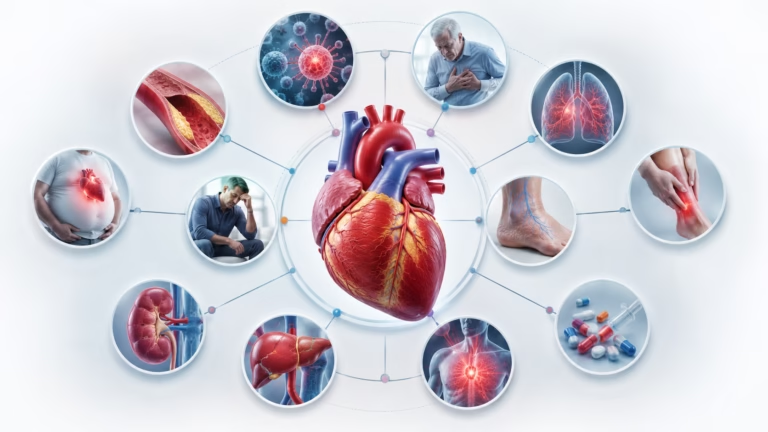
Coronary artery disease remains one of the leading causes. Ongoing ischemia, recurrent heart attacks, or extensive damage to the heart muscle can progressively weaken cardiac function.
Longstanding uncontrolled hypertension also plays a major role. Chronic pressure overload forces the heart to work harder, leading to structural remodeling, enlargement, and eventual dysfunction.
Cardiac arrhythmias such as atrial fibrillation or ventricular tachycardia can further compromise heart performance. These abnormal rhythms reduce the efficiency of blood circulation and often worsen symptoms.
Multiple chronic health conditions frequently coexist with heart failure and complicate management. Diabetes, chronic kidney disease, chronic obstructive pulmonary disease (COPD), obesity, and sleep apnea can all accelerate disease progression.
Medication nonadherence is another important factor. Complex treatment regimens, side effects, financial barriers, or misunderstandings about therapy may reduce treatment effectiveness and contribute to recurrent decompensation.
Conventional Treatment Approaches
Even in advanced heart failure, optimizing guideline-directed medical therapy remains the foundation of treatment.
Diuretics continue to play a central role in controlling fluid overload. Loop diuretics such as furosemide, bumetanide, or torsemide are commonly used. In patients with diuretic resistance, thiazide diuretics may be added to enhance fluid removal.
Neurohormonal blockade is another essential component of therapy. Medications such as ACE inhibitors, angiotensin receptor blockers (ARBs), angiotensin receptor-neprilysin inhibitors (ARNIs), beta-blockers, and mineralocorticoid receptor antagonists help reduce disease progression and improve survival.
For patients who cannot tolerate certain medications, vasodilator combinations such as hydralazine and nitrates may provide symptom relief and cardiovascular benefits.
Device-based therapies are frequently considered. Implantable cardioverter-defibrillators (ICDs) reduce the risk of sudden cardiac death, while cardiac resynchronization therapy (CRT) can improve heart function in patients with electrical conduction abnormalities.
Despite these treatments, some patients continue to experience progressive symptoms and require advanced interventions.
Advanced Therapies for Intractable Cases
When standard treatments no longer provide adequate symptom control, advanced therapies may become necessary.
Inotropic Support
Intravenous inotropic medications such as dobutamine and milrinone increase the heart’s pumping strength and improve circulation. These medications are often used during severe decompensation or as a bridge to more definitive therapies.
While inotropes can provide temporary symptom relief, long-term use is associated with increased risks, including arrhythmias and higher mortality rates.
Mechanical Circulatory Support
Mechanical circulatory support devices provide assistance to the failing heart.
Intra-aortic balloon pumps may be used temporarily to reduce cardiac workload and improve blood flow. Ventricular assist devices (VADs) can provide longer-term support by helping one or both ventricles pump blood effectively.
For patients experiencing severe cardiogenic shock, extracorporeal membrane oxygenation (ECMO) may provide temporary life-saving support while other treatment decisions are made.
Heart Transplantation
Heart transplantation remains the gold standard treatment for carefully selected patients with end-stage heart failure.
Transplantation can dramatically improve survival and quality of life. However, donor shortages, strict eligibility criteria, and the need for lifelong immunosuppressive therapy limit its availability.
Emerging Therapies
Several innovative treatments continue to expand options for advanced heart failure patients.
Cardiac contractility modulation delivers electrical impulses that improve heart muscle performance. Baroreceptor activation therapy targets the autonomic nervous system to reduce excessive sympathetic activity. Renal denervation and other experimental approaches are currently being investigated for their potential benefits.
Lifestyle Modifications and Supportive Care
Medical treatment alone is not sufficient for managing intractable CHF. Comprehensive supportive care is equally important.
Sodium restriction helps minimize fluid retention. Many patients benefit from limiting sodium intake to approximately 1.5 to 2 grams daily. Fluid restrictions may also be recommended to prevent worsening congestion.
Nutritional counseling helps patients maintain adequate caloric intake while avoiding excessive sodium and fluid consumption. Malnutrition is common in advanced heart failure and should be addressed proactively.
Supervised exercise rehabilitation programs can improve functional capacity and quality of life. Even low-intensity physical activity may provide meaningful benefits when appropriately tailored to the patient’s condition.
Psychological support is essential. Depression and anxiety frequently accompany advanced heart failure and can negatively affect treatment adherence and outcomes. Counseling, support groups, and mental health services often play an important role in comprehensive care.
Palliative care should be introduced early rather than reserved for the final stages of illness. Palliative specialists help manage symptoms, facilitate difficult conversations, and ensure that treatment decisions align with patient values and goals.
Monitoring and Follow-Up
Close monitoring helps identify early signs of worsening heart failure and prevent unnecessary hospitalizations.
Patients are often encouraged to monitor their weight daily. Sudden weight gain may indicate fluid accumulation and require prompt intervention.
Regular laboratory testing allows healthcare providers to monitor kidney function, electrolyte levels, and cardiac biomarkers while adjusting medications safely.
Telemedicine and remote monitoring technologies have become increasingly valuable. Devices such as implantable pulmonary artery pressure monitors can detect worsening congestion before symptoms become severe.
Multidisciplinary heart failure clinics provide coordinated care involving cardiologists, nurses, pharmacists, dietitians, physical therapists, and social workers. This collaborative approach has been shown to improve outcomes and reduce hospital readmissions.
Prognosis and Quality of Life
The prognosis of intractable congestive heart failure varies widely depending on age, underlying cause, response to treatment, and availability of advanced therapies.
Although advanced heart failure remains a serious condition, many patients can achieve meaningful symptom relief and improved quality of life through comprehensive management. Early recognition, aggressive treatment, and individualized care plans help maximize function and comfort.
Equally important is ensuring that patients remain active participants in their care. Education, self-monitoring, and open communication with healthcare providers empower individuals to manage symptoms more effectively and make informed decisions about treatment options.
Conclusion
Intractable congestive heart failure represents one of the most challenging forms of cardiovascular disease, characterized by persistent symptoms, recurrent hospitalizations, and resistance to conventional treatment. Despite these challenges, significant advances in medical therapy, device technology, and multidisciplinary care have created new opportunities to improve outcomes and quality of life.
Successful management requires a comprehensive approach that combines optimized medications, advanced interventions when appropriate, lifestyle modifications, psychological support, and palliative care integration. Continuous monitoring and collaboration among healthcare professionals further enhance the ability to prevent complications and reduce hospital admissions.
For patients and caregivers facing intractable CHF, it is important to remember that hope remains. Through individualized treatment plans, ongoing support, and emerging therapeutic innovations, many individuals can experience meaningful symptom improvement, greater independence, and a better quality of life despite the complexity of their condition.
Disclaimer
This article is for educational purposes only and does not replace professional medical advice, diagnosis, or treatment. Seizures, severe headache, confusion, visual changes, or blood pressure readings in the hypertensive crisis range require urgent medical evaluation.
Was this page helpful?
Thanks for your feedback! What could we improve?
Thank you! Your feedback helps us improve our articles.
True Impact Health articles are written by our editorial team and based on reliable sources such as public health agencies, clinical guidelines and peer-reviewed research. This article has not yet been medically reviewed. Read our editorial process.
This content is for general information and is not a substitute for professional medical advice, diagnosis or treatment.