
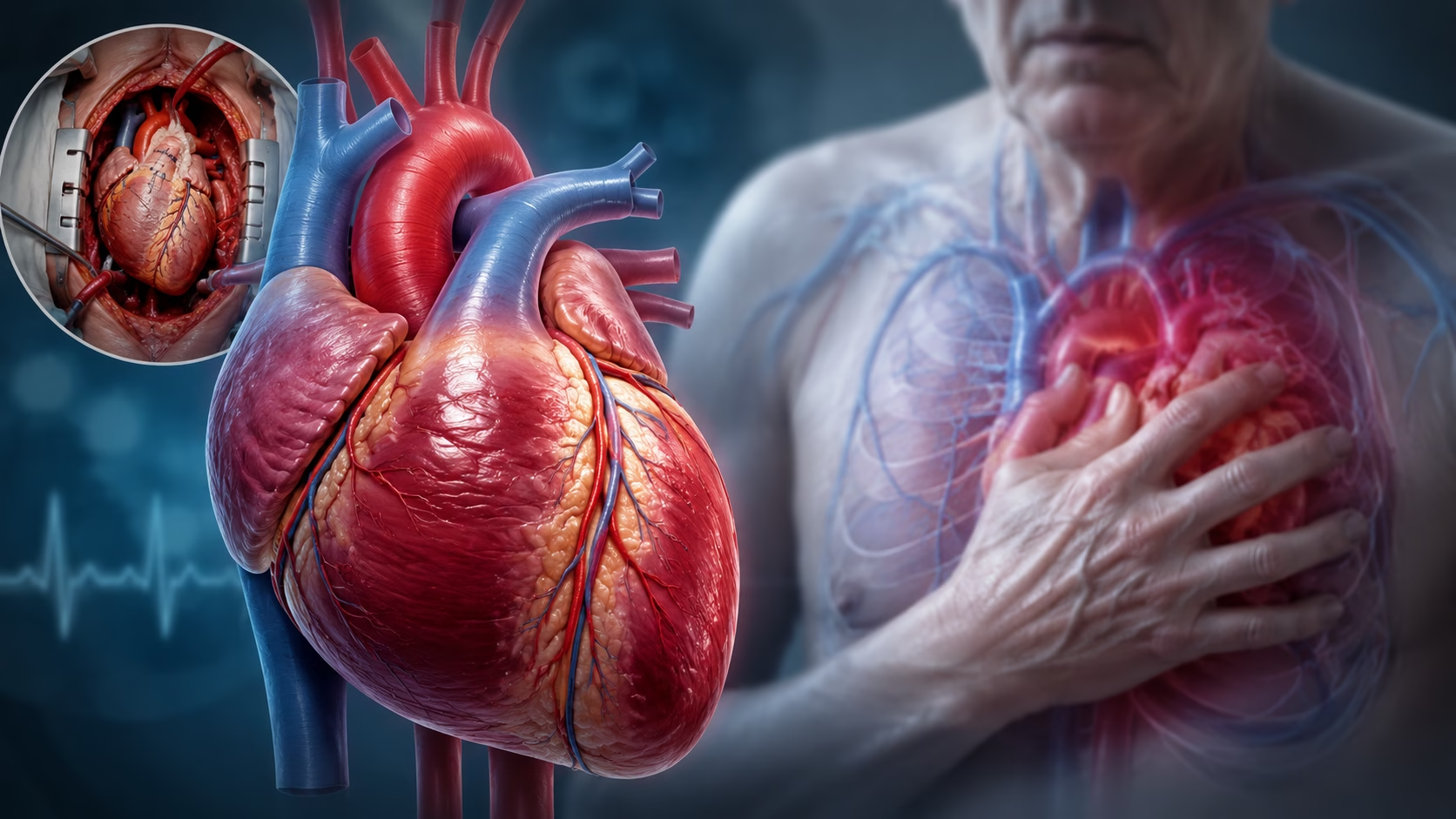
Congestive Heart Failure After Open Heart Surgery
Introduction
Open heart surgery is one of the most significant advances in modern medicine and has saved countless lives worldwide. Procedures such as coronary artery bypass grafting (CABG), heart valve repair or replacement, congenital heart defect correction, and aortic surgery are often performed to improve heart function, relieve symptoms, and extend life expectancy. For many patients, these operations provide a second chance at a healthier and more active life.
- Recognize risk factors: low ejection fraction, hypertension, diabetes, chronic kidney disease, advanced age, and prolonged cardiopulmonary bypass time.
- Early recognition and prompt management prevent fluid accumulation, improve breathing, protect organs, reduce emergency visits, and lower mortality risk.
- Monitor for shortness of breath, rapid weight gain, peripheral swelling, persistent cough, fatigue, and new or worsening palpitations.
- Confirm diagnosis with echocardiogram, BNP or NT-proBNP testing, chest radiograph, relevant labs, and hemodynamic monitoring for critically ill patients.
- Treat with diuretics, ACE inhibitors or ARBs, beta blockers, mineralocorticoid receptor antagonists; consider devices, mechanical support, and structured cardiac rehabilitation.
However, while open heart surgery can successfully address underlying cardiac problems, recovery is often complex and requires careful monitoring. One potential complication that patients, caregivers, and healthcare providers must be aware of is congestive heart failure (CHF) following surgery. In some cases, heart failure may develop for the first time after an operation, while in others, preexisting heart failure may worsen during the recovery period.
The development of congestive heart failure after open heart surgery can be frightening, but understanding why it occurs, recognizing warning signs early, and following appropriate treatment strategies can significantly improve outcomes. Advances in postoperative care, medications, rehabilitation programs, and monitoring techniques have greatly enhanced the ability to manage this condition effectively.
This comprehensive guide explains what congestive heart failure is, why it can occur after open heart surgery, how it is diagnosed and treated, and what patients can do to support recovery and protect their long-term heart health.
Why This Matters
Approximately 2–4% of Patients Develop New or Worsening Heart Failure After Major Cardiac Surgery
Although most patients recover successfully after cardiac surgery, a small but significant percentage experience postoperative heart failure.
Several factors contribute to this risk, including:
- Preexisting heart disease
- Reduced heart muscle function before surgery
- Surgical complications
- Advanced age
- Multiple medical conditions
Even when surgery successfully corrects the underlying problem, the heart may require time to recover from the physical stress of the operation.
Early Recognition and Prompt Management Reduce Hospital Readmissions
Heart failure that is identified and treated early is much easier to control.
Prompt intervention can:
- Prevent fluid accumulation
- Improve breathing
- Protect organ function
- Reduce emergency hospital visits
- Lower mortality risk
Recognizing symptoms early allows healthcare teams to intervene before complications become severe.
Patient Education Improves Recovery Outcomes
Patients who understand the signs of heart failure and actively participate in their recovery often achieve better results.
Knowledge empowers patients to:
- Monitor symptoms effectively
- Follow treatment plans
- Take medications correctly
- Seek medical attention when necessary
Active participation is one of the most important factors in successful recovery.
Understanding Congestive Heart Failure
What Is Congestive Heart Failure?
Congestive heart failure is a chronic condition in which the heart cannot pump blood efficiently enough to meet the body’s needs.
The heart functions as a powerful pump that delivers oxygen-rich blood throughout the body. When the heart becomes weakened or stiff, it struggles to maintain adequate circulation.
As pumping efficiency declines:
- Blood flow slows down.
- Organs receive less oxygen.
- Fluid accumulates in tissues.
- Pressure increases inside blood vessels.
The term “congestive” refers to the buildup of fluid that occurs when blood backs up in the circulation.
This congestion commonly affects:
- The lungs
- The legs
- The ankles
- The abdomen
- The liver
Without proper management, heart failure can significantly affect quality of life and overall health.
Key Features of Congestive Heart Failure
Reduced Cardiac Output
Cardiac output refers to the amount of blood pumped by the heart each minute.
When heart failure develops:
- Less blood reaches muscles.
- Less oxygen reaches organs.
- Energy production decreases.
As a result, patients often experience:
- Fatigue
- Weakness
- Reduced exercise capacity
Fluid Accumulation (Edema)
As circulation slows, fluid leaks from blood vessels into surrounding tissues.
This can cause:
- Swollen ankles
- Swollen feet
- Leg swelling
- Abdominal swelling
In severe cases, fluid may accumulate throughout the body.
Shortness of Breath
Fluid buildup within the lungs interferes with normal oxygen exchange.
Patients may notice:
- Breathlessness during activity
- Difficulty lying flat
- Nighttime breathing difficulties
Shortness of breath is one of the most common symptoms of heart failure.
Elevated Jugular Venous Pressure
When the heart cannot effectively pump blood forward, pressure increases in the veins returning blood to the heart.
This may cause visible swelling of the neck veins.
Healthcare providers often assess jugular venous pressure during physical examinations because it provides important information about fluid status.
The Physiology Behind Congestive Heart Failure
Understanding how heart failure develops helps explain why it can occur after surgery.
Systolic Dysfunction
Systolic dysfunction occurs when the heart muscle becomes weak and cannot contract effectively.
As a result:
- Less blood is pumped with each heartbeat.
- Ejection fraction declines.
- Organs receive inadequate blood flow.
This form of heart failure is often called heart failure with reduced ejection fraction (HFrEF).
Diastolic Dysfunction
Diastolic dysfunction occurs when the heart muscle becomes stiff.
Even though the heart may contract normally, it cannot relax adequately between beats.
This reduces filling capacity and increases pressure inside the heart.
This condition is often called heart failure with preserved ejection fraction (HFpEF).
Neurohormonal Activation
When the heart struggles to pump blood, the body activates several hormonal systems designed to compensate.
These include:
- Renin
- Angiotensin II
- Aldosterone
- Norepinephrine
Initially, these hormones help maintain blood pressure.
Over time, however, they contribute to:
- Fluid retention
- Blood vessel constriction
- Heart enlargement
- Progressive heart damage
This process is known as cardiac remodeling.
Why Open Heart Surgery Can Lead to CHF
Surgical Stress and Inflammation
Open heart surgery places considerable stress on the cardiovascular system.
During surgery:
- The heart may be temporarily stopped.
- Blood circulation is often maintained by a heart-lung machine.
- Heart tissues experience temporary changes in blood flow.
These factors trigger inflammation throughout the body.
Impact of Cardiopulmonary Bypass
The heart-lung machine, also known as cardiopulmonary bypass, is an essential component of many cardiac surgeries.
Although lifesaving, it can trigger:
- Systemic inflammatory responses
- Temporary heart muscle dysfunction
- Fluid shifts
- Organ stress
These changes may contribute to postoperative heart failure.
Preexisting Conditions and Risk Factors
Certain patients face a higher risk of developing CHF after surgery.
Reduced Ejection Fraction Before Surgery
Patients whose hearts already pump poorly before surgery are more vulnerable.
An ejection fraction below 40% significantly increases risk.
Hypertension
Long-standing high blood pressure can weaken and stiffen the heart.
These structural changes may complicate recovery.
Diabetes
Diabetes damages blood vessels and heart tissue.
It also increases inflammation and slows healing.
Chronic Kidney Disease
The kidneys play an important role in regulating fluid balance.
Kidney dysfunction increases the likelihood of postoperative fluid overload.
Advanced Age
Older patients often have:
- Reduced physiologic reserve
- More medical conditions
- Slower recovery
These factors increase susceptibility to heart failure.
Prolonged Cardiopulmonary Bypass Time
Longer surgical procedures generally increase stress on the heart and other organs.
Postoperative Complications
Complications such as:
- Bleeding
- Arrhythmias
- Infections
- Low blood pressure
can further impair heart function.
Signs and Symptoms to Watch For
Early recognition is critical.
Shortness of Breath
Patients may experience:
- Breathlessness during activity
- Difficulty breathing at rest
- Worsening symptoms when lying flat
This often indicates fluid accumulation in the lungs.
Rapid Weight Gain
Sudden weight gain frequently reflects fluid retention rather than increased body fat.
A gain of:
- 2–3 pounds in one day
- 5 pounds in one week
should prompt medical evaluation.
Swelling
Fluid retention may cause swelling in:
- Feet
- Ankles
- Legs
- Abdomen
Swelling often worsens as the day progresses.
Persistent Cough or Wheezing
Fluid congestion within the lungs may trigger:
- Chronic coughing
- Wheezing
- Chest congestion
These symptoms often worsen when lying down.
Fatigue and Weakness
Reduced blood flow limits oxygen delivery to muscles and organs.
Patients may find routine activities exhausting.
Rapid or Irregular Heartbeat
The heart may attempt to compensate for reduced function by beating faster.
Arrhythmias may also develop after surgery.
Diagnosis and Monitoring
Echocardiogram
An echocardiogram uses ultrasound waves to evaluate heart structure and function.
It provides information about:
- Ejection fraction
- Heart chamber size
- Valve performance
- Fluid status
This is often the most important test for diagnosing postoperative heart failure.
BNP and NT-proBNP Blood Tests
When the heart is under stress, it releases hormones called natriuretic peptides.
Elevated BNP or NT-proBNP levels often indicate:
- Fluid overload
- Increased heart pressure
- Heart failure severity
These tests help confirm the diagnosis.
Chest X-Ray
Chest imaging can reveal:
- Fluid in the lungs
- Enlarged heart size
- Pulmonary congestion
This helps assess the extent of heart failure.
Laboratory Tests
Blood tests evaluate:
- Kidney function
- Liver function
- Electrolytes
- Blood counts
These measurements guide treatment decisions.
Hemodynamic Monitoring
In critically ill patients, specialized catheters may measure:
- Pulmonary artery pressures
- Cardiac output
- Fluid status
This information helps optimize treatment.
Management and Treatment Options
Medical Therapy
Diuretics
Diuretics such as furosemide help remove excess fluid.
Benefits include:
- Reduced swelling
- Improved breathing
- Lower heart workload
ACE Inhibitors and ARBs
These medications:
- Relax blood vessels
- Lower blood pressure
- Reduce cardiac remodeling
They are foundational treatments for many heart failure patients.
Beta-Blockers
Beta-blockers:
- Slow heart rate
- Reduce oxygen demand
- Improve long-term survival
They are commonly prescribed after surgery.
Mineralocorticoid Receptor Antagonists
Examples include spironolactone and eplerenone.
These medications:
- Reduce fluid retention
- Block harmful hormonal effects
Vasodilators and Inotropes
In severe cases:
- Vasodilators improve circulation.
- Inotropes strengthen heart contractions.
These therapies are often used in intensive care settings.
Advanced Therapies
Cardiac Resynchronization Therapy (CRT)
CRT improves coordination between the heart’s chambers.
It may improve:
- Pumping efficiency
- Symptoms
- Survival
in selected patients.
Implantable Cardioverter-Defibrillator (ICD)
Patients at risk for dangerous arrhythmias may benefit from an ICD.
The device can detect and correct life-threatening heart rhythms.
Mechanical Circulatory Support
Severe cases may require:
- Ventricular assist devices (VADs)
- Temporary mechanical support systems
These devices help the heart pump blood.
Cardiac Rehabilitation
Cardiac rehabilitation is one of the most effective recovery tools available.
Supervised Exercise Training
Structured exercise programs help:
- Improve endurance
- Strengthen muscles
- Enhance cardiovascular fitness
Education
Patients learn:
- Symptom recognition
- Medication management
- Lifestyle modification strategies
Nutritional Counseling
Dietitians provide guidance regarding:
- Sodium restriction
- Weight management
- Heart-healthy eating patterns
Prevention and Postoperative Care
Preoperative Optimization
Managing existing heart failure before surgery improves outcomes.
This includes:
- Medication adjustment
- Blood pressure control
- Diabetes management
Careful Fluid Management
Avoiding excessive fluid administration helps reduce postoperative congestion.
Early Mobilization
Getting out of bed and walking early after surgery:
- Improves circulation
- Enhances lung function
- Reduces complications
Infection Prevention
Infections increase inflammation and place additional stress on the heart.
Strict infection control measures are essential.
Follow-Up Care
Regular follow-up visits allow healthcare providers to:
- Monitor recovery
- Adjust medications
- Detect complications early
Patient Education and Lifestyle Strategies
Daily Weight Monitoring
Daily weight measurements help detect fluid retention before symptoms become severe.
Low-Sodium Diet
Limiting sodium to 2,000 mg daily or less reduces fluid retention and helps control blood pressure.
Regular Physical Activity
Exercise strengthens the heart and improves recovery.
Activity should follow rehabilitation guidelines.
Medication Adherence
Taking medications exactly as prescribed is essential for long-term success.
Skipping doses can worsen heart failure.
Prompt Symptom Reporting
Patients should immediately report:
- Sudden weight gain
- Increased swelling
- Worsening breathlessness
- Persistent fatigue
Early intervention often prevents hospitalization.
Conclusion
Congestive heart failure after open heart surgery is a serious but manageable complication that can occur during the recovery process. Although the development of heart failure can be alarming, advances in modern cardiac care have made it possible to diagnose and treat this condition more effectively than ever before.
Understanding the causes, recognizing warning signs early, adhering to prescribed medications, participating in cardiac rehabilitation, and maintaining regular communication with healthcare providers are all essential components of successful recovery. Patients who actively engage in their care often experience better outcomes, fewer complications, and a higher quality of life.
With proper treatment, careful monitoring, and a commitment to heart-healthy lifestyle changes, many individuals can successfully manage congestive heart failure after surgery and return to productive, active, and fulfilling lives.