














Hypertension Soap Note
Hypertension remains one of the most prevalent chronic diseases worldwide and is a leading contributor to cardiovascular morbidity and mortality. Because...

Table of Contents
Introduction
Hypertension remains one of the most prevalent chronic diseases worldwide and is a leading contributor to cardiovascular morbidity and mortality. Because high blood pressure is often asymptomatic until complications develop, accurate assessment, monitoring, and documentation are essential components of patient care. One of the most widely used documentation methods in healthcare is the SOAP note format, which provides a structured framework for recording patient encounters and developing treatment plans.
A well-prepared hypertension SOAP note allows clinicians to systematically evaluate symptoms, identify risk factors, document objective findings, formulate an accurate assessment, and create an individualized management plan. Whether you are a physician, nurse practitioner, physician assistant, or nursing student, mastering hypertension SOAP notes can improve clinical communication, support evidence-based decision-making, and contribute to better patient outcomes.
This comprehensive guide explains each component of a hypertension SOAP note in detail and provides practical examples that can be applied in everyday clinical practice.
What Is a SOAP Note and Why Is It Important for Hypertension?
A SOAP note is a standardized method of documenting patient encounters that organizes clinical information into four distinct sections: Subjective, Objective, Assessment, and Plan. This format helps healthcare providers gather information systematically while ensuring that no critical details are overlooked during evaluation and treatment.
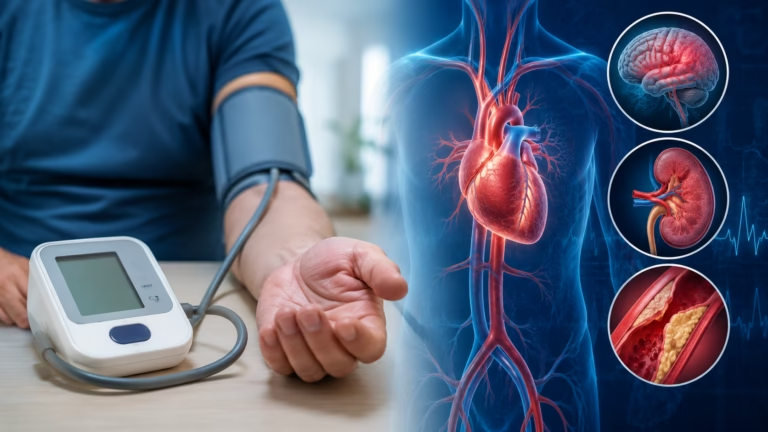
In hypertension management, SOAP notes play a particularly important role because blood pressure control requires continuous monitoring over time. Patients often need ongoing lifestyle counseling, medication adjustments, and evaluation for complications affecting the heart, kidneys, brain, and blood vessels. Thorough documentation allows clinicians to track trends, assess treatment effectiveness, and communicate important findings with other members of the healthcare team.
Additionally, accurate SOAP notes support legal documentation requirements, facilitate insurance reimbursement, improve quality assurance initiatives, and enhance continuity of care across multiple healthcare settings.
Subjective (S)
The Subjective section contains information obtained directly from the patient. This portion focuses on symptoms, concerns, medical history, lifestyle habits, medication use, and other information that cannot be directly measured by the clinician.
Chief Complaint
The chief complaint describes the primary reason the patient is seeking medical attention. It should ideally be documented using the patient’s own words whenever possible.
For example, a patient may state, “My blood pressure has been running high at home,” or “I have been having headaches and dizziness for the past two weeks.”
Recording the patient’s exact concern helps establish the focus of the visit and provides context for the subsequent assessment.
History of Present Illness
The history of present illness provides a detailed description of the patient’s current condition. When evaluating hypertension, clinicians should explore the duration of elevated blood pressure readings, associated symptoms, aggravating or relieving factors, and previous treatment efforts.
For instance, a patient may report that home blood pressure readings have consistently ranged between 150/90 mmHg and 165/95 mmHg over the past month. The patient may also describe experiencing mild morning headaches, occasional dizziness, or fatigue. Questions should be asked regarding chest pain, shortness of breath, visual disturbances, palpitations, or episodes of syncope because these symptoms may indicate complications or severe hypertension.
Understanding symptom patterns helps determine the severity of the condition and guides clinical decision-making.
Past Medical History
The patient’s medical history provides valuable information regarding existing conditions that may contribute to hypertension or influence treatment decisions.
Important conditions to document include diabetes mellitus, chronic kidney disease, coronary artery disease, heart failure, hyperlipidemia, sleep apnea, obesity, and previous cardiovascular events such as stroke or myocardial infarction.
A comprehensive understanding of the patient’s health background helps identify additional risk factors and informs the development of a safe and effective treatment plan.
Medication History
A detailed medication review is essential when assessing hypertension. Clinicians should document all prescribed medications, over-the-counter products, herbal supplements, and vitamins.
Special attention should be given to antihypertensive medications, including dosage, frequency, duration of use, and adherence patterns. Many cases of uncontrolled hypertension result from poor medication adherence rather than treatment failure.
For example, a patient may report taking lisinopril 10 mg daily but occasionally forgetting doses during busy workdays. Such information can significantly influence treatment recommendations.
Lifestyle and Social History
Lifestyle factors are among the most important contributors to hypertension and should be explored thoroughly.
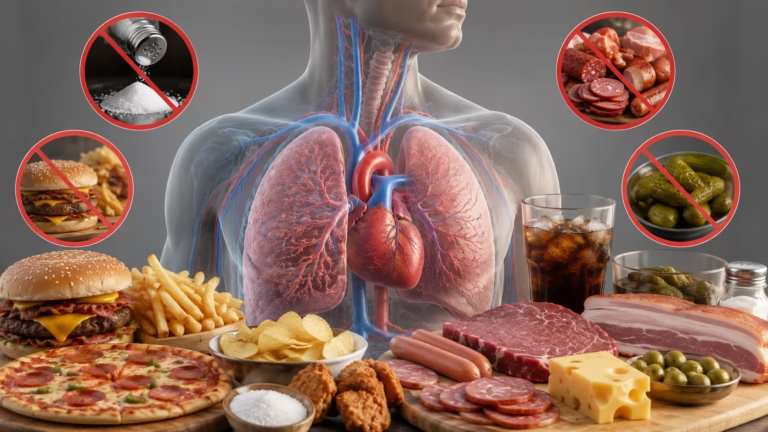
The clinician should assess dietary habits, particularly sodium intake and consumption of processed foods. Physical activity levels, alcohol use, tobacco use, recreational drug use, sleep patterns, and stress levels should also be evaluated.
For example, a patient may report eating fast food several times per week, engaging in minimal physical activity, and experiencing significant occupational stress. These factors can contribute substantially to elevated blood pressure and should be addressed during counseling.
Family History
Family history provides insight into inherited cardiovascular risk.
Documentation should include any history of hypertension, stroke, heart disease, diabetes, or kidney disease among first-degree relatives.
For example, a patient may report that both parents had hypertension and that their father experienced a heart attack at age 58. Such findings increase the patient’s overall cardiovascular risk profile.
Objective (O)
The Objective section includes measurable and observable findings obtained through physical examination, laboratory testing, and diagnostic procedures.
Vital Signs
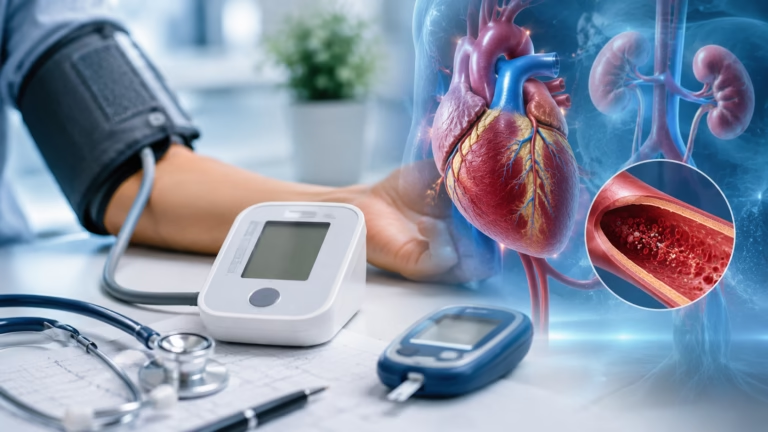
Blood pressure measurement is the cornerstone of hypertension evaluation. Accurate documentation should include the specific reading, measurement site, patient position, and timing.
For example:
Blood Pressure: 158/92 mmHg measured in the right arm while seated after five minutes of rest.
Additional vital signs should include heart rate, respiratory rate, temperature, and oxygen saturation.
Repeated measurements may be necessary to confirm elevated blood pressure readings and reduce the impact of temporary factors such as anxiety or physical activity.
Anthropometric Measurements
Weight, height, and body mass index should be documented because obesity is strongly associated with hypertension and cardiovascular disease.
For example:
Weight: 85 kg
Height: 170 cm
BMI: 29.4 kg/m²
Tracking these measurements over time helps evaluate the effectiveness of lifestyle interventions and weight-management strategies.
Physical Examination
A focused physical examination should assess potential complications of hypertension and identify signs of target-organ damage.
Cardiovascular examination should evaluate heart sounds, rhythm abnormalities, murmurs, peripheral pulses, and signs of fluid retention.
Pulmonary examination should assess for crackles or other signs of heart failure.
Fundoscopic examination may reveal retinal changes associated with chronic hypertension, including arteriolar narrowing, hemorrhages, exudates, or papilledema in severe cases.
Extremities should be examined for edema, cyanosis, or vascular abnormalities.
Laboratory Findings
Laboratory testing helps identify secondary causes of hypertension and evaluate end-organ function.
Common laboratory studies include:
Serum creatinine and estimated glomerular filtration rate to assess kidney function.
Electrolyte levels, particularly sodium and potassium.
Fasting glucose or hemoglobin A1C to evaluate for diabetes.
Lipid profile to assess cardiovascular risk.
Urinalysis and urine microalbumin testing to detect early kidney damage.
For example:
Creatinine: 1.1 mg/dL
LDL Cholesterol: 140 mg/dL
Hemoglobin A1C: 6.8%
Diagnostic Studies
Additional diagnostic testing may be indicated depending on the clinical scenario.
An electrocardiogram can identify left ventricular hypertrophy or arrhythmias. Echocardiography can evaluate cardiac structure and function. Ambulatory blood pressure monitoring may help distinguish sustained hypertension from white-coat hypertension.
These investigations provide important information regarding disease severity and complications.
Assessment (A)
The Assessment section represents the clinician’s interpretation of the collected data. It includes diagnoses, disease severity, and relevant clinical impressions.
The primary diagnosis should clearly identify the type and stage of hypertension.
For example:
Essential hypertension, Stage 2, inadequately controlled.
Additional conditions contributing to cardiovascular risk should also be documented.
For example:
Overweight status with BMI of 29.4 kg/m².
Prediabetes.
Hyperlipidemia.
The assessment should consider possible secondary causes of hypertension when appropriate. Conditions such as renal artery stenosis, primary hyperaldosteronism, thyroid disorders, pheochromocytoma, and obstructive sleep apnea may need further evaluation if blood pressure remains difficult to control.
Risk stratification should also be included, taking into account age, comorbidities, family history, smoking status, and evidence of target-organ damage.
Plan (P)
The Plan section outlines the specific actions that will be taken to manage the patient’s condition.
Lifestyle Modifications
Lifestyle interventions form the foundation of hypertension treatment and should be emphasized for all patients.
The patient should receive counseling regarding the DASH dietary pattern, which emphasizes fruits, vegetables, whole grains, lean proteins, and low-fat dairy products while limiting sodium, saturated fat, and processed foods.
Regular physical activity should be encouraged, with a goal of at least 150 minutes of moderate-intensity exercise per week.
Weight reduction strategies should be discussed when appropriate, as even modest weight loss can significantly improve blood pressure control.
Smoking cessation and moderation of alcohol consumption should also be addressed.
Medication Management
Pharmacologic therapy should be individualized based on the patient’s blood pressure level, cardiovascular risk, and comorbid conditions.
For example:
Initiate lisinopril 10 mg orally once daily.
Monitor blood pressure response and renal function.
Consider dose adjustment during follow-up if target blood pressure is not achieved.
Medication adherence should be reinforced, and patients should be educated regarding potential side effects and expected benefits.
Monitoring
Patients should be encouraged to monitor blood pressure at home and maintain a written log of readings.
Regular monitoring allows earlier detection of treatment failure and provides valuable information for clinical decision-making.
The patient may be instructed to measure blood pressure twice daily, once in the morning and once in the evening, and bring recorded readings to follow-up appointments.
Referrals
Specialist referrals may be necessary depending on the patient’s needs.
Examples include referral to a dietitian for nutritional counseling, a cardiologist for resistant hypertension, or a nephrologist if kidney disease is present.
Follow-Up
A clear follow-up plan should always be documented.
For example:
Schedule follow-up visit in four weeks for blood pressure reassessment and medication review.
Repeat basic metabolic panel and lipid profile in three months.
Sample Hypertension SOAP Note
Subjective
The patient presents with concerns regarding elevated home blood pressure readings over the past two weeks. Blood pressure measurements have consistently ranged between 150/90 mmHg and 160/95 mmHg. The patient reports experiencing mild morning headaches but denies chest pain, shortness of breath, visual disturbances, or syncope. Medical history includes hypertension diagnosed five years ago and type 2 diabetes mellitus. The patient admits to inconsistent adherence to prescribed lisinopril therapy and reports limited physical activity.
Objective
Blood pressure is 158/92 mmHg measured in the right arm while seated. Heart rate is 82 beats per minute and regular. Weight is 85 kilograms, with a BMI of 29.4 kg/m². Laboratory results reveal serum creatinine of 1.1 mg/dL, LDL cholesterol of 140 mg/dL, and hemoglobin A1C of 6.8%.
Assessment
Stage 2 essential hypertension with suboptimal control. Additional diagnoses include overweight status, prediabetes, and hyperlipidemia.
Plan
The patient will continue lisinopril therapy and receive counseling regarding medication adherence. Lifestyle modifications including the DASH diet, sodium restriction, weight management, and increased physical activity were discussed. Home blood pressure monitoring was recommended twice daily. Referral to a registered dietitian was provided. Follow-up appointment scheduled in four weeks.
Conclusion
A hypertension SOAP note serves as far more than a documentation tool. It provides a structured framework for evaluating patients, identifying risk factors, monitoring treatment effectiveness, and developing personalized management strategies. By carefully documenting subjective concerns, objective findings, clinical assessments, and treatment plans, healthcare providers can improve communication, enhance continuity of care, and support better patient outcomes.
As hypertension continues to be a leading cause of cardiovascular disease worldwide, the ability to create thorough and meaningful SOAP notes remains an essential clinical skill. Consistent use of a well-structured SOAP format ensures that patients receive comprehensive, evidence-based care while helping clinicians maintain accurate and organized medical records.
Disclaimer
This article is for educational purposes only and does not replace professional medical advice, diagnosis, or treatment. Seizures, severe headache, confusion, visual changes, or blood pressure readings in the hypertensive crisis range require urgent medical evaluation.
Was this page helpful?
Thanks for your feedback! What could we improve?
Thank you! Your feedback helps us improve our articles.
True Impact Health articles are written by our editorial team and based on reliable sources such as public health agencies, clinical guidelines and peer-reviewed research. This article has not yet been medically reviewed. Read our editorial process.
This content is for general information and is not a substitute for professional medical advice, diagnosis or treatment.