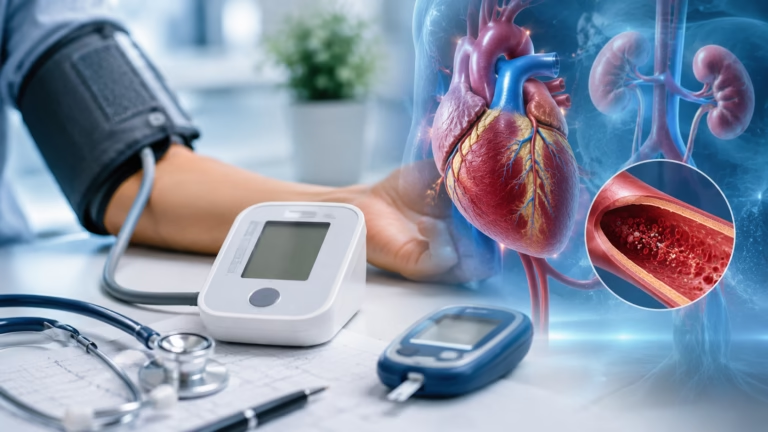
















ICD 10 White Coat Hypertension
Learn what white coat hypertension is, how it is coded (R03.0 vs I10), and when to seek medical attention.

Table of Contents
Quick answer
White coat hypertension is when blood pressure is high in a medical setting but normal at home. It is coded with ICD‑10 R03.0 until out‑of‑office measurements confirm sustained hypertension, at which point I10 is used.
Introduction
Blood pressure measurement is one of the most common assessments performed in healthcare settings. Accurate blood pressure readings are essential because they influence diagnosis, treatment decisions, quality reporting, insurance reimbursement, and long-term patient outcomes. However, not every elevated blood pressure reading reflects true hypertension. Some patients consistently demonstrate high blood pressure in medical settings while maintaining normal readings in their everyday environment. This phenomenon is known as white coat hypertension.
White coat hypertension presents unique challenges for healthcare professionals. Without proper evaluation, patients may be incorrectly diagnosed with hypertension and started on medications they do not need. At the same time, healthcare providers must recognize that white coat hypertension is not always completely benign. Research has shown that some individuals with white coat hypertension eventually develop sustained hypertension and may carry a higher cardiovascular risk than individuals whose blood pressure is consistently normal.
From a coding perspective, accurately distinguishing white coat hypertension from established hypertension is critical. Proper ICD-10 code selection ensures compliant billing, accurate clinical documentation, and reliable healthcare data reporting. Understanding how to identify, document, and code white coat hypertension allows clinicians and coders to work together effectively while improving patient care.
Understanding White Coat Hypertension
White coat hypertension refers to a condition in which a patient’s blood pressure becomes elevated during visits to healthcare facilities but remains within normal limits when measured outside the clinical environment. The term originates from the traditional white coats worn by healthcare providers, reflecting the anxiety some patients experience when interacting with medical professionals.
Many individuals become nervous during medical appointments. This anxiety activates the body’s stress response system, causing temporary increases in heart rate and blood pressure. As a result, blood pressure measurements taken in the office may appear significantly higher than readings obtained at home or during routine daily activities.
White coat hypertension is surprisingly common. Studies suggest that approximately fifteen to thirty percent of patients who initially appear to have hypertension actually have white coat hypertension. The condition is more frequently observed among older adults, individuals with anxiety disorders, first-time patients, and those who have previously experienced concerning health issues.
Although white coat hypertension does not meet the criteria for chronic hypertension, it should not be ignored. Patients with this condition often require ongoing monitoring because some eventually progress to sustained hypertension over time.
Why White Coat Hypertension Is Clinically Important
White coat hypertension has important implications for both patient care and healthcare administration.
One of the primary concerns is the potential for misdiagnosis. If elevated office readings are accepted without further investigation, patients may receive a diagnosis of hypertension despite having normal blood pressure outside the clinic. This can lead to unnecessary treatment, increased healthcare costs, medication side effects, and emotional stress associated with carrying a chronic disease diagnosis.
In addition, inaccurate hypertension diagnoses can affect quality reporting measures, insurance records, and population health statistics. Healthcare organizations rely heavily on diagnostic coding to evaluate patient outcomes and allocate resources. Therefore, distinguishing white coat hypertension from true hypertension improves the accuracy of healthcare data.
Furthermore, white coat hypertension may serve as an early warning sign of future cardiovascular disease. Research indicates that individuals with white coat hypertension may experience subtle vascular changes and are more likely to develop sustained hypertension compared with individuals whose blood pressure remains consistently normal. This makes regular monitoring and preventive interventions particularly important.
ICD-10 Coding for White Coat Hypertension
The primary ICD-10-CM code used to report white coat hypertension is R03.0 – Elevated blood-pressure reading, without diagnosis of hypertension.
This code is appropriate when a patient demonstrates elevated blood pressure measurements but does not meet the diagnostic criteria for hypertension. It is specifically intended for situations where elevated readings have been observed, yet a formal diagnosis of hypertension has not been established.
White coat hypertension falls under this category because blood pressure elevations occur primarily within the clinical environment while out-of-office measurements remain normal. The code communicates that abnormal readings exist and warrant attention, but that persistent hypertension has not been confirmed.
It is important to understand that R03.0 is not a hypertension diagnosis code. Rather, it represents an abnormal clinical finding that requires monitoring, follow-up, and further evaluation.
When to Assign ICD-10 Code R03.0
The use of R03.0 should be supported by clear clinical documentation demonstrating that elevated office blood pressure readings are not accompanied by persistently elevated measurements outside the healthcare setting.
For example, a patient may present with office blood pressure readings of 145/90 mmHg during multiple clinic visits. However, subsequent home blood pressure monitoring or ambulatory blood pressure monitoring may reveal average readings well within normal limits. In this situation, hypertension has not been confirmed, making R03.0 the appropriate code.
Documentation should clearly indicate the clinician’s interpretation of the findings. Statements such as “white coat hypertension suspected” or “elevated office readings with normal ambulatory monitoring” provide strong support for code assignment.
The code may also be used during the initial evaluation period while further testing is being conducted to determine whether hypertension is truly present.
When to Use ICD-10 Code I10 Instead
There are situations in which R03.0 is no longer appropriate.
If elevated blood pressure readings are confirmed both inside and outside the healthcare setting, the patient should be diagnosed with hypertension. In these cases, the appropriate ICD-10 code becomes I10 – Essential (Primary) Hypertension.
Once sustained hypertension has been established, healthcare providers should discontinue using R03.0 and replace it with the appropriate hypertension diagnosis code.
Similarly, if hypertension develops as a result of another medical condition, such as chronic kidney disease, endocrine disorders, or renovascular disease, secondary hypertension codes should be assigned according to ICD-10 guidelines.
Continuous reassessment is important because patients with white coat hypertension may eventually transition to sustained hypertension.
Diagnostic Approaches for White Coat Hypertension
Accurate diagnosis requires more than a single blood pressure reading obtained during an office visit.
Healthcare providers should confirm elevated blood pressure using validated methods that assess blood pressure outside the clinical environment.
Ambulatory Blood Pressure Monitoring
Ambulatory Blood Pressure Monitoring (ABPM) is widely considered the gold standard for diagnosing white coat hypertension.
This method involves placing a portable blood pressure monitor on the patient for twenty-four hours. The device automatically records blood pressure readings throughout the day and night while the patient continues normal activities.
ABPM provides valuable information about daytime blood pressure patterns, nighttime blood pressure behavior, and overall blood pressure variability. Because measurements occur in real-world settings, they offer a more accurate reflection of the patient’s true blood pressure status.
When ABPM demonstrates normal average blood pressure despite elevated office readings, white coat hypertension can be diagnosed with greater confidence.
Home Blood Pressure Monitoring
Home Blood Pressure Monitoring (HBPM) is another highly useful diagnostic tool.
Patients are instructed to use validated home blood pressure devices and record measurements over several days or weeks. Multiple readings collected under normal living conditions help eliminate the influence of clinical anxiety.
Home monitoring also encourages patient engagement and provides valuable longitudinal data that can assist with future treatment decisions.
Repeated Office Measurements
Blood pressure should never be diagnosed based on a single reading. Multiple office visits are often necessary to establish reliable trends.
Proper measurement technique, appropriate cuff size, and adequate rest before testing all contribute to more accurate results. Repeated measurements help distinguish temporary elevations from persistent hypertension.
Cardiovascular Risks Associated with White Coat Hypertension
For many years, white coat hypertension was considered harmless. However, newer evidence suggests the condition may carry some degree of cardiovascular risk.
Patients with white coat hypertension generally have a lower risk of heart disease than those with sustained hypertension. Nevertheless, their risk may be higher than individuals with completely normal blood pressure.
Studies have identified associations between white coat hypertension and early target-organ changes, including increased arterial stiffness, subtle left ventricular hypertrophy, and endothelial dysfunction. These findings suggest that repeated blood pressure elevations, even if intermittent, may contribute to long-term cardiovascular stress.
Consequently, patients with white coat hypertension should not simply be reassured and discharged. Instead, they should undergo periodic monitoring to identify progression and address modifiable risk factors.
Management Strategies for White Coat Hypertension
The primary focus of management is preventing progression to sustained hypertension while reducing overall cardiovascular risk.
Lifestyle modification remains the cornerstone of treatment. Patients should be encouraged to maintain a healthy body weight, consume a balanced diet rich in fruits and vegetables, reduce sodium intake, engage in regular physical activity, and avoid tobacco use.
The DASH dietary pattern has consistently demonstrated benefits for blood pressure control and cardiovascular health. Regular aerobic exercise, including walking, cycling, and swimming, can further support healthy blood pressure regulation.
Stress management is particularly relevant for individuals with white coat hypertension. Since anxiety often contributes to elevated office readings, techniques such as mindfulness meditation, deep breathing exercises, yoga, and relaxation training may help reduce stress-related blood pressure responses.
Routine antihypertensive medication is generally not recommended for uncomplicated white coat hypertension. However, treatment decisions should be individualized. Patients with diabetes, chronic kidney disease, existing cardiovascular disease, or evidence of target-organ damage may require closer monitoring and, in some cases, pharmacological intervention.
Documentation Best Practices
Thorough documentation is essential for supporting accurate coding and clinical decision-making.
Healthcare providers should record office blood pressure measurements, home monitoring results, ambulatory monitoring findings, and the methods used to obtain these readings. Documentation should also include relevant patient history, anxiety-related factors, and the clinician’s interpretation of the findings.
A well-documented note might state:
“Patient demonstrates elevated blood pressure readings during office visits. Seven-day home blood pressure monitoring averages 122/76 mmHg. Twenty-four-hour ambulatory monitoring confirms normal daytime and nighttime pressures. Findings are consistent with white coat hypertension. No evidence of sustained hypertension at this time.”
Such documentation clearly supports the assignment of R03.0 and provides a strong clinical rationale for management decisions.
Practical Coding Example
Consider a fifty-two-year-old patient who presents with office blood pressure readings averaging 142/88 mmHg during two separate appointments. Concerned about possible hypertension, the physician orders both home blood pressure monitoring and ambulatory monitoring.
Over the following week, the patient’s home blood pressure averages 120/76 mmHg. Ambulatory monitoring produces similar results, with normal daytime and nighttime blood pressure patterns.
Based on these findings, the physician documents that the patient has white coat hypertension and does not meet the criteria for sustained hypertension.
The correct ICD-10 code in this scenario is R03.0 – Elevated blood-pressure reading, without diagnosis of hypertension.
Six months later, if both office and home readings consistently exceed diagnostic thresholds, the diagnosis would change to essential hypertension, and the code would be updated to I10.
Conclusion
White coat hypertension represents a common yet frequently misunderstood clinical condition. Although blood pressure appears elevated during medical visits, out-of-office monitoring reveals normal values, distinguishing the condition from true hypertension. Accurate identification is essential because misdiagnosis can lead to unnecessary treatment, increased healthcare costs, and inaccurate reporting.
The appropriate ICD-10-CM code for white coat hypertension is R03.0 – Elevated blood-pressure reading, without diagnosis of hypertension. This code should only be assigned when sustained hypertension has been excluded through appropriate evaluation methods such as home blood pressure monitoring or ambulatory blood pressure monitoring.
Healthcare providers should view white coat hypertension as an opportunity for preventive care rather than a benign curiosity. Through careful monitoring, lifestyle counseling, and ongoing risk assessment, clinicians can help patients maintain cardiovascular health while identifying those who may eventually progress to true hypertension.
For clinicians, coders, and practice managers alike, mastering the diagnosis, documentation, and coding of white coat hypertension supports better patient outcomes, more accurate billing practices, and stronger healthcare data quality.
Disclaimer
This article is for educational purposes only and does not replace professional medical advice, diagnosis, or treatment. Seizures, severe headache, confusion, visual changes, or blood pressure readings in the hypertensive crisis range require urgent medical evaluation.
When to see a doctor
- Consistently high office readings (≥140/90) with normal home readings
- New onset chest pain, shortness of breath, or dizziness
- Sudden severe headache or visual changes
- Signs of organ damage such as swelling or kidney problems
- If home blood pressure remains elevated despite lifestyle changes
If symptoms are severe or come on suddenly, call your local emergency number.
Frequently asked questions
How is white coat hypertension diagnosed?
Diagnosis requires multiple office readings and out‑of‑office measurements, such as home blood pressure monitoring or 24‑hour ambulatory monitoring, showing normal values outside the clinic.
Can white coat hypertension become permanent hypertension?
Yes, studies show a proportion of people with white coat hypertension develop sustained hypertension over years, so regular follow‑up is recommended.
Do I need medication for white coat hypertension?
Medication is not usually started unless sustained hypertension is confirmed. Lifestyle measures and monitoring are the first steps.
What lifestyle changes help lower blood pressure?
Reducing sodium intake, maintaining a healthy weight, exercising regularly, limiting alcohol, and managing stress can all help keep blood pressure within normal ranges.
Was this page helpful?
Thanks for your feedback! What could we improve?
Thank you! Your feedback helps us improve our articles.
True Impact Health articles are written by our editorial team and based on reliable sources such as public health agencies, clinical guidelines and peer-reviewed research. This article has not yet been medically reviewed. Read our editorial process.
This content is for general information and is not a substitute for professional medical advice, diagnosis or treatment.