














Va Rating for Hypertension on Medication
Introduction Hypertension (high blood pressure) is one of the most common service-connected conditions affecting U.S. veterans. If you’re on medication...
By True Impact Health Editorial Team

Medical graduate of Girne American University with a focus on patient-centred care, clinical assessment and preventive health.
Reviewed this article on October 9, 2026.
View profile How we reviewUpdated on October 9, 2026 5 min read
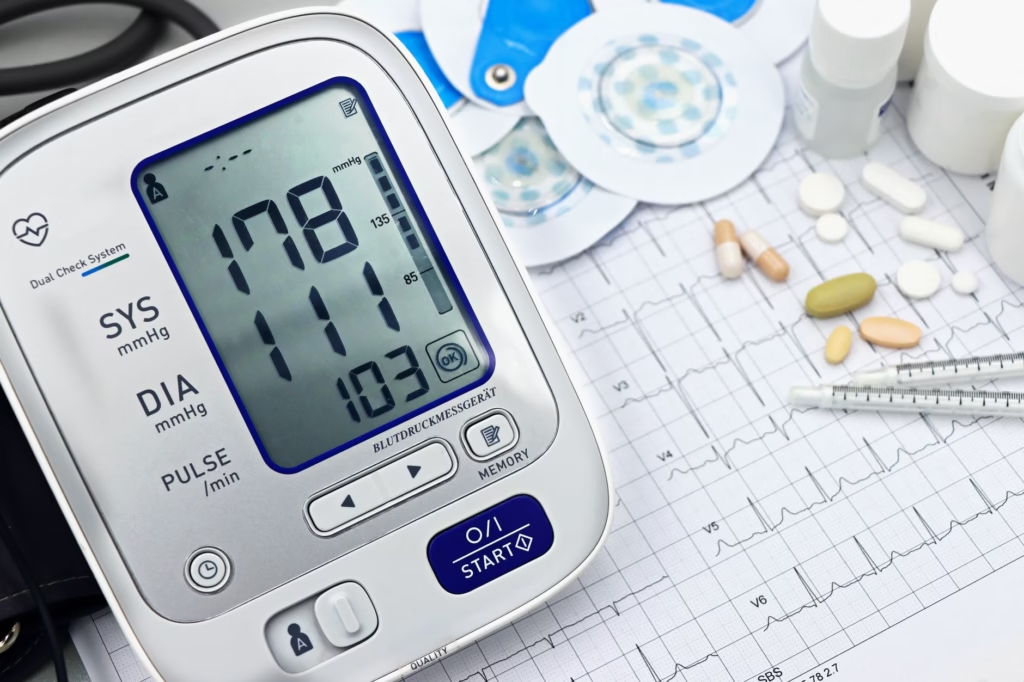
Table of Contents
Key Takeaways
- VA rates hypertension by the highest reading over 12 months
- Medication‑controlled hypertension can qualify for 10% or higher
- Provide medical records, home logs, and a nexus letter for stronger claims
- You can appeal decisions; use VSOs and meet deadlines
Introduction
Hypertension (high blood pressure) is one of the most common service-connected conditions affecting U.S. veterans. If you’re on medication to manage your blood pressure, you may qualify for VA disability compensation. Understanding how the U.S. Department of Veterans Affairs (VA) assigns a disability rating for hypertension can help you file a stronger claim, maximize your benefits, and ensure you have the medical evidence needed. In this post, we’ll demystify the VA rating process for hypertension on medication, guide you through each step, and share tips to boost your chances of success.
Understanding VA Disability Ratings
Before diving into hypertension specifics, it’s helpful to know how VA disability ratings work:
- Purpose: To compensate veterans for service-connected disabilities that impair earning capacity.
- Scale: Ratings range from 0% to 100% in 10% increments. The higher your rating, the higher your monthly benefit.
- Medical Criteria: Each condition has a Diagnostic Code and rating criteria based on severity, frequency, or markers (e.g., blood pressure readings).
- Effective Date: Typically the date you filed your claim or when evidence first showed service connection.
How Hypertension Is Rated by the VA
The VA rates hypertension under Diagnostic Code 7101 in the Schedule of Ratings for the Cardiovascular System. Key points include:
- No Diagnosis (“0%”): You have hypertension but it’s well-controlled without medication.
- Mild (10%): Diastolic pressure 100-109 mm Hg or systolic 160-199 mm Hg on medication.
- Moderate (20%): Diastolic pressure 110-119 mm Hg or systolic 200-209 mm Hg on medication.
- Severe (40%): Diastolic pressure 120 mm Hg or higher, or systolic 210 mm Hg or higher, even on medication.
- Rating Basis: The VA uses the highest credible reading over a 12-month period.
Hypertension on Medication: What You Need to Know
If you manage your blood pressure with drugs, pay attention to:
- Controlled vs. Uncontrolled: Controlled readings may still qualify for 10% or higher under certain thresholds.
- Medication Names: List all prescriptions (e.g., ACE inhibitors, beta-blockers, diuretics).
- Side Effects: Certain side effects, fatigue, dizziness, kidney issues, can be separately service-connected under different codes.
- Consistency: Document multiple readings to show chronic hypertension rather than a one-time spike.
Key Factors Influencing Your Rating
Your final rating isn’t solely a number, VA looks at the whole picture:
- Medical Exams (C&P Exams): Compensation & Pension exams provide official measurements and medical opinions.
- Treatment History: Regular doctor visits, lab tests, medication refills, and blood pressure logs strengthen your claim.
- Additional Conditions: If hypertension contributed to heart disease or stroke, those may qualify for separate or combined ratings.
- Nexus Letter: A statement from your doctor linking your condition to military service boosts service-connection credibility.

Gathering Supporting Evidence
Solid medical evidence can make or break your claim. Consider:
- VA and Private Medical Records: Include all blood pressure readings, treatment notes, and medication lists.
- Patient-Generated Logs: Home readings logged over weeks/months.
- Buddy Statements: Fellow service members who observed stressors or symptoms during service.
- Lay Statements: Personal accounts of symptoms, medication side effects, and daily limitations.
Tips for a Successful Claim
- File Early: Don’t wait, VA back pay accrues from your claim’s effective date.
- Complete Exam Requests: Attend all C&P exams on time; missing an exam can delay or deny benefits.
- Be Honest and Thorough: Provide accurate blood pressure readings and symptom descriptions.
- Use Veterans Service Organizations (VSOs): Groups like the VFW or DAV offer free claims assistance.
- Keep Copies: Maintain your own file of every form, letter, and medical record you submit.
-
Common Mistakes to Avoid
- Underreporting Symptoms: Even mild headaches or fatigue matter, note them.
- Incomplete Evidence: A single reading won’t suffice, VA needs a pattern.
- Ignoring Secondary Claims: Conditions like kidney disease or ischemic heart disease may stem from hypertension and warrant separate claims.
- Missing Deadlines: Appeals or supplemental claims have strict time limits.
-

Compensation & Pension exam where a clinician records blood pressure measurements for rating purposes. (Photo by Los Muertos Crew on Pexels) Appealing a VA Hypertension Rating
If you disagree with the VA’s decision:
- Review Your Decision Letter: Note the rating assigned, effective date, and reasons for denial or reduction.
- Choose an Appeal Lane: Supplemental Claim, Higher-Level Review, or Board Appeal (Board of Veterans’ Appeals).
- Submit New Evidence (if applicable): Recent medical records or buddy statements.
- Consider Representation: An accredited attorney or VSO can guide you through appeals.
Frequently Asked Questions
Can I receive a VA rating for hypertension if I only use lifestyle changes, no medication?
Yes, but without medication the VA usually assigns a 0% rating unless blood pressure remains uncontrolled; medication use is key for higher ratings.
How often does the VA require blood pressure measurements for a rating review?
The VA considers the highest credible reading within a 12‑month period, so regular check‑ups provide a reliable record.
Will a secondary condition like kidney disease affect my hypertension rating?
Secondary conditions are evaluated separately; if hypertension contributed to kidney disease you can file an additional claim for that condition.
What is a nexus letter and why is it important?
A nexus letter is a doctor’s statement linking your hypertension to military service, strengthening the service‑connection argument.
Conclusion
Securing a fair VA disability rating for hypertension on medication starts with understanding the rating criteria, gathering robust evidence, and partnering with knowledgeable advocates. Remember, even if your initial rating seems low, you have the right to appeal. By keeping detailed medical records, attending C&P exams, and seeking help from VSOs, you can maximize your chances of receiving the benefits you’ve earned. If you’re unsure where to begin, reach out to a VSO or VA-accredited attorney today, your health and financial security deserve nothing less.
For more information, see the NIH.
Was this page helpful?
Thanks for your feedback! What could we improve?
Thank you! Your feedback helps us improve our articles.
Medically reviewed by
Dr. Oluwabusola Stella OkeMedical graduate of Girne American University with a focus on patient-centred care, clinical assessment and preventive health.
True Impact Health articles are written by our editorial team and based on reliable sources such as public health agencies, clinical guidelines and peer-reviewed research. This article has been checked by a doctor on our review panel. Read our editorial process.
This content is for general information and is not a substitute for professional medical advice, diagnosis or treatment.