














Health A–Z guide
Obsessive‑Compulsive Disorder (OCD)
Obsessive‑Compulsive Disorder (OCD) is a common and often misunderstood mental health condition. While many people casually describe themselves as “a little OCD” when referring to neatness or organization, true OCD…
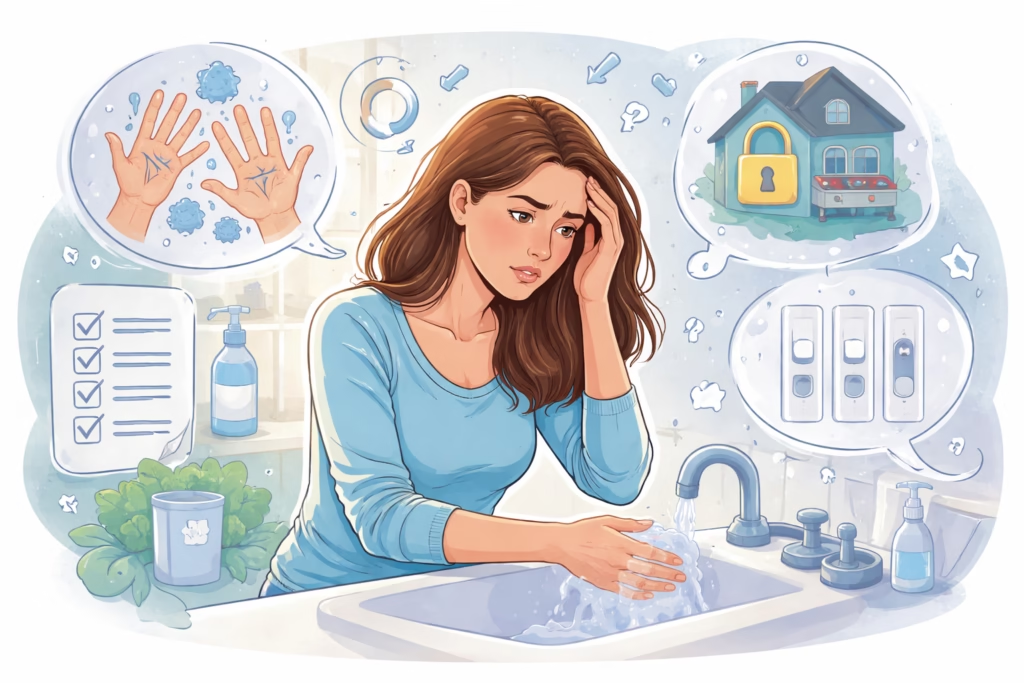
Table of Contents

Obsessive‑Compulsive Disorder (OCD) is a common and often misunderstood mental health condition. While many people casually describe themselves as “a little OCD” when referring to neatness or organization, true OCD is far more complex—and often distressing. It involves persistent, intrusive thoughts and repetitive behaviors that can significantly interfere with daily life, relationships, and overall well‑being.
This article provides a clear, medically accurate overview of OCD, including its causes, symptoms, diagnosis, treatment options, and practical lifestyle considerations.
Overview / Definition
Obsessive‑Compulsive Disorder (OCD) is a chronic mental health disorder characterized by:
- Obsessions: Recurrent, intrusive, unwanted thoughts, images, or urges that cause distress.
- Compulsions: Repetitive behaviors or mental acts performed to reduce anxiety or prevent a feared outcome.
OCD is classified as a psychiatric condition in the Diagnostic and Statistical Manual of Mental Disorders (DSM-5-TR) and is categorized under “Obsessive‑Compulsive and Related Disorders.”
Importantly, people with OCD typically recognize that their obsessions and compulsions are excessive or unreasonable. However, they often feel unable to control them.
Causes and Risk Factors
The exact cause of OCD is not fully understood. Current research suggests it results from a combination of biological, psychological, and environmental factors.
1. Genetic Factors
- OCD tends to run in families.
- First-degree relatives of people with OCD may have an increased risk.
- Certain genetic variations may influence brain circuitry linked to the disorder.
2. Brain Structure and Function
Neuroimaging studies suggest differences in specific brain areas involved in:
- Decision-making
- Error detection
- Impulse control
- Emotional regulation
Abnormal activity in the cortico-striato-thalamo-cortical (CSTC) circuit is commonly associated with OCD.
3. Neurochemical Imbalances
- Disruptions in serotonin, a neurotransmitter, are strongly linked to OCD.
- Other neurotransmitters such as dopamine and glutamate may also play roles.
4. Environmental Factors
- Childhood trauma or stressful life events
- Severe infections (in rare pediatric cases, e.g., PANDAS)
- Learned behavioral patterns
Risk can develop in childhood, adolescence, or early adulthood. OCD affects people of all genders, cultures, and backgrounds.
Symptoms / Clinical Presentation
The hallmark of OCD is the presence of obsessions, compulsions, or both.
Common Obsessions
Obsessions are intrusive, unwanted thoughts that cause significant anxiety or distress. Examples include:
- Fear of contamination (germs, dirt, illness)
- Fear of harming oneself or others
- Aggressive or violent thoughts
- Excessive concern with order, symmetry, or exactness
- Religious or moral fears (scrupulosity)
- Sexual intrusive thoughts
These thoughts are not simply excessive worries about real-life problems—they are persistent and often irrational, yet difficult to dismiss.
Common Compulsions
Compulsions are repetitive behaviors or mental acts performed in response to obsessions. They aim to reduce anxiety or prevent a feared event.
Examples include:
- Excessive handwashing or cleaning
- Repeated checking (locks, appliances, doors)
- Counting, tapping, or repeating actions
- Arranging objects symmetrically
- Silent praying or repeating phrases
- Seeking constant reassurance
While compulsions may provide temporary relief, they ultimately reinforce the cycle of OCD.
Impact on Daily Life
For a diagnosis of OCD, symptoms must:
- Take up more than one hour per day, or
- Cause significant distress or impairment in social, occupational, or academic functioning.
Without treatment, OCD can become chronic and progressively disabling.
Diagnosis or Screening
OCD is diagnosed through a comprehensive clinical evaluation conducted by a qualified healthcare professional such as a psychiatrist, psychologist, or primary care physician.
Diagnostic Criteria
Diagnosis typically involves:
- Assessment of obsessions and compulsions
- Evaluation of symptom severity
- Determination of functional impairment
- Exclusion of other medical or psychiatric conditions
There are no laboratory tests or brain scans that confirm OCD. Diagnosis is based on clinical interviews and standardized assessment tools, such as:
- Yale-Brown Obsessive Compulsive Scale (Y-BOCS)
Early diagnosis is important, as timely treatment significantly improves outcomes.
Treatment and Management Options
OCD is a treatable condition. Evidence-based approaches include psychotherapy, medication, or a combination of both.
1. Cognitive Behavioral Therapy (CBT)
The most effective psychotherapy for OCD is Exposure and Response Prevention (ERP), a specialized form of CBT.
ERP involves:
- Gradual exposure to feared thoughts or situations
- Prevention of compulsive responses
- Learning to tolerate anxiety without ritualizing
Over time, anxiety reduces naturally, and obsessive-compulsive cycles weaken.
2. Medications
Medications commonly used include:
- Selective Serotonin Reuptake Inhibitors (SSRIs)
- Fluoxetine
- Sertraline
- Fluvoxamine
- Paroxetine
- Tricyclic antidepressants (e.g., clomipramine)
Higher doses may be required for OCD compared to depression. Medication benefits may take 8–12 weeks to become noticeable.
3. Combination Therapy
Research shows that combining CBT (ERP) with medication often yields the best results, particularly for moderate to severe OCD.
4. Advanced and Emerging Treatments
In treatment-resistant cases, options may include:
- Deep Brain Stimulation (DBS)
- Transcranial Magnetic Stimulation (TMS)
- Augmentation strategies with other medications
These are typically reserved for severe cases under specialist care.
Prevention and Lifestyle Considerations
There is no guaranteed way to prevent OCD. However, certain strategies may support mental health and reduce symptom severity:
Supportive Lifestyle Measures
- Maintain a structured daily routine
- Practice stress management (e.g., mindfulness, breathing exercises)
- Prioritize adequate sleep
- Exercise regularly
- Limit excessive reassurance-seeking behaviors
- Avoid substance misuse
Family Involvement
Family support can make a significant difference. Family members may benefit from:
- Psychoeducation about OCD
- Learning not to reinforce compulsive behaviors
- Participating in structured family therapy sessions when appropriate
Early intervention is one of the strongest predictors of long-term recovery.
When to Seek Professional Help
It may be time to seek evaluation if:
- Intrusive thoughts feel uncontrollable.
- Repetitive behaviors interfere with daily life.
- Anxiety feels overwhelming.
- Work, school, or relationships are being affected.
OCD is not a personality trait or a matter of willpower—it is a recognized medical condition that deserves appropriate care.
Conclusion
Obsessive‑Compulsive Disorder (OCD) is a chronic yet highly treatable mental health condition characterized by intrusive thoughts and repetitive behaviors. Although symptoms can be distressing and disruptive, evidence-based treatments—particularly Exposure and Response Prevention (ERP) and certain medications—offer substantial relief for many individuals.
Understanding OCD reduces stigma and empowers those affected to seek effective support. With proper treatment and self-management strategies, many people with OCD lead fulfilling, productive lives.
Disclaimer: This article is for educational purposes only and does not constitute medical advice. If you or someone you know may be experiencing symptoms of Obsessive‑Compulsive Disorder, consult a qualified healthcare professional for proper evaluation and treatment.
Was this page helpful?
Thanks for your feedback! What could we improve?
Thank you! Your feedback helps us improve our guides.
Our Health A–Z guides are written by the True Impact Health Editorial Team and based on reliable sources such as public health agencies, clinical guidelines and peer-reviewed research. This guide has not yet been medically reviewed. Read our editorial process.
This content is for general information and is not a substitute for professional medical advice, diagnosis or treatment.