















Health A–Z guide
Deafness
Deafness: Understanding Hearing Loss, Its Causes, and Management
Hearing plays a vital role in communication, social interaction, and overall quality of life. Deafness—also commonly referred to as hearing loss—affects millions of people worldwide and can occur at any…
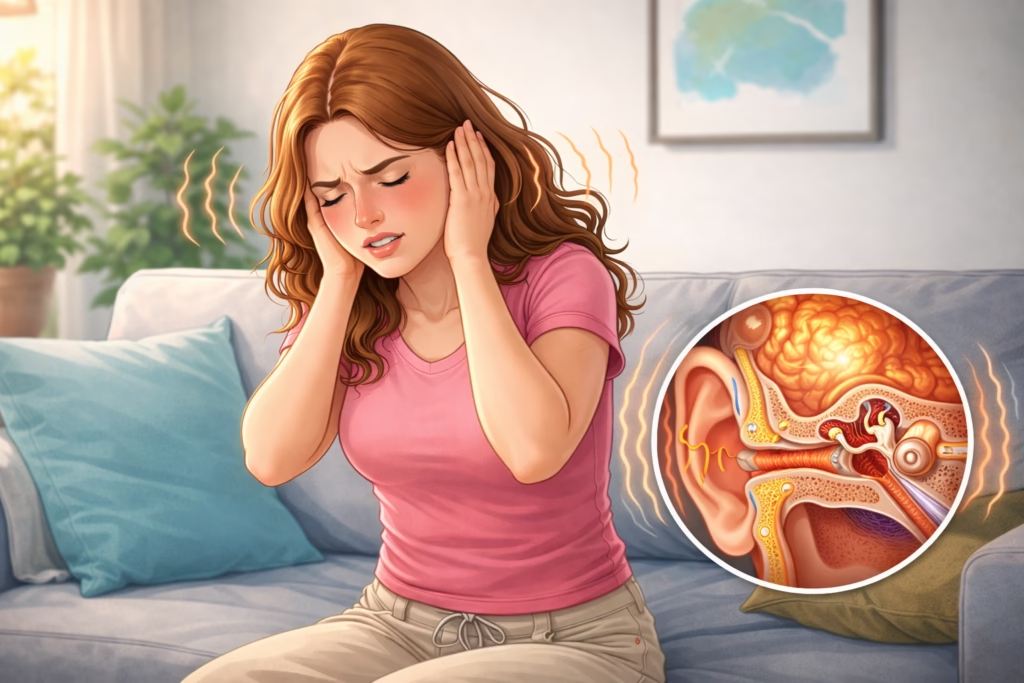
Table of Contents
Hearing plays a vital role in communication, social interaction, and overall quality of life. Deafness—also commonly referred to as hearing loss—affects millions of people worldwide and can occur at any age. While some forms begin at birth, others develop gradually over time or suddenly due to illness or injury. Understanding deafness, its causes, and available management options is essential for early recognition and appropriate care.
This article provides a clear, medically accurate overview of deafness in accessible language, helping readers better understand the condition and its impact.
Overview / Definition
Deafness describes a partial or complete inability to hear sound in one or both ears. It exists on a spectrum, ranging from mild hearing loss to profound deafness.
Medically, hearing loss is often categorized into three main types:
- Conductive hearing loss – Involves problems in the outer or middle ear that reduce sound transmission
- Sensorineural hearing loss – Results from damage to the inner ear (cochlea) or auditory nerve
- Mixed hearing loss – A combination of conductive and sensorineural components
Deafness may be congenital (present at birth) or acquired later in life, and it can be temporary or permanent depending on the underlying cause.
Causes or Risk Factors
Deafness can result from a wide range of medical, environmental, and genetic factors.
Common Causes
- Aging (presbycusis) – Gradual hearing loss due to age-related changes
- Excessive noise exposure – Loud music, machinery, or explosions
- Infections – Such as meningitis, measles, mumps, or chronic ear infections
- Genetic conditions – Inherited disorders affecting ear structure or nerve function
- Ototoxic medications – Certain antibiotics, chemotherapy agents, or high-dose aspirin
- Head trauma – Injury affecting the auditory system
Risk Factors
- Family history of hearing loss
- Occupational noise exposure
- Recurrent ear infections
- Chronic conditions such as diabetes or cardiovascular disease
Symptoms or Clinical Presentation
The symptoms of deafness vary depending on severity, onset, and age of the individual.
Common Symptoms in Adults
- Difficulty understanding speech, especially in noisy environments
- Perception that others are mumbling
- Frequently asking people to repeat themselves
- Increasing volume on televisions or devices
- Ringing in the ears (tinnitus)
Signs in Infants and Children
- Lack of response to loud sounds
- Delayed speech or language development
- Not turning toward familiar voices
- Academic or communication difficulties
Early recognition is especially important in children, as hearing loss can significantly affect speech, language, and learning.
Diagnosis or Screening
Hearing loss is diagnosed through a combination of medical history, physical examination, and auditory testing.
Common Diagnostic Tools
- Pure-tone audiometry – Measures the faintest sounds a person can hear
- Speech audiometry – Assesses speech recognition and clarity
- Tympanometry – Evaluates middle ear function
- Otoacoustic emissions (OAE) – Often used in newborn hearing screening
- Auditory brainstem response (ABR) – Tests nerve pathways, especially in infants
Routine screening in newborns, older adults, and individuals at risk helps identify hearing loss early, improving outcomes.
Treatment or Management Options
Management depends on the type, severity, and cause of deafness. While some forms are reversible, others require long-term strategies.
Common Treatment Approaches
- Hearing aids – Amplify sound for mild to severe hearing loss
- Cochlear implants – Surgically implanted devices for profound sensorineural deafness
- Medical or surgical treatment – For infections, fluid buildup, or structural abnormalities
- Assistive listening devices – Including amplified phones or alerting systems
Supportive and Rehabilitative Options
- Speech and language therapy
- Auditory training
- Sign language or alternative communication methods
- Educational and workplace accommodations
A multidisciplinary approach often provides the best functional and social outcomes.
Prevention or Lifestyle Considerations
While not all cases of deafness can be prevented, certain measures can help reduce risk and protect hearing.
Hearing Protection and Healthy Practices
- Limit exposure to loud noise
- Use ear protection in noisy environments
- Keep personal audio devices at safe volume levels
- Seek prompt treatment for ear infections
- Avoid unnecessary use of ototoxic medications when alternatives exist
Maintaining overall health through regular medical care may also reduce hearing-related complications.
Conclusion
Deafness is a complex condition with diverse causes, presentations, and management strategies. Whether present at birth or acquired later in life, hearing loss can significantly affect communication and daily functioning. Early detection, accurate diagnosis, and appropriate intervention play a crucial role in minimizing its impact and supporting quality of life.
Ongoing advances in hearing technology, medical treatment, and rehabilitation continue to improve outcomes for individuals with hearing loss, making awareness and education more important than ever.
Medical Disclaimer
This article is intended for educational purposes only and does not replace professional medical advice. Individuals with concerns about hearing or possible hearing loss should consult a qualified healthcare professional or audiologist for proper evaluation and guidance.
Was this page helpful?
Thanks for your feedback! What could we improve?
Thank you! Your feedback helps us improve our guides.
Our Health A–Z guides are written by the True Impact Health Editorial Team and based on reliable sources such as public health agencies, clinical guidelines and peer-reviewed research. This guide has not yet been medically reviewed. Read our editorial process.
This content is for general information and is not a substitute for professional medical advice, diagnosis or treatment.