












Health A–Z guide
Lung Cancer
Lung Cancer: Causes, Symptoms, Diagnosis, and Treatment Options
Lung cancer is one of the most common and serious types of cancer worldwide. It occurs when abnormal cells in the lungs grow uncontrollably, forming tumors that can interfere with…
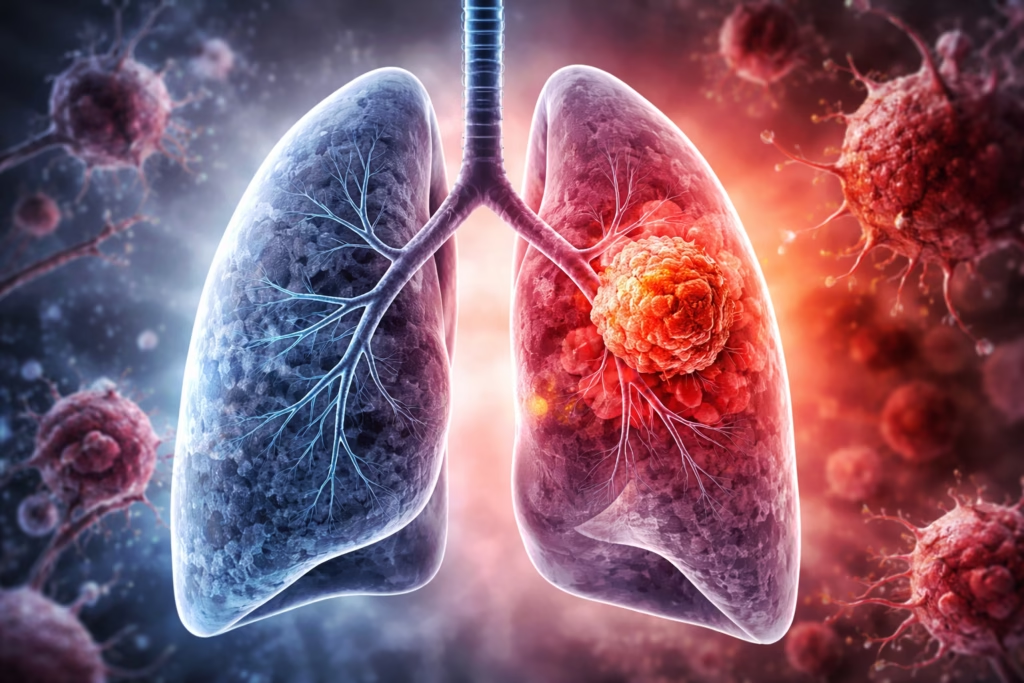
Table of Contents
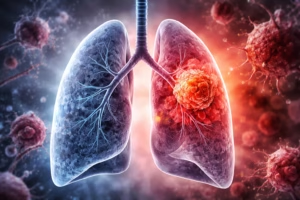
Lung cancer is one of the most common and serious types of cancer worldwide. It occurs when abnormal cells in the lungs grow uncontrollably, forming tumors that can interfere with breathing and spread to other parts of the body. Despite its severity, advances in screening, diagnosis, and treatment have significantly improved outcomes—especially when detected early.
In this article, we’ll explore lung cancer in detail, including its causes, symptoms, diagnosis, treatment options, and preventive strategies.
Overview / Definition
Lung cancer begins in the tissues of the lungs, most often in the cells lining the air passages (bronchi). It is broadly classified into two main types:
1. Non-Small Cell Lung Cancer (NSCLC)
- Accounts for approximately 85% of cases
- Includes subtypes such as:
- Adenocarcinoma
- Squamous cell carcinoma
- Large cell carcinoma
- Generally grows and spreads more slowly than small cell lung cancer
2. Small Cell Lung Cancer (SCLC)
- More aggressive and fast-growing
- Strongly associated with smoking
- Often spreads early to other organs
Lung cancer can also spread (metastasize) to distant organs such as the brain, liver, bones, and adrenal glands.
Causes and Risk Factors
The primary cause of lung cancer is long-term exposure to harmful substances that damage lung cells. However, not everyone exposed develops cancer, and some individuals without known risk factors may still be affected.
Major Risk Factors Include:
- Cigarette smoking (leading cause)
- Includes active smoking and long-term exposure
- Secondhand smoke exposure
- Radon gas exposure
- A naturally occurring radioactive gas found in soil and buildings
- Occupational exposures
- Asbestos
- Arsenic
- Chromium
- Diesel exhaust
- Air pollution
- Family history of lung cancer
- Previous radiation therapy to the chest
While smoking remains the dominant risk factor, nearly 10–20% of lung cancer cases occur in people who have never smoked.
Symptoms and Clinical Presentation
In its early stages, lung cancer may not cause noticeable symptoms. As the disease progresses, symptoms may appear and worsen.
Common Symptoms:
- Persistent cough or change in a chronic cough
- Coughing up blood (hemoptysis)
- Chest pain that worsens with coughing or deep breathing
- Shortness of breath
- Wheezing
- Hoarseness
- Unexplained weight loss
- Fatigue
- Recurrent respiratory infections (e.g., bronchitis or pneumonia)
Symptoms of Advanced Disease May Include:
- Bone pain
- Headaches or neurological symptoms (if spread to the brain)
- Swelling of the face or neck
- Difficulty swallowing
Because these symptoms may overlap with other respiratory conditions, medical evaluation is essential for accurate diagnosis.
Diagnosis and Screening
Screening
Early detection significantly improves survival rates. Screening is recommended for individuals at high risk.
Low-dose computed tomography (LDCT) is currently the recommended screening method for:
- Adults aged 50–80 years
- Those with a significant smoking history (e.g., 20 pack-years or more)
- Current smokers or those who have quit within the past 15 years
Screening should be discussed with a healthcare provider to assess individual risk.
Diagnostic Tests
If lung cancer is suspected, a healthcare provider may recommend:
- Chest X-ray
- CT scan (more detailed imaging)
- PET scan (to evaluate cancer spread)
- Biopsy (definitive diagnosis)
- Needle biopsy
- Bronchoscopy
- Surgical biopsy
- Molecular testing
- Identifies genetic mutations (e.g., EGFR, ALK) that may guide targeted therapy
Staging determines how far the cancer has spread and is critical for treatment planning.
Treatment and Management Options
Treatment depends on several factors:
- Cancer type (NSCLC vs. SCLC)
- Stage of disease
- Genetic characteristics of the tumor
- Overall health of the patient
Common Treatment Modalities
1. Surgery
- Often used in early-stage NSCLC
- May involve removing:
- A small section of the lung (wedge resection)
- A lobe (lobectomy)
- An entire lung (pneumonectomy)
2. Chemotherapy
- Uses medications to kill rapidly dividing cells
- May be given:
- Before surgery (neoadjuvant)
- After surgery (adjuvant)
- As primary treatment in advanced stages
3. Radiation Therapy
- High-energy beams target cancer cells
- Often combined with chemotherapy
4. Targeted Therapy
- Targets specific genetic mutations in cancer cells
- Typically fewer side effects than traditional chemotherapy
- Requires molecular testing
5. Immunotherapy
- Helps the immune system identify and attack cancer cells
- Increasingly used in advanced lung cancer
- Includes drugs such as immune checkpoint inhibitors
Many patients receive a combination of these therapies as part of a multidisciplinary treatment plan.
Prevention and Lifestyle Considerations
While not all cases of lung cancer are preventable, certain measures significantly reduce risk.
Key Preventive Strategies:
- Avoid smoking and tobacco products
- Quit smoking, regardless of age or duration
- Avoid secondhand smoke exposure
- Test homes for radon gas
- Use protective equipment if exposed to occupational hazards
- Reduce exposure to outdoor air pollution where possible
- Maintain a healthy lifestyle:
- Balanced diet
- Regular physical activity
- Weight management
Smoking cessation at any age lowers risk and improves overall health outcomes.
Conclusion
Lung cancer remains a leading cause of cancer-related deaths worldwide, but substantial progress in screening, molecular testing, and modern therapies has improved survival rates. Early detection through low-dose CT screening is particularly crucial for high-risk individuals. Understanding risk factors, recognizing symptoms early, and seeking prompt medical evaluation are essential steps in reducing mortality and improving outcomes.
If you are concerned about lung cancer risk or symptoms, consult a qualified healthcare professional for evaluation and personalized guidance.
Disclaimer
This article is intended for educational purposes only and does not replace professional medical advice. Always consult a licensed healthcare provider for diagnosis, treatment decisions, and individualized medical recommendations.
Was this page helpful?
Thanks for your feedback! What could we improve?
Thank you! Your feedback helps us improve our guides.
Our Health A–Z guides are written by the True Impact Health Editorial Team and based on reliable sources such as public health agencies, clinical guidelines and peer-reviewed research. This guide has not yet been medically reviewed. Read our editorial process.
This content is for general information and is not a substitute for professional medical advice, diagnosis or treatment.