












Borderline Hypertension ICD 10
Learn about the ICD-10 codes for borderline hypertension, including R03.0 and Z13.6, and why accurate medical coding matters for care.
By True Impact Health Editorial Team

Dr. Oluwabusola Stella OkeMedical Reviewer, True Impact Health
Medical graduate of Girne American University with a focus on patient-centred care, clinical assessment and preventive health.
Reviewed this article on October 10, 2026.
View profile How we reviewUpdated on October 10, 2026 9 min read
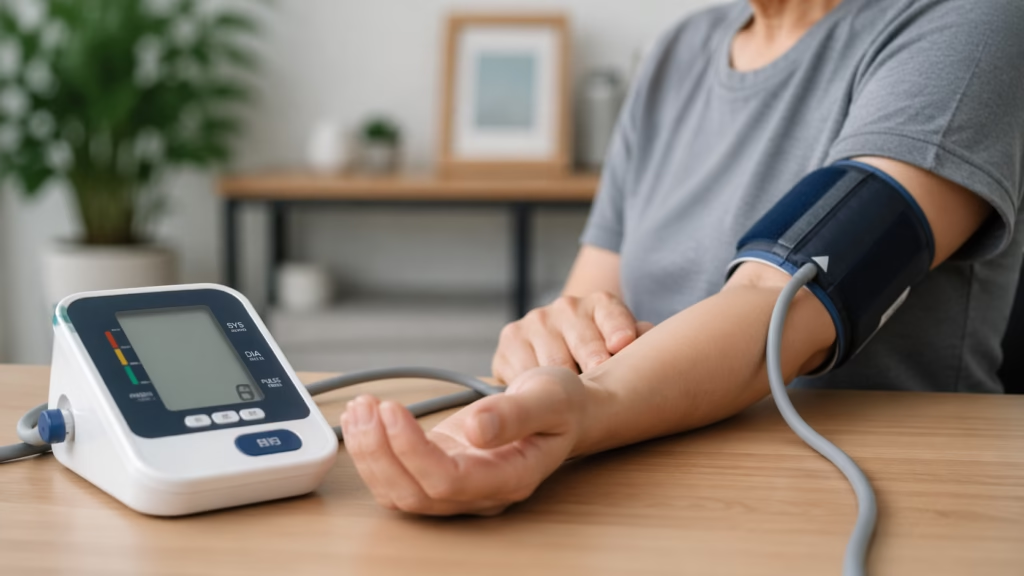
Table of Contents
Quick answer
Key takeaways
- Borderline hypertension defined by systolic 120–139 mmHg or diastolic 80–89 mmHg, indicating elevated but nondiagnostic blood pressure.
- Major modifiable risk factors include obesity, high sodium intake, sedentary lifestyle, chronic stress, and a positive family history.
- ICD-10 guidance: use R03.0 for elevated readings, Z13.6 for screening, and reserve I10 for confirmed hypertension diagnoses.
- Lifestyle management: reduce sodium, 150 minutes weekly moderate exercise, modest weight loss, stress reduction, and regular home blood pressure monitoring.
- Document multiple blood pressure readings and risk factors; record lifestyle counseling to ensure accurate coding, follow up, and appropriate reimbursement.
Borderline hypertension is most commonly coded in ICD-10 as R03.0 for elevated blood pressure reading without a diagnosis of hypertension. It may also be documented using screening code Z13.6. These codes allow healthcare providers to track elevated readings before a formal diagnosis of essential hypertension (I10) is established.
Introduction
Borderline hypertension, often referred to as prehypertension, represents an intermediate stage in blood pressure classification where readings are elevated above normal but do not yet meet the diagnostic threshold for hypertension. Despite its seemingly mild classification, this condition holds considerable clinical importance because it signals an increased risk of progression to sustained hypertension and associated cardiovascular complications.
From a healthcare systems perspective, accurate classification and documentation using the International Classification of Diseases, Tenth Revision, commonly known as ICD-10, is essential. Proper coding facilitates effective patient monitoring, enhances clinical decision making, and ensures appropriate reimbursement mechanisms. Therefore, both the clinical and administrative dimensions of borderline hypertension warrant careful consideration.
Understanding Borderline Hypertension
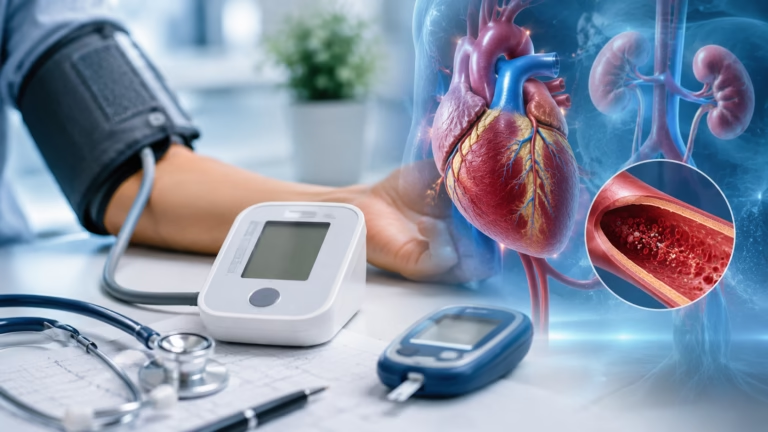
Borderline hypertension is defined by blood pressure readings that fall within a specific elevated range but do not yet meet the criteria for a formal hypertension diagnosis. Typically, systolic blood pressure ranges between 120 and 139 mmHg, while diastolic pressure falls between 80 and 89 mmHg. These values indicate that the cardiovascular system is beginning to experience increased strain, even though the condition may not yet produce overt clinical symptoms.
The development of borderline hypertension is influenced by a range of risk factors that reflect both biological predispositions and lifestyle patterns. A family history of hypertension significantly increases susceptibility, suggesting a genetic component in blood pressure regulation. Sedentary behavior contributes to reduced cardiovascular efficiency and metabolic imbalance, while diets high in sodium and saturated fats promote fluid retention and vascular stiffness. Excess body weight further exacerbates these effects by increasing cardiac workload. Additionally, chronic stress plays a role through hormonal pathways that elevate heart rate and vascular resistance.
The clinical importance of borderline hypertension lies in its predictive value. Individuals within this range are at a substantially higher risk of progressing to stage 1 or stage 2 hypertension if no intervention occurs. However, this stage also presents a critical opportunity for prevention. Evidence indicates that timely lifestyle modifications can significantly reduce the likelihood of disease progression and may even restore blood pressure to normal levels.
The Importance of Accurate ICD-10 Coding
Accurate ICD-10 coding is fundamental to modern healthcare systems because it standardizes the classification of diseases and health conditions across institutions. In the context of borderline hypertension, precise coding enables consistent data collection, which is essential for epidemiological surveillance and public health planning. By accurately recording elevated blood pressure readings, healthcare systems can better track trends, identify at risk populations, and allocate resources effectively.
Moreover, coding plays a crucial role in administrative processes such as insurance claims and reimbursement. Proper documentation ensures that healthcare providers receive appropriate compensation for services rendered, including screening, counseling, and follow up care. It also supports continuity of care by enabling clear communication among healthcare professionals. When patient records accurately reflect blood pressure status and associated risk factors, clinicians can make more informed decisions regarding monitoring and intervention.
ICD-10 Codes Relevant to Borderline Hypertension
Although ICD-10 does not include a specific code explicitly labeled as borderline hypertension, several related codes are used to capture this clinical state. These codes allow healthcare providers to document elevated blood pressure readings without assigning a definitive diagnosis of hypertension.
The code R03.0 is used to indicate elevated blood pressure readings in the absence of a formal hypertension diagnosis. This code is particularly relevant when repeated measurements fall within the borderline range but do not meet diagnostic thresholds. It serves as a provisional classification that signals the need for continued monitoring and possible intervention.
The code Z13.6 is applied during routine screenings for cardiovascular disorders. This is especially useful in preventive care settings where blood pressure measurements are taken as part of general health assessments. It highlights the importance of early detection and ongoing evaluation.
The code I10, which represents essential or primary hypertension, is reserved for cases where blood pressure readings consistently exceed established thresholds, typically at or above 140/90 mmHg. This code should only be assigned once a definitive diagnosis has been established based on multiple readings over time.
Practical Coding Considerations
Accurate coding requires careful clinical judgment and thorough documentation. Healthcare providers should ensure that multiple blood pressure readings are recorded over time before assigning a long term diagnostic code. This approach reduces the risk of misclassification and ensures that transient elevations are not incorrectly labeled as chronic conditions.
In addition, patient records should include relevant risk factors such as obesity, dietary habits, and family history, as these factors provide important context for clinical decision making. Documentation of lifestyle counseling is also essential, as it reflects the preventive measures undertaken during patient care. In such cases, supplementary codes related to counseling services may be applied to capture the full scope of clinical interaction.
Implications for Healthcare Providers and Patients
For healthcare providers, the accurate identification and coding of borderline hypertension enhances clinical decision making by enabling early intervention strategies. It supports adherence to quality metrics related to preventive care and ensures compliance with billing regulations. By maintaining detailed and accurate records, providers can improve patient outcomes and reduce the likelihood of complications associated with uncontrolled blood pressure.
For patients, awareness of borderline hypertension serves as a critical motivator for lifestyle modification. Understanding that blood pressure is elevated but not yet at dangerous levels can encourage proactive behavior changes. Early intervention at this stage significantly reduces the risk of developing serious cardiovascular conditions such as heart attack, stroke, and kidney disease. Furthermore, clear communication between patients and healthcare providers fosters greater engagement in long term health management.
Managing Borderline Hypertension
Management of borderline hypertension primarily focuses on non pharmacological interventions aimed at reducing risk factors and improving cardiovascular health. Dietary modification is a central component, with emphasis on consuming fruits, vegetables, whole grains, and lean proteins while reducing sodium intake. Lower sodium consumption helps decrease fluid retention and vascular pressure, thereby contributing to improved blood pressure control.
Regular physical activity is equally important, as it strengthens the heart and enhances circulation. Engaging in at least 150 minutes of moderate intensity exercise per week has been shown to produce measurable improvements in blood pressure. Combining aerobic exercises such as walking or cycling with resistance training further enhances cardiovascular benefits.
Weight management plays a significant role in blood pressure regulation. Even modest weight loss, typically between five and ten percent of body weight, can lead to noticeable reductions in blood pressure levels. This effect is achieved through decreased cardiac workload and improved metabolic efficiency.
Stress reduction strategies are also essential, as chronic stress can elevate blood pressure through sustained hormonal activation. Practices such as mindfulness, meditation, and adequate sleep contribute to overall cardiovascular stability. Social support systems further enhance psychological well being and resilience.
Regular monitoring is a critical aspect of management. Home blood pressure devices allow individuals to track their readings between clinical visits, providing valuable data for ongoing assessment. Scheduled follow up appointments ensure that any changes in blood pressure are promptly addressed and that management strategies are adjusted as needed.
Leveraging Electronic Health Records and Coding Systems
The integration of electronic health records into clinical practice has significantly improved the efficiency of documentation and coding processes. Standardized templates for recording blood pressure readings, risk factors, and counseling interventions streamline data entry and reduce the likelihood of errors. Automated reminders for repeat measurements ensure that patients receive consistent monitoring, while built in coding tools assist clinicians in selecting appropriate ICD-10 codes.
These systems enhance both clinical and administrative efficiency, ultimately contributing to better patient outcomes and more effective healthcare delivery.
Conclusion
Borderline hypertension represents a pivotal stage in the progression of cardiovascular disease, offering a valuable opportunity for early intervention and prevention. Although it does not yet meet the criteria for a formal hypertension diagnosis, its presence indicates increased risk and warrants careful monitoring.
Accurate ICD-10 coding plays a central role in documenting this condition, supporting both clinical management and healthcare system operations. By combining precise coding practices with comprehensive lifestyle interventions, healthcare providers can significantly reduce the burden of hypertension and its associated complications.
For patients, early recognition and proactive management of borderline hypertension can lead to substantial long term health benefits. Maintaining awareness, adhering to recommended lifestyle changes, and engaging in regular monitoring are essential steps toward achieving and sustaining optimal cardiovascular health.
Disclaimer
This article is for educational purposes only and does not replace professional medical advice, diagnosis, or treatment. Seizures, severe headache, confusion, visual changes, or blood pressure readings in the hypertensive crisis range require urgent medical evaluation.
When to see a doctor
- Sudden, severe headache or chest pain
- Shortness of breath or difficulty breathing
- Numbness, weakness, or changes in vision
- Blood pressure readings consistently above 140/90 mmHg
- Call 911 or your local emergency number immediately for severe chest pain or stroke symptoms
If symptoms are severe or come on suddenly, call your local emergency number.
Frequently asked questions
What is the difference between code R03.0 and code I10?
Code R03.0 is used for an isolated or provisional elevated blood pressure reading without a confirmed diagnosis. Code I10 is reserved for established essential or primary hypertension, which requires multiple high readings taken over time.
Can borderline hypertension be reversed without medication?
Yes, many people can lower borderline blood pressure through lifestyle changes. Adopting a heart-healthy diet low in sodium, exercising regularly, maintaining a healthy weight, limiting alcohol, and managing stress can effectively bring blood pressure back into a normal range.
How often should borderline blood pressure be monitored?
Healthcare providers usually recommend checking blood pressure every three to six months if it falls in the borderline range. Home blood pressure monitoring may also be advised to track trends between clinic visits.
Does a code of R03.0 mean insurance covers preventive care?
In many cases, yes. Code R03.0 establishes medical necessity for follow-up monitoring, routine screening, and lifestyle counseling. However, specific coverage depends on the individual insurance plan and provider guidelines.
Sources and further reading
Was this page helpful?
Thanks for your feedback! What could we improve?
Thank you! Your feedback helps us improve our articles.
Medically reviewed by
Dr. Oluwabusola Stella OkeMedical graduate of Girne American University with a focus on patient-centred care, clinical assessment and preventive health.
True Impact Health articles are written by our editorial team and based on reliable sources such as public health agencies, clinical guidelines and peer-reviewed research. This article has been checked by a doctor on our review panel. Read our editorial process.
This content is for general information and is not a substitute for professional medical advice, diagnosis or treatment.