











7 Lower Back Stretches to Reduce Pain and Improve Mobility
Learn seven effective lower back stretches to improve mobility and reduce pain. Follow these simple, evidence-based exercises to help ease daily stiffness.
By True Impact Health Editorial Team

Medical graduate of Girne American University with a focus on patient-centred care, clinical assessment and preventive health.
Reviewed this article on October 10, 2026.
View profile How we reviewUpdated on October 9, 2026 6 min read
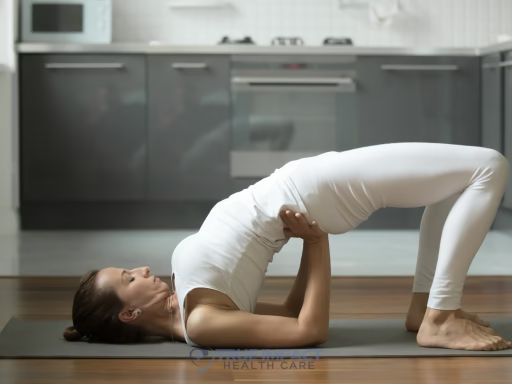
Table of Contents
Quick answer
Lower back stretches help reduce pain by releasing muscle tension, improving spinal flexibility, and promoting better posture. By regularly performing gentle movements, you can alleviate stiffness caused by prolonged sitting or physical activity. These exercises are most effective when done consistently, but they should always be performed slowly and gently to avoid aggravating existing injuries or discomfort.
Introduction
Lower back pain affects millions of people worldwide, from desk workers and athletes to busy parents. Whether it’s a stiff morning or a nagging ache after hours on your feet, targeted stretches can be one of the simplest, most effective ways to relieve discomfort and restore mobility. In this post, we’ll walk you through seven easy-to-follow lower back stretches that can be done at home or in the office. No fancy equipment required, just a yoga mat (or soft surface), a few minutes of your day, and the commitment to feel better.
Why Stretching Matters for Lower Back Pain
• Promotes blood flow and nutrient delivery to spinal structures
• Releases tight muscles and fascia that contribute to aches
• Enhances flexibility, posture, and functional movement
• Reduces risk of recurring injuries and chronic pain
Let’s dive into these seven foundational stretches. Aim to hold each position for 20–30 seconds, repeat 2–3 times, and practice daily or every other day for best results. Always listen to your body, if something hurts, back off or modify.
1 Child’s Pose (Balasana)
A Gentle Release for Your Lumbar Spine
Child’s Pose is a restorative yoga posture that elongates the lower back and hips. It’s perfect for beginners and can be used as a resting break between more active movements.
How to Do It
- Start on hands and knees (tabletop position) with wrists under shoulders and knees under hips.
- Exhale, sit your hips back toward your heels.
- Stretch your arms forward, palms pressing into the floor, forehead resting on the mat.
- Keep the spine long; allow the lower ribs to sink toward the thighs.
- Breathe deeply for 20–30 seconds.
Benefits
• Stretches the erector spinae and glutes
• Calms the nervous system, reducing stress-related tension
• Opens the hips and lengthens the spine
2 Cat–Cow Stretch
Mobilize Your Entire Spine
This dynamic pair of movements increases spinal flexibility and warms up the muscles around the lumbar and thoracic regions.
How to Do It
• Cow (Inhale): From tabletop, drop your belly toward the mat, lift your tailbone and chest up, gaze forward.
• Cat (Exhale): Round your spine toward the ceiling, tuck your chin and tailbone, engaging your core.
Repeat slowly for 8–10 rounds.
Benefits
• Improves coordination between core muscles and back extensors
• Encourages synovial fluid movement in the spinal joints
• Relieves stiffness after prolonged sitting
3 Knee-to-Chest Stretch
Target Deep Lumbar Muscles
A classic stretch that gently compresses and releases the lower spine, ideal for relieving acute tension.
How to Do It
- Lie on your back with knees bent and feet flat on the floor.
- Hug one knee to your chest, keeping the other foot grounded.
- Hold for 20–30 seconds, then switch legs.
- For a deeper stretch, pull both knees in together.
Benefits
• Reduces nerve root tension
• Stretches the gluteal muscles and lower back
• Eases compression in the lumbar discs
4 Seated Spinal Twist
Improve Rotational Mobility
Rotational stretches help distribute movement evenly through the spine, promoting balance and reducing localized stiffness.
How to Do It
- Sit on the floor with legs extended. Bend your right knee and place your foot outside your left thigh.
- Inhale lengthening your spine; exhale twisting toward the right, placing your left elbow on the outside of the right knee.
- Keep both sit bones grounded. Hold 20–30 seconds, then switch sides.
Benefits
• Increases flexibility in the thoracic and lumbar spine
• Massages abdominal organs, improving circulation
• Relieves tension in the spinal ligaments
5 Piriformis Stretch (Figure Four)
Loosen Tight Hips and Alleviate Sciatica
Tight piriformis muscles can irritate the sciatic nerve, leading to low back and leg pain. This stretch targets that deep hip area.
How to Do It
- Lie on your back and cross your right ankle over the left thigh (just above the knee).
- Clasp your hands behind the left thigh and gently pull both legs toward your chest.
- Keep shoulders relaxed. Hold 20–30 seconds, then repeat on the other side.
Benefits
• Relieves hip and glute tightness that contribute to lower back strain
• Improves range of motion in hip external rotation
• Reduces sciatica symptoms
6 Cobra Stretch (Bhujangasana)
Strengthen and Extend the Spine
The cobra pose not only stretches the lower back but also activates the core and spinal extensors for balanced support.
How to Do It
- Lie face down, legs extended, tops of feet on the floor.
- Place hands under shoulders, elbows close to your sides.
- Inhale, gently press up using the strength of your back, lifting your chest while keeping hips grounded.
- Look slightly upward; hold 15–20 seconds. Lower down with control.
Benefits
• Opens chest and counteracts forward-posture habits
• Engages lower back muscles, improving endurance
• Enhances spinal extension and posture
7 Pelvic Tilt
Activate Your Core for Spinal Support
Pelvic tilts teach you to use your abdominal muscles to stabilize the lumbar spine, reducing undue stress.
How to Do It
- Lie on your back, knees bent, feet hip-width apart and flat on the floor.
- Flatten your lower back against the ground by tilting your pelvis upward.
- Hold for 5–10 seconds, then relax.
- Repeat 10–15 times, moving slowly and with control.
Benefits
• Strengthens deep core stabilizers (transverse abdominis)
• Reduces lumbar lordosis, alleviating lower back strain
• Improves mind–body connection and posture awareness
Conclusion
Consistency is key when it comes to reducing lower back pain and enhancing mobility. Incorporate these seven stretches into your daily or alternate-day routine, and you’ll likely notice reduced stiffness, improved posture, and greater freedom of movement within a few weeks. Remember:
• Warm up briefly before deeper movements (e.g., a 5-minute walk)
• Breathe steadily, never hold your breath
• Modify poses to your comfort level; avoid any sharp pain
• Pair stretching with strength exercises (planks, bridges) for balanced support
If your back pain persists or worsens, consult a healthcare professional (physical therapist, chiropractor, or physician) to rule out underlying issues. With patience and practice, these simple stretches can become your go-to toolkit for long-term back health and mobility. Start today, and give your back the relief it deserves!
When to see a doctor
- Pain that follows a severe fall, blow, or other physical injury.
- Numbness, tingling, or weakness in one or both legs.
- Unexplained weight loss or fever accompanying back pain.
- Loss of bladder or bowel control, which requires immediate medical attention.
- Pain that is constant, severe, or does not improve with rest.
If symptoms are severe or come on suddenly, call your local emergency number.
Frequently asked questions
Should I stretch if my back pain is severe?
If you are experiencing acute, severe pain, it is best to consult a healthcare professional before starting a stretching routine. Stretching can sometimes aggravate an underlying injury, such as a herniated disc or muscle strain. Focus on gentle movement and rest until you have received a proper diagnosis and guidance from your doctor.
How long does it take to feel relief from back pain?
Results vary depending on the cause of your pain. Some people experience immediate relief from muscle tension after a few sessions, while others may require several weeks of consistent, gentle stretching to notice a significant improvement. If your pain persists or worsens after a few weeks of home care, seek professional medical advice.
Is it better to use heat or ice for lower back pain?
For new injuries, ice packs can help reduce inflammation during the first 48 hours. After that, or for chronic stiffness, heat therapy—such as a heating pad or warm bath—is often more effective at relaxing tight muscles and improving blood flow. Always use a protective barrier between the heat or ice source and your skin.
Can stretching prevent future back pain?
Yes, maintaining flexibility and core strength is a key component of long-term back health. Regular stretching helps prevent muscles from becoming overly tight, which reduces the risk of strain during daily activities. However, stretching should be combined with regular physical activity and good ergonomic habits to provide the most comprehensive protection for your spine.
Sources and further reading
Was this page helpful?
Thanks for your feedback! What could we improve?
Thank you! Your feedback helps us improve our articles.
Medically reviewed by
Dr. Oluwabusola Stella OkeMedical graduate of Girne American University with a focus on patient-centred care, clinical assessment and preventive health.
True Impact Health articles are written by our editorial team and based on reliable sources such as public health agencies, clinical guidelines and peer-reviewed research. This article has been checked by a doctor on our review panel. Read our editorial process.
This content is for general information and is not a substitute for professional medical advice, diagnosis or treatment.