














Health A–Z guide
Tuberculosis
Tuberculosis: Causes, Symptoms, Diagnosis, Treatment, and Prevention
Tuberculosis (TB) is one of the world’s oldest known infectious diseases, yet it remains a major global health concern today. Despite being preventable and treatable, tuberculosis continues to affect millions…
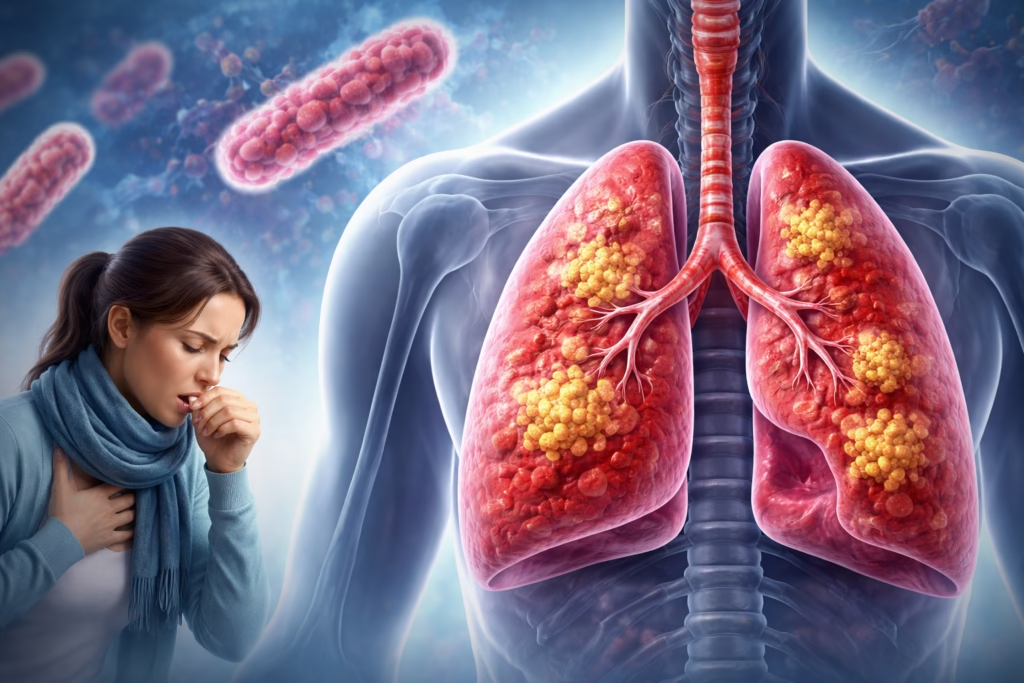
Table of Contents
Tuberculosis (TB) is one of the world’s oldest known infectious diseases, yet it remains a major global health concern today. Despite being preventable and treatable, tuberculosis continues to affect millions of people each year. Understanding how TB spreads, how it presents, and how it is treated is essential for improving awareness and reducing its impact.
In this comprehensive guide, we’ll explore the causes, symptoms, diagnosis, treatment, and prevention of tuberculosis in clear, accessible language grounded in current medical knowledge.
Overview: What Is Tuberculosis?
Tuberculosis is a contagious bacterial infection caused by Mycobacterium tuberculosis. It most commonly affects the lungs (pulmonary TB), but it can also involve other parts of the body, such as:
- Lymph nodes
- Bones and joints
- Kidneys
- Brain (tuberculous meningitis)
- Spine (Pott’s disease)
Latent TB vs. Active TB
TB infection exists in two main forms:
- Latent Tuberculosis Infection (LTBI)
- The bacteria are present in the body but inactive.
- The person has no symptoms and is not contagious.
- However, latent TB can later become active.
- Active Tuberculosis Disease
- The bacteria multiply and cause symptoms.
- The person can spread the disease to others (if pulmonary TB).
- Requires immediate medical treatment.
Globally, TB remains one of the leading causes of death from infectious disease, particularly in low- and middle-income countries.
Causes and Risk Factors
How TB Is Spread
Tuberculosis is transmitted through the air. When a person with active pulmonary TB coughs, sneezes, speaks, or sings, microscopic droplets containing the bacteria can be inhaled by others.
TB is not spread through:
- Sharing utensils
- Handshakes
- Touching surfaces
- Food or water
Risk Factors for Infection or Activation
While anyone can contract tuberculosis, certain factors increase the risk:
- Close contact with someone who has active TB
- Weakened immune system (e.g., HIV/AIDS, cancer, diabetes)
- Organ transplantation or use of immunosuppressive medications
- Malnutrition
- Smoking
- Substance use disorders
- Living in crowded or poorly ventilated conditions
- Healthcare work in high-risk settings
People living with HIV are at significantly higher risk because a weakened immune system allows latent TB to progress to active disease.
Symptoms and Clinical Presentation
The symptoms of tuberculosis depend on whether it is pulmonary or extrapulmonary.
Common Symptoms of Pulmonary TB
- Persistent cough lasting more than 3 weeks
- Coughing up blood or sputum
- Chest pain
- Fatigue
- Fever
- Night sweats
- Unexplained weight loss
- Loss of appetite
Symptoms often develop gradually and may initially be mild.
Symptoms of Extrapulmonary TB
These vary depending on the organ affected:
- Swollen lymph nodes
- Back pain (spinal TB)
- Confusion or neurological symptoms (TB meningitis)
- Blood in urine (renal TB)
Because symptoms can mimic other illnesses, prompt medical evaluation is essential when TB is suspected.
Diagnosis and Screening
Early diagnosis plays a critical role in preventing complications and limiting spread.
Screening Tests for TB Infection
- Tuberculin Skin Test (TST)
- A small amount of purified protein derivative (PPD) is injected under the skin.
- The site is checked after 48–72 hours for a reaction.
- Interferon-Gamma Release Assays (IGRAs)
- Blood tests that measure immune response to TB bacteria.
- Often preferred for people who received the BCG vaccine.
Tests for Active TB Disease
If active TB is suspected, healthcare providers may order:
- Chest X-ray
- Sputum smear microscopy
- Sputum culture (gold standard)
- Nucleic acid amplification tests (NAATs)
- CT scans (in certain cases)
- Biopsy (for extrapulmonary TB)
Prompt identification of drug-resistant TB strains is crucial for selecting effective treatment.
Treatment and Management Options
Tuberculosis is treatable and curable with appropriate antibiotics. However, treatment requires strict adherence and may last several months.
Standard Treatment for Drug-Sensitive TB
The typical regimen for active TB involves a combination of antibiotics for at least 6 months:
- Isoniazid
- Rifampin
- Pyrazinamide
- Ethambutol
Treatment usually occurs in two phases:
- Intensive Phase (First 2 Months) – Combination of four drugs
- Continuation Phase (Next 4 Months) – Typically two drugs
Drug-Resistant TB
Some strains of TB are resistant to standard medications:
- MDR-TB (Multidrug-resistant TB): Resistant to isoniazid and rifampin
- XDR-TB (Extensively drug-resistant TB): Resistant to multiple second-line drugs
These cases require longer treatment (often 9–24 months) and specialized medications.
Treatment of Latent TB
People with latent infection may be treated to prevent progression. Options include:
- Isoniazid for 6–9 months
- Rifampin for 4 months
- Combination therapy (shorter regimens)
Completing treatment is essential to prevent relapse and resistance.
Prevention and Lifestyle Considerations
Preventing TB involves both public health strategies and individual measures.
Vaccination
- The BCG (Bacillus Calmette-Guérin) vaccine is used in many countries to prevent severe forms of TB in children.
- It is not routinely used in all countries due to variable effectiveness in adults.
Reducing Transmission
- Early detection and treatment of active TB
- Proper ventilation in indoor spaces
- Use of respiratory precautions in healthcare settings
- Wearing masks in high-risk environments
Strengthening Immune Health
While not a substitute for medical care, maintaining overall health can support immune function:
- Balanced nutrition
- Smoking cessation
- Management of chronic conditions (e.g., diabetes)
- Access to HIV testing and antiretroviral therapy when needed
Public health programs, including contact tracing and directly observed therapy (DOT), have significantly improved TB control worldwide.
Conclusion
Tuberculosis is a serious but preventable and treatable infectious disease caused by Mycobacterium tuberculosis. It most often affects the lungs but can impact multiple organs. Early recognition of symptoms such as a persistent cough, fever, night sweats, and weight loss is vital. With appropriate antibiotic therapy and adherence to prescribed regimens, most cases can be successfully cured.
Public awareness, vaccination programs, and improved access to healthcare remain essential components in reducing the global burden of tuberculosis.
Disclaimer
This article is intended for educational and informational purposes only and does not constitute medical advice. If you have symptoms suggestive of tuberculosis or concerns about TB exposure, please consult a qualified healthcare professional for proper evaluation and guidance.
Was this page helpful?
Thanks for your feedback! What could we improve?
Thank you! Your feedback helps us improve our guides.
Our Health A–Z guides are written by the True Impact Health Editorial Team and based on reliable sources such as public health agencies, clinical guidelines and peer-reviewed research. This guide has not yet been medically reviewed. Read our editorial process.
This content is for general information and is not a substitute for professional medical advice, diagnosis or treatment.