















Health A–Z guide
Smallpox
Smallpox: Understanding a Deadly Disease That Changed History
Smallpox was once one of the most devastating infectious diseases known to humanity. For centuries, it caused widespread illness and death across continents—shaping populations, altering the course of wars, and…
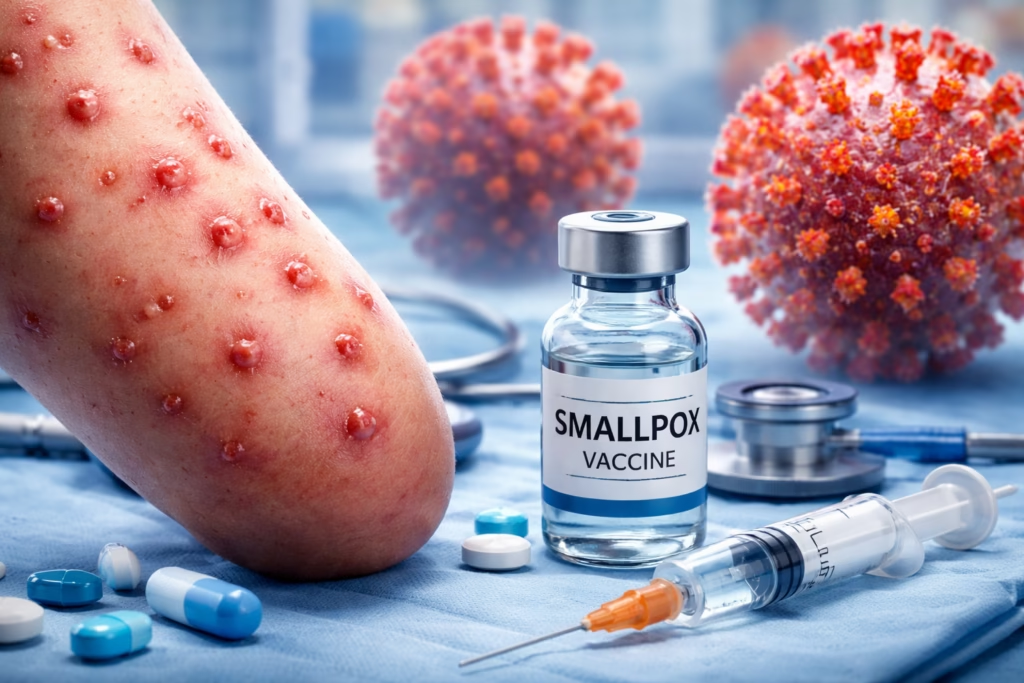
Table of Contents
Smallpox was once one of the most devastating infectious diseases known to humanity. For centuries, it caused widespread illness and death across continents—shaping populations, altering the course of wars, and influencing global health systems. Thanks to an unprecedented global vaccination effort, smallpox was declared eradicated in 1980. Today, it remains the only human infectious disease to have been completely eliminated worldwide.
Although smallpox no longer occurs naturally, understanding its history, symptoms, treatment, and prevention is important—particularly in discussions surrounding public health, vaccination, and global preparedness.
Overview / Definition
Smallpox was a highly contagious viral disease caused by the variola virus, a member of the Orthopoxvirus genus. There were two main forms:
- Variola major – the more severe form, associated with higher mortality (around 30%)
- Variola minor – a milder form, with a significantly lower death rate (less than 1%)
Smallpox was characterized by:
- High fever
- Fatigue
- A distinctive progressive skin rash that developed into pus-filled blisters
- Scarring in survivors
Through an intensive global vaccination program led by the World Health Organization (WHO), the last naturally occurring case of smallpox was reported in 1977. In 1980, smallpox was officially declared eradicated.
Causes and Risk Factors
Cause
Smallpox was caused exclusively by infection with the variola virus, which infected humans and had no known animal reservoir. This lack of an animal host made eradication possible.
Transmission
The virus primarily spread through:
- Respiratory droplets during close, face-to-face contact
- Direct contact with infected bodily fluids
- Contact with contaminated objects, such as bedding or clothing
- Less commonly, airborne transmission in enclosed spaces
Risk Factors (Historical Context)
Historically, risk factors included:
- Close contact with infected individuals
- Living in crowded or unsanitary conditions
- Lack of prior vaccination
- International travel during outbreaks
Today, the general public is not at risk of naturally occurring smallpox.
Symptoms and Clinical Presentation
Symptoms typically appeared 10–14 days after exposure, following an incubation period during which the person was not contagious.
Early Symptoms (Prodromal Phase)
These resembled severe flu-like illness:
- High fever (often above 101°F / 38.3°C)
- Severe fatigue
- Headache
- Back pain
- Vomiting
- Occasionally abdominal pain
This phase lasted about 2–4 days and marked the beginning of contagiousness.
Rash Development
The rash followed a predictable pattern:
- Flat red spots (macules)
- Raised bumps (papules)
- Fluid-filled blisters (vesicles)
- Pus-filled lesions (pustules)
- Crusting and scab formation
Key distinguishing features of the rash:
- Began on the face, hands, and forearms before spreading
- Lesions were at the same stage of development across the body
- Often left permanent pitted scars
Severe forms could include:
- Hemorrhagic smallpox (bleeding into the skin and organs)
- Malignant or “flat” smallpox (lesions that failed to develop properly)
These forms had very high mortality rates.
Diagnosis and Screening
Historical Diagnosis
Smallpox was typically diagnosed based on:
- Clinical examination of the rash pattern
- History of exposure
- Laboratory confirmation by viral culture or advanced testing (in modern era)
The uniform progression of skin lesions was a hallmark feature that helped distinguish it from other blistering illnesses, such as chickenpox.
Modern Context
Today:
- Routine screening is not performed because the disease no longer exists in the community.
- Laboratory research involving variola virus is restricted to high-security facilities.
- Any suspected case would trigger immediate public health investigation.
Treatment and Management Options
Historical Management
There was no specific cure for smallpox during most of human history. Treatment focused on supportive care:
- Hydration
- Pain management
- Fever control
- Prevention of secondary bacterial infections
Despite medical care, mortality remained high in severe cases.
Modern Antiviral Options
Although smallpox has been eradicated, antiviral agents have been developed in case of a laboratory accident or bioterrorism event:
- Tecovirimat (TPOXX)
- Brincidofovir
These medications were developed as precautionary countermeasures and are stockpiled in some countries.
Prevention and Public Health Measures
Vaccination
The smallpox vaccine was one of the first vaccines ever developed. It used a related virus (vaccinia virus) to stimulate immune protection without causing smallpox.
Key features of the vaccine:
- Provided strong immunity
- Often produced a distinctive circular scar
- Helped eliminate the disease worldwide
Routine vaccination stopped after eradication because:
- The disease no longer circulated
- Vaccine risks, though generally low, were no longer justified
Certain military and laboratory personnel may still receive the vaccine as a precaution.
Global Eradication Success
Smallpox remains a landmark achievement in medicine because:
- It was eliminated through coordinated international collaboration
- It demonstrated the power of mass vaccination campaigns
- It strengthened global health surveillance systems
Why Smallpox Still Matters Today
Although eradicated, smallpox remains relevant due to:
- Public health preparedness planning
- Bioterrorism risk considerations
- Historical lessons in vaccine development
- Insights into outbreak control strategies
The eradication effort paved the way for modern vaccination programs and global collaborations aimed at controlling diseases such as polio and measles.
Conclusion
Smallpox was once a highly contagious and deadly viral infection responsible for millions of deaths worldwide. Caused by the variola virus, it produced severe fever and a characteristic rash that often left lasting scars. Through coordinated global vaccination efforts, smallpox became the first—and so far only—human infectious disease to be eradicated.
Understanding smallpox offers valuable insight into infectious disease control, vaccination science, and global public health success. It stands as a powerful reminder of what coordinated medical efforts can achieve.
Disclaimer:
This article is for educational purposes only and does not constitute medical advice. If you have concerns about infectious diseases, vaccinations, or related health topics, consult a qualified healthcare professional.
Was this page helpful?
Thanks for your feedback! What could we improve?
Thank you! Your feedback helps us improve our guides.
Our Health A–Z guides are written by the True Impact Health Editorial Team and based on reliable sources such as public health agencies, clinical guidelines and peer-reviewed research. This guide has not yet been medically reviewed. Read our editorial process.
This content is for general information and is not a substitute for professional medical advice, diagnosis or treatment.