















Health A–Z guide
Kidney Cancer
Kidney Cancer: Symptoms, Causes, Diagnosis, and Treatment
Kidney cancer is a serious but often treatable condition that begins in the tissues of the kidneys—two bean-shaped organs located on either side of the spine, just below the rib…
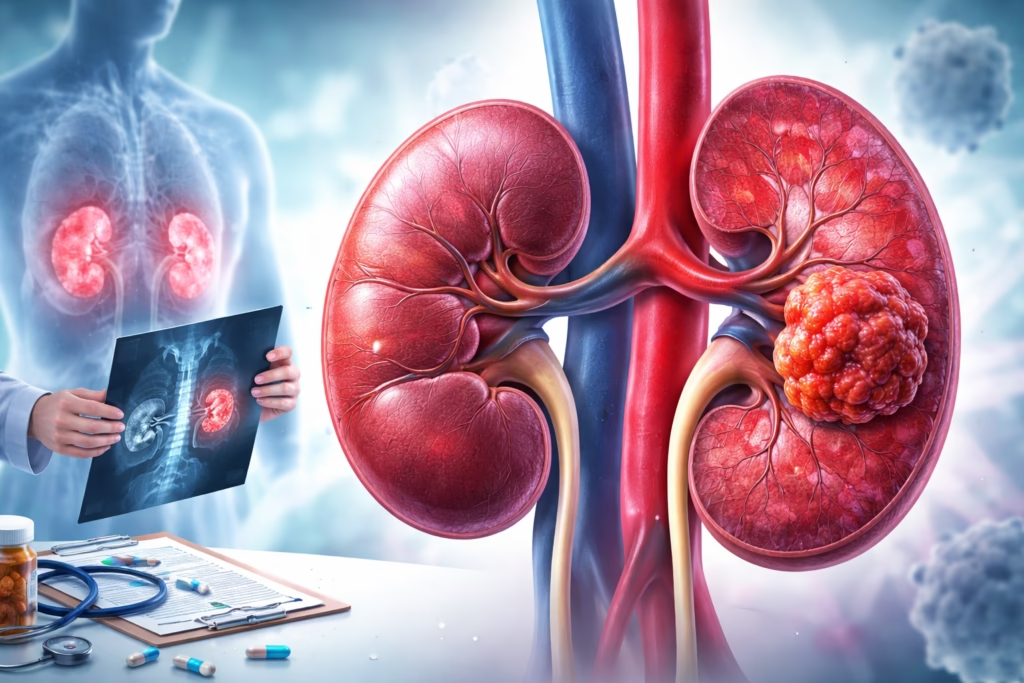
Table of Contents
Kidney cancer is a serious but often treatable condition that begins in the tissues of the kidneys—two bean-shaped organs located on either side of the spine, just below the rib cage. The kidneys play a critical role in filtering waste from the blood, balancing fluids and electrolytes, and producing hormones that help regulate blood pressure and red blood cell production.
While kidney cancer accounts for a smaller proportion of all cancers compared to breast, lung, or colorectal cancers, its incidence has gradually increased over recent decades. Fortunately, advances in imaging techniques, earlier detection, and improved treatments have significantly enhanced outcomes for many patients.
This article provides a comprehensive, medically accurate overview of kidney cancer, including its causes, symptoms, diagnosis, treatment options, and prevention strategies.
Overview / Definition
Kidney cancer, also known as renal cancer, refers to the uncontrolled growth of abnormal cells in the kidney. The most common type in adults is:
1. Renal Cell Carcinoma (RCC)
- Accounts for about 85–90% of kidney cancers
- Originates in the lining of the small tubes (renal tubules) within the kidney
Other less common types include:
- Transitional cell carcinoma (affects the renal pelvis)
- Wilms tumor (primarily affects children)
- Renal sarcoma (rare, originates in connective tissues)
Kidney cancer may remain confined to the kidney in early stages. However, if untreated, it can spread (metastasize) to lymph nodes, lungs, bones, liver, or brain.
Causes and Risk Factors
The exact cause of kidney cancer is not fully understood, but several risk factors have been identified. These factors may increase the likelihood of developing the disease:
Lifestyle Factors
- Smoking (approximately doubles the risk)
- Obesity
- High blood pressure (hypertension)
Medical Conditions
- Chronic kidney disease
- Long-term dialysis
- Certain inherited conditions (e.g., Von Hippel–Lindau disease)
Environmental and Occupational Exposures
- Exposure to certain chemicals (e.g., trichloroethylene)
- Long-term use of certain pain medications (historically associated, though less common today)
Demographic Factors
- More common in individuals over age 50
- Slightly more common in men than women
- Family history of kidney cancer
Having one or more risk factors does not mean someone will develop kidney cancer, but it may increase the probability.
Symptoms and Clinical Presentation
Kidney cancer may not cause symptoms in its early stages. In many cases, it is discovered incidentally during imaging tests for other conditions.
When symptoms occur, they may include:
- Blood in the urine (hematuria) – may be visible or detected only under a microscope
- Persistent pain in the side or lower back
- A palpable mass in the abdomen or flank
- Unexplained weight loss
- Fatigue
- Fever not associated with infection
- Night sweats
- Swelling in the legs or ankles
In more advanced cases, symptoms related to metastasis may appear, such as bone pain, shortness of breath, or neurological symptoms.
Because these symptoms can overlap with other conditions, medical evaluation is essential for accurate diagnosis.
Diagnosis and Screening
Diagnostic Evaluation
If kidney cancer is suspected, healthcare providers may use:
1. Imaging Tests
- Ultrasound
- CT scan (computed tomography) – most commonly used
- MRI (magnetic resonance imaging)
These tests help determine:
- Size and location of the tumor
- Whether it has spread
- Involvement of nearby structures
2. Laboratory Tests
- Blood tests to assess kidney function
- Urinalysis to detect blood or abnormal cells
3. Biopsy
In selected cases, a small sample of tumor tissue is removed and examined under a microscope to confirm diagnosis.
Screening
Currently, there is no routine screening program for kidney cancer in the general population. Screening may be recommended for individuals with strong genetic risk factors or inherited syndromes.
Treatment and Management Options
Treatment depends on several factors, including:
- Tumor size and stage
- Whether cancer has spread
- Overall health of the patient
- Kidney function
1. Surgery (Primary Treatment)
Surgery is often the first-line treatment for localized kidney cancer.
- Partial nephrectomy: Removal of the tumor while preserving healthy kidney tissue
- Radical nephrectomy: Removal of the entire kidney (and sometimes nearby lymph nodes)
Modern surgical approaches often use minimally invasive techniques such as laparoscopic or robotic surgery.
2. Targeted Therapy
Targeted drugs block specific pathways involved in cancer cell growth and blood supply. These therapies are commonly used for advanced kidney cancer.
Examples include:
- Tyrosine kinase inhibitors (TKIs)
- mTOR inhibitors
3. Immunotherapy
Immunotherapy stimulates the immune system to recognize and attack cancer cells. It has significantly improved outcomes for advanced RCC.
Common agents include:
- Immune checkpoint inhibitors (e.g., PD-1 or CTLA-4 inhibitors)
4. Radiation Therapy
Radiation is not typically used as a primary treatment for kidney cancer but may help relieve symptoms, especially in metastatic disease.
5. Active Surveillance
For small, slow-growing tumors—especially in older or medically frail individuals—careful monitoring with periodic imaging may be an appropriate option.
Treatment plans are individualized and developed by a multidisciplinary team.
Prevention and Lifestyle Considerations
While not all kidney cancers are preventable, certain steps may reduce risk:
- Stop smoking
- Maintain a healthy weight
- Engage in regular physical activity
- Control blood pressure
- Follow medical advice for managing chronic kidney disease
Healthy dietary patterns that include fruits, vegetables, and whole grains may contribute to overall cancer risk reduction, although specific dietary links to kidney cancer are not definitive.
Regular medical check-ups can also aid early detection of underlying risk factors.
Prognosis and Outlook
The prognosis for kidney cancer depends largely on the stage at diagnosis.
- Localized kidney cancer has a relatively high 5-year survival rate.
- Advanced or metastatic disease has lower survival rates but outcomes have improved significantly with modern therapies.
Early detection and prompt treatment remain key factors in improving long-term outcomes.
Conclusion
Kidney cancer is a complex condition that can develop silently and present few symptoms in its early stages. Although its exact cause is not fully understood, several modifiable and non-modifiable risk factors contribute to its development. Modern diagnostic tools allow for earlier detection, and advances in surgery, immunotherapy, and targeted treatments have improved survival and quality of life for many patients.
Understanding the warning signs, maintaining a healthy lifestyle, and seeking prompt medical evaluation for persistent or unusual symptoms are essential steps in supporting kidney health.
Disclaimer: This article is intended for educational purposes only and does not replace professional medical advice. If you have concerns about kidney cancer or related symptoms, please consult a qualified healthcare provider for personalized evaluation and care.
Was this page helpful?
Thanks for your feedback! What could we improve?
Thank you! Your feedback helps us improve our guides.
Our Health A–Z guides are written by the True Impact Health Editorial Team and based on reliable sources such as public health agencies, clinical guidelines and peer-reviewed research. This guide has not yet been medically reviewed. Read our editorial process.
This content is for general information and is not a substitute for professional medical advice, diagnosis or treatment.