Brain Tumors: What You Need to Know
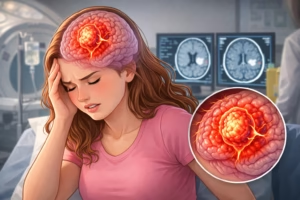
Brain tumors are complex medical conditions that can affect people of all ages. While the word “tumor” often raises concern, it’s important to understand that brain tumors vary widely in type, behavior, and severity. Some grow slowly and may cause minimal symptoms, while others are aggressive and require prompt medical care. This article provides a clear, medically accurate overview of brain tumors to help readers better understand the condition, its causes, symptoms, and available management options.
Overview: What Are Brain Tumors?
A brain tumor is an abnormal growth of cells within the brain or the surrounding structures, such as the meninges (the protective layers around the brain), cranial nerves, or the pituitary gland.
Brain tumors are generally classified into two broad categories:
- Primary brain tumors: Originate in the brain or nearby tissues
- Secondary (metastatic) brain tumors: Spread to the brain from cancers elsewhere in the body (such as lung, breast, or melanoma)
Tumors may also be described as:
- Benign (non-cancerous): Typically slow-growing and less likely to invade nearby tissue
- Malignant (cancerous): More aggressive and capable of invading surrounding brain tissue
Both benign and malignant tumors can be serious due to the brain’s sensitive and limited space.
Causes and Risk Factors
In many cases, the exact cause of a brain tumor is not known. However, research has identified several factors that may increase risk.
Known or Suspected Risk Factors
- Genetic conditions (e.g., neurofibromatosis, Li-Fraumeni syndrome)
- Exposure to high levels of ionizing radiation, particularly to the head during childhood
- Family history of certain rare brain tumor syndromes
- History of cancer elsewhere in the body, increasing the risk of metastatic brain tumors
It is important to note that everyday exposures such as mobile phone use have not been conclusively proven to cause brain tumors based on current scientific evidence.
Symptoms and Clinical Presentation
Brain tumor symptoms can vary significantly depending on the tumor’s size, type, growth rate, and location in the brain.
Common Symptoms May Include:
- Persistent or worsening headaches
- Seizures, especially in individuals without a prior seizure history
- Nausea or vomiting (often worse in the morning)
- Changes in vision, hearing, or speech
- Weakness or numbness in parts of the body
- Difficulty with balance or coordination
- Memory problems or personality changes
Symptoms may develop gradually or appear suddenly, particularly if there is swelling or bleeding in the brain.
Diagnosis and Evaluation
Diagnosing a brain tumor typically involves several steps to confirm its presence and determine its type.
Common Diagnostic Tools
- Neurological examination to assess vision, hearing, balance, and reflexes
- Imaging studies, such as:
- Magnetic Resonance Imaging (MRI)
- Computed Tomography (CT) scans
- Biopsy, where a small tissue sample is examined under a microscope to identify tumor type
- Molecular and genetic testing to guide treatment decisions in certain cases
Early and accurate diagnosis is essential for appropriate management planning.
Treatment and Management Options
Treatment depends on multiple factors, including tumor type, size, location, growth rate, and the patient’s overall health. Managing brain tumors often involves a multidisciplinary medical team.
Common Treatment Approaches
- Surgery to remove as much of the tumor as safely possible
- Radiation therapy to target and destroy abnormal cells
- Chemotherapy or other drug therapies to slow or stop tumor growth
- Targeted therapy or immunotherapy, used in selected tumor types
- Supportive care, such as medications to control seizures or reduce brain swelling
In some cases, especially with slow-growing tumors, careful monitoring (active surveillance) may be recommended.
Prevention and Lifestyle Considerations
Currently, there is no guaranteed way to prevent brain tumors. However, some general strategies support overall health and may reduce certain risks:
- Avoid unnecessary exposure to high-dose radiation
- Follow safety guidelines in occupational or medical settings involving radiation
- Maintain regular medical check-ups, especially if at increased genetic risk
Leading a healthy lifestyle—balanced nutrition, physical activity, and avoiding tobacco—supports overall well-being, though it cannot eliminate risk entirely.
Conclusion: Key Takeaways
Brain tumors are diverse conditions that range from slow-growing benign masses to aggressive malignancies. Understanding the types, symptoms, and diagnostic process can help demystify the condition and highlight the importance of timely medical evaluation. Advances in imaging, surgery, radiation, and targeted therapies continue to improve outcomes and quality of life for many patients. Accurate information and professional medical care remain central to effective management.
Medical Disclaimer
This article is intended for educational purposes only and does not provide personalized medical advice. If you have symptoms, concerns, or questions related to brain tumors, please consult a qualified healthcare professional for proper evaluation and guidance.
If you’d like, I can also provide a simplified version for patients, an SEO-optimized meta description, or a follow-up article focusing on specific types of brain tumors.