Introduction — Why COVID-19 Still Matters
Since emerging in late 2019, COVID-19 has evolved from a regional outbreak into one of the most significant global public-health crises in modern history. Beyond infection itself, it has reshaped healthcare delivery, labor markets, education systems, and social behavior.
Understanding COVID-19 is no longer just about recognizing symptoms, it involves appreciating virology, transmission dynamics, immunology, prevention strategies, and long-term societal implications. Continued awareness is essential because:
-
The virus continues to circulate globally
-
New variants periodically emerge
-
Long-term complications remain under investigation
-
Public health responses evolve with scientific evidence
Section 1: What Is COVID-19? — Scientific Context
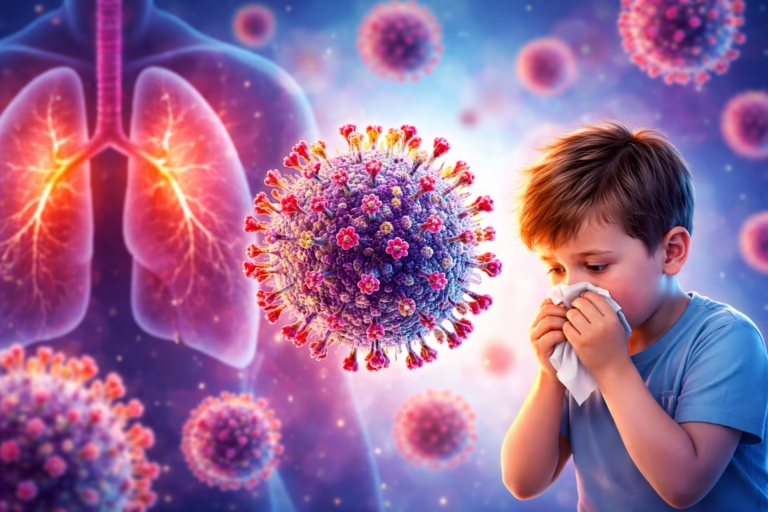
COVID-19 is the disease caused by the novel coronavirus SARS-CoV-2, first identified in patients with pneumonia in Wuhan, China.
Virological Background
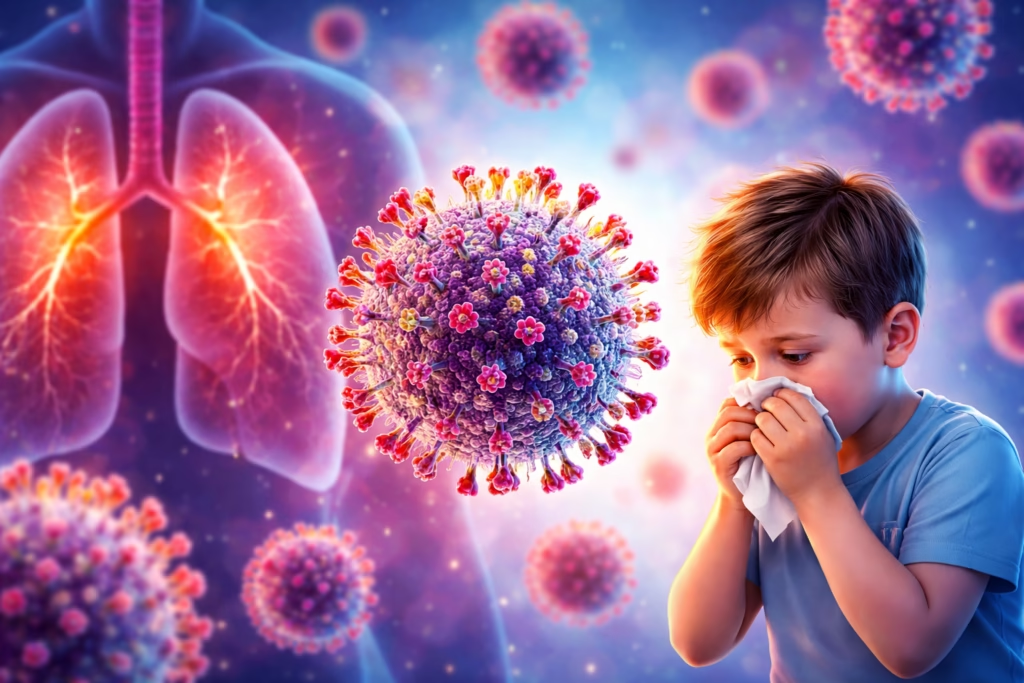
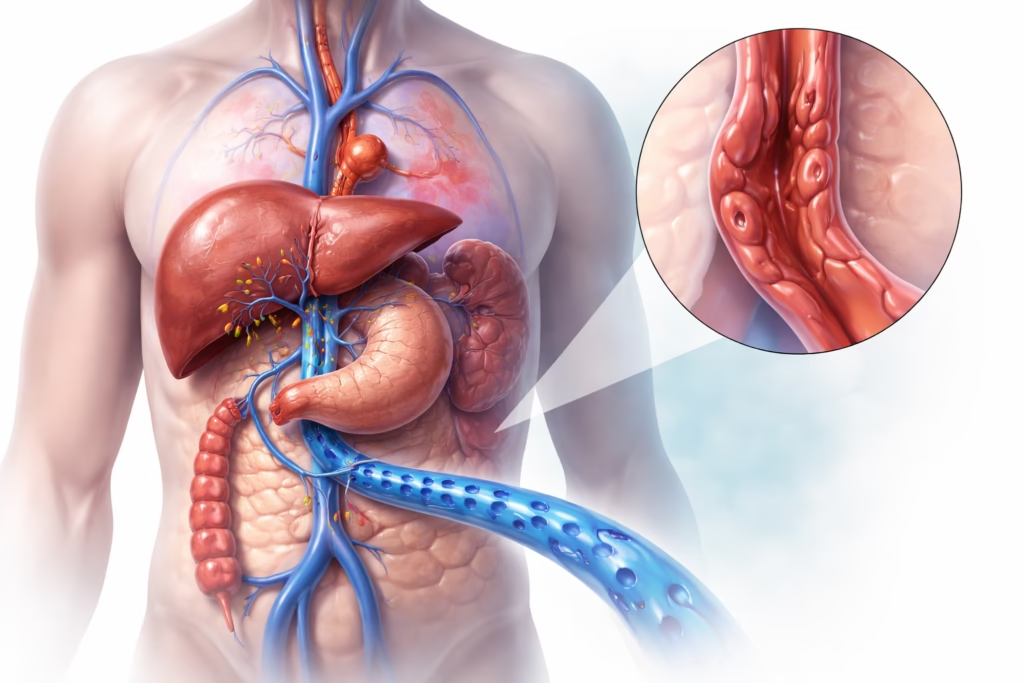
Coronaviruses belong to a family of viruses characterized by crown-like spike proteins on their surface. These spikes enable the virus to attach to human cells via ACE2 receptors located in:
-
Respiratory tract
-
Blood vessels
-
Gastrointestinal system
-
Nervous tissue
This widespread receptor distribution explains the multi-system effects observed in COVID-19.
Classification
-
Family: Coronaviridae
-
Genus: Betacoronavirus
-
Genetic material: Single-stranded RNA
RNA viruses mutate more frequently than DNA viruses, allowing adaptation and variant emergence.
Variant Evolution
Mutations may alter:
-
Transmissibility
-
Immune evasion
-
Disease severity
Major variant waves demonstrated how viral evolution can influence public-health strategies and vaccination updates.
Section 2: Symptoms and Transmission — Mechanisms and Patterns
Symptom Spectrum
COVID-19 ranges from asymptomatic infection to critical illness.
Mild to Moderate Manifestations
-
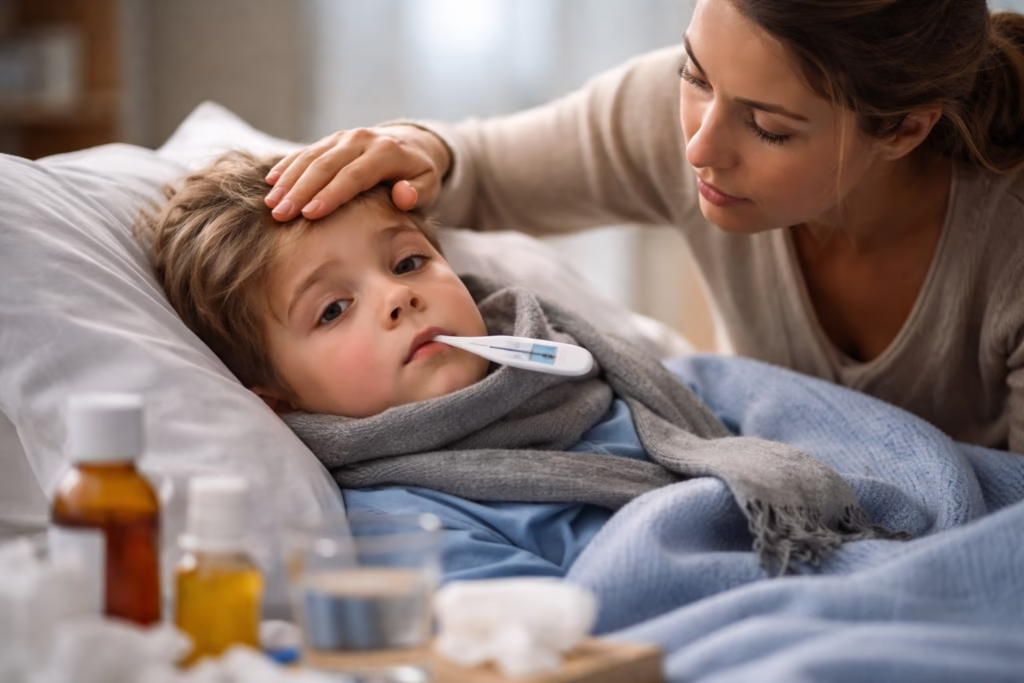
Fever — caused by immune signaling
-
Dry cough — airway inflammation
-
Fatigue — systemic inflammatory response
-
Muscle aches — cytokine activity
-
Loss of taste/smell — nerve involvement
-
Gastrointestinal symptoms — intestinal receptor binding
Severe Manifestations
-
Pneumonia
-
Acute respiratory distress syndrome
-
Blood clot formation
-
Cardiac inflammation
-
Neurological complications
Severity is influenced by:
-
Age
-
Comorbidities
-
Immune status
-
Viral load
Transmission Pathways — Detailed Explanation
Respiratory Droplets
-
Expelled during coughing or talking
-
Travel short distances
-
Primary transmission early in the pandemic
Aerosol Spread
-
Smaller particles remain airborne
-
Accumulate in enclosed spaces
-
Major driver in indoor outbreaks
Surface (Fomite) Transmission
-
Less common than initially feared
-
Possible when contaminated surfaces contact mucous membranes
Pre-Symptomatic Spread
A critical challenge:
-
Individuals can transmit before symptoms appear
-
Makes containment difficult
Section 3: Prevention — Layered Risk Reduction
No single preventive measure eliminates risk — effectiveness comes from combining strategies.
Personal Protective Measures
Mask Use
Reduces inhalation and emission of infectious particles.
Effectiveness depends on:
-
Fit
-
Filtration quality
-
Consistency of use
Physical Distancing
Reduces exposure probability by minimizing viral concentration encountered.
Hand Hygiene
Interrupts indirect transmission routes by removing pathogens before face contact.
Ventilation Improvements
Dilutes airborne viral particles through:
-
Fresh air exchange
-
Filtration systems
Environmental Cleaning
Routine disinfection targets high-contact surfaces such as:
-
Door handles
-
Electronics
-
Workstations
This adds another protective layer, particularly in shared environments.
Section 4: Vaccination and Treatment — Biomedical Defense
Vaccine Platforms Explained
mRNA Vaccines
Developed by Pfizer Inc. with BioNTech SE, and by Moderna
-
Deliver genetic instructions to produce spike protein
-
Trigger immune memory without live virus
Viral Vector Vaccines
Produced by Johnson & Johnson and AstraZeneca
-
Use harmless carrier virus
-
Introduce spike protein blueprint
Protein Subunit Vaccines
Example from Novavax
-
Direct delivery of spike protein fragments
-
Traditional immunization strategy
Benefits of Vaccination
-
Reduces severe illness risk
-
Lowers hospitalization rates
-
Mitigates healthcare system strain
-
Contributes to population immunity
Boosters address waning immunity and variant shifts.
Treatment Strategies
Depend on disease stage and severity:
Antiviral Drugs
-
Inhibit viral replication
-
Most effective early in infection
Anti-Inflammatory Therapies
-
Reduce immune overreaction
-
Prevent organ damage
Supportive Care
-
Oxygen supplementation
-
Fluid management
-
Intensive care when needed
Medical management continues evolving as clinical data accumulate.
Section 5: Societal and Economic Impacts — Broader Consequences
Social Transformation
-
Remote collaboration normalized
-
Education digitization accelerated
-
Shifts in urban mobility patterns
-
Increased mental-health awareness
Economic Disruption
-
Supply chain fragmentation
-
Labor market volatility
-
Rapid automation adoption
-
Growth of digital commerce
These changes may persist beyond the pandemic era.
Section 6: Living with COVID-19
Mental Health Considerations
Prolonged uncertainty and isolation contributed to:
-
Anxiety
-
Depression
-
Burnout
Protective strategies include:
-
Structured routines
-
Physical activity
-
Social connection
-
Professional support when needed
Long COVID — Post-Infection Sequelae
A subset of individuals experience prolonged symptoms due to:
-
Immune dysregulation
-
Organ inflammation
-
Nervous system involvement
Common issues:
-
Persistent fatigue
-
Cognitive difficulty
-
Shortness of breath
-
Cardiovascular complications
Management requires multidisciplinary care and ongoing research.
Conclusion — Moving Forward
COVID-19 represents more than a viral outbreak, it is a complex biomedical and societal phenomenon that has reshaped global health priorities.
Understanding viral biology, recognizing transmission patterns, utilizing vaccination, and maintaining preventive behaviors empower individuals and communities to manage ongoing risk. As science advances, adaptive responses and informed decision-making will remain central to navigating the post-pandemic landscape and strengthening resilience against future public-health challenges.