

Introduction
As teens transition into adulthood, one of the most common questions circulating among 16- and 17-year-olds is: “Am I done growing?” While most adolescents experience their biggest growth spurts in early to mid-teens, there’s still hope for that late leap in height. In this post, we’ll explore the science behind growth spurts, discuss whether you can still grow at 17, and share practical tips to maximize your natural height potential.
Understanding Growth Spurts
What Is a Growth Spurt?
A growth spurt refers to a phase of accelerated physical growth, during which a child or adolescent gains height much faster than usual over a relatively short period of time. Rather than growing steadily year by year, the body experiences a sudden surge in bone length and overall stature.
Growth spurts are biologically driven and occur when the body releases increased levels of specific hormones. The most important of these is human growth hormone (HGH), which stimulates bone and tissue growth. During puberty, sex hormones, estrogen in girls and testosterone in boys, work alongside HGH to intensify this process. These hormones not only promote rapid height increase but also contribute to other physical changes such as muscle development, bone maturation, and changes in body composition.
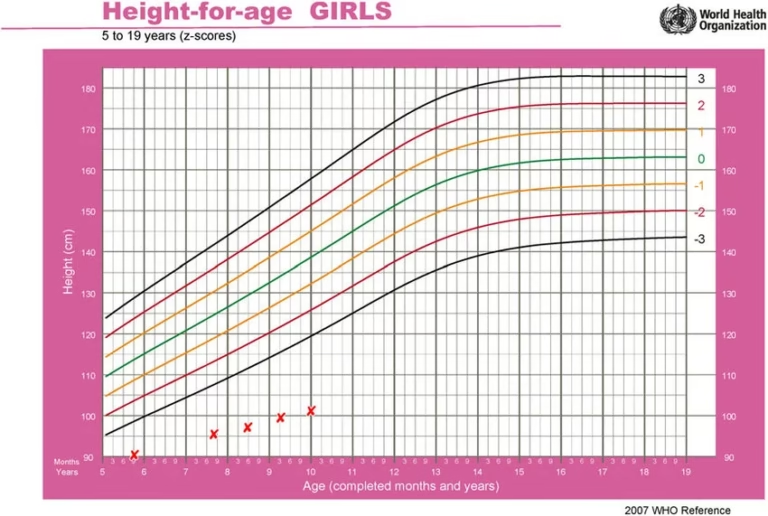
Growth spurts are most prominent during puberty, typically occurring earlier in girls than in boys. Girls often experience their major growth spurt between ages 9 and 14, while boys usually have theirs between ages 11 and 16. However, the timing, duration, and intensity vary widely from one individual to another due to genetics, nutrition, overall health, and environmental factors.
Some adolescents may grow several centimeters in a single year, while others experience smaller but longer-lasting spurts. This variation is normal and does not necessarily indicate a health problem. In most cases, growth gradually slows and eventually stops once the growth plates in the bones close at the end of puberty.
Understanding growth spurts helps parents and caregivers recognize that temporary changes. such as increased appetite, fatigue, or awkward coordination, are natural parts of healthy development.
Key Phases of Adolescent Growth
Adolescent growth does not happen all at once; it occurs in distinct phases, each marked by specific physical and hormonal changes. Understanding these phases helps explain why growth rates differ widely among teenagers.
Pre-pubertal phase (approximately ages 8–10 for girls, 9–11 for boys)
This stage marks the transition from childhood into puberty. Growth is still relatively steady, but the body begins preparing for rapid changes. Hormonal activity gradually increases, bones start to lengthen slightly faster, and early signs of puberty, such as breast development in girls or testicular enlargement in boys, may begin. Height increases are modest but consistent during this phase.
Peak height velocity (girls: about 11–13 years; boys: about 13–15 years)
This is the most intense growth phase, often referred to as the growth spurt. During this period, adolescents experience their fastest increase in height, sometimes growing 7–10 cm (3–4 inches) per year. Girls typically reach this peak earlier than boys. Hormones such as growth hormone, estrogen, and testosterone are at their highest levels, driving rapid bone growth and noticeable changes in body shape and proportions.
Late-puberty tapering (up to age 18 for some individuals)
After the peak growth phase, the rate of height increase gradually slows. Bones continue to mature and harden as growth plates begin to close. While some adolescents may gain a small amount of additional height, growth eventually stops entirely by late adolescence or early adulthood. This phase is also characterized by increased muscle development, improved coordination, and final body proportions.
Typical Growth Patterns in Teens
Teenage growth follows recognizable patterns shaped by a combination of genetics, nutrition, lifestyle, and hormonal activity. While no two adolescents grow in exactly the same way, these factors largely determine how tall someone becomes and how long growth continues.
Genetics: Your Height Blueprint
Genetics play the dominant role in determining adult height. Research suggests that about 60–80% of final height is inherited, meaning family traits strongly influence growth potential. Looking at the heights of biological parents and close relatives can offer a rough estimate of a teen’s likely growth curve. However, genetics set the potential, not the guarantee, environmental factors still matter.
Nutrition & Lifestyle
Proper nutrition and healthy habits are essential for reaching genetic height potential. Calcium and vitamin D support bone strength and mineralization, while protein provides the building blocks needed for bone and muscle growth.
Lifestyle choices also play a critical role. Regular physical activity, especially weight-bearing exercises (such as walking, jumping, or sports) and stretching, helps stimulate the release of human growth hormone (HGH). Equally important is quality sleep, the body releases its highest levels of growth hormone during deep sleep stages, making consistent rest vital during adolescence.
Hormones & Growth Plates
Actual height increase occurs at the growth plates (epiphyseal plates), soft areas of cartilage located at the ends of long bones. During puberty, hormones drive these plates to produce new bone, resulting in increased height.
Once growth plates close and harden into solid bone, significant height gain is no longer possible. This typically occurs between ages 16–18 in girls and 18–21 in boys, though timing varies. In medical settings, bone-age X-rays are sometimes used to assess skeletal maturity and determine whether growth plates remain open.
Can You Still Grow at 17?
Yes, it is possible to grow at 17, especially for boys. While many teens have already passed their peak growth phase by this age, growth does not stop at the same time for everyone. Much depends on biological timing, genetics, and overall health.
Late Bloomers Exist
Adolescent development varies widely, and late bloomers are common, particularly among males. Boys often continue growing into their late teens or even early twenties if their growth plates remain open. A 17-year-old boy may still gain 1–3 inches (2.5–7.5 cm), especially if puberty started later than average.
Girls, on the other hand, usually complete most of their height growth by ages 15–16, as their growth spurts occur earlier. However, small increases in height can still happen in some cases, particularly if puberty began later.
Factors That Influence a Late Growth Spurt
Several factors can contribute to continued growth or a delayed growth spurt:
-
Genetics: Family patterns matter. If parents or siblings grew later than average, the same pattern may apply.
-
Nutrition recovery: Teens who experienced undernutrition or illness earlier in adolescence may see additional growth once nutrition improves, allowing the body to “catch up.”
-
Physical activity: Regular exercise supports bone health and naturally boosts human growth hormone (HGH) levels, which are essential for growth.
-
Hormonal balance: Conditions affecting thyroid hormones or sex hormones can delay puberty and extend the growth window. When treated, growth may continue for longer than expected.
Real-Life Examples
There are well-documented cases of professional athletes who experienced noticeable height increases late in their teens, sometimes after age 17. In addition, anecdotal reports and clinical observations show that some adolescents gain 2–4 cm after this age, particularly males with delayed skeletal maturity.
How to Maximize Growth Potential at 17
At 17, growth may be slowing, but if your growth plates are still open, there is still room to optimize your remaining height potential. While you cannot change your genetics, you can create the best possible conditions for your body to grow by focusing on nutrition, movement, sleep, and healthy daily habits.
Nutrition: Fuel Your Growth
Proper nutrition provides the raw materials your body needs to build bone and tissue.
-
Prioritize lean proteins such as chicken, fish, eggs, beans, and legumes. Protein is essential for muscle repair and bone matrix formation during late adolescence.
-
Increase calcium intake through dairy products, fortified plant milks, leafy greens, and nuts. Pair this with vitamin D, obtained from sunlight exposure and fortified foods, to enhance calcium absorption and bone strength.
-
Choose complex carbohydrates, whole grains, fruits, and vegetables, to supply sustained energy that supports daily activity, exercise, and hormonal balance.
A nutrient-dense diet helps ensure you reach your genetically determined height potential.
Exercise & Posture
Physical activity plays a supportive role in growth and skeletal health.
-
Stretching routines and yoga help maintain proper spinal alignment, reduce compression, and improve posture, sometimes making you appear taller immediately.
-
Sports such as basketball, swimming, and trampoline workouts involve jumping and full-body extension, which are associated with natural stimulation of human growth hormone (HGH).
-
Strength training, when done with proper technique and supervision, strengthens muscles and improves bone density. It does not stunt growth and can enhance posture and overall body structure.
Consistency matters more than intensity; regular, balanced exercise is key.
Sleep & Recovery
Sleep is one of the most critical and often overlooked factors in growth.
-
Aim for 8–10 hours of high-quality sleep each night, as growth hormone is primarily released during deep sleep stages.
-
Maintain a consistent bedtime routine, reducing screen time, caffeine, and heavy meals before bed to improve sleep quality.
-
Short naps (20–30 minutes) can support recovery and alertness without interfering with nighttime sleep, especially after intense physical activity.
Without adequate sleep, even perfect nutrition and exercise won’t fully support growth.
Lifestyle Tips
Everyday habits can either support or hinder growth.
-
Stay well hydrated, as water is essential for nutrient transport and joint health.
-
Avoid smoking and excessive caffeine, both of which can negatively affect bone density and hormone regulation.
-
Maintain a healthy weight, being significantly underweight or overweight can disrupt hormonal balance and potentially delay or limit growth.
When to Seek Medical Advice
Warning Signs to Watch For
• Sudden growth slowdown or plateau before age 16 (girls) / 18 (boys)
• Extreme fatigue, mood swings or appetite changes
• Delayed puberty signs (no testicular growth by 14 in boys; no breast development by 13 in girls)
Professional Options
• Pediatrician or endocrinologist consultation
• Bone-age assessment via hand/wrist X-ray
• Growth hormone therapy (in rare, clinically diagnosed cases)
Conclusion
While the window for dramatic height gains narrows after 16 for girls and 18 for boys, a growth spurt at 17 isn’t impossible, especially for late-blooming teens. Genetics set the stage, but nutrition, exercise, sleep and overall health play starring roles in maximizing your height potential. If you suspect growth-plate closure or hormonal issues, don’t hesitate to consult a medical professional.
Remember: every body is unique. Embrace your natural build, adopt healthy habits, and who knows, you might just catch that final inch (or two)!
Have you experienced a late growth spurt? Share your story in the comments below, and don’t forget to subscribe for more teen growth and health tips.








One Response