













Health A–Z guide
Arthritis
Arthritis: Understanding Joint Pain, Causes, and Care Options
Arthritis is one of the most common causes of chronic pain and disability worldwide, affecting people of all ages, not just older adults. While often discussed as a single condition,…
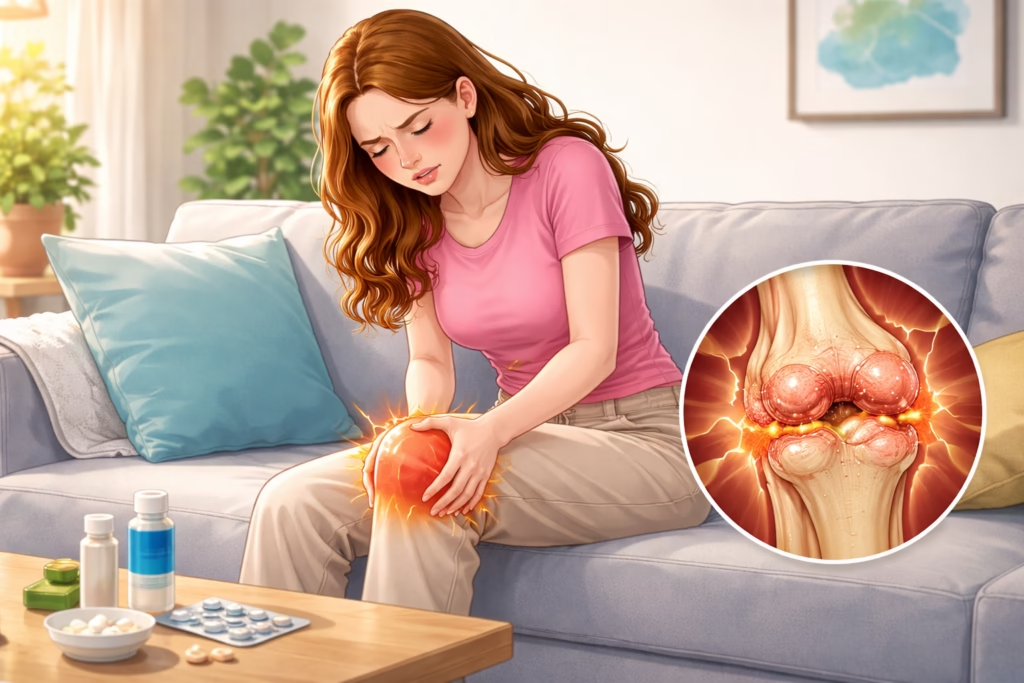
Table of Contents

Arthritis is one of the most common causes of chronic pain and disability worldwide, affecting people of all ages, not just older adults. While often discussed as a single condition, arthritis actually refers to a group of more than 100 disorders that involve inflammation or damage to the joints. Understanding what arthritis is, why it occurs, and how it can be managed is essential for maintaining mobility, independence, and quality of life.
This article provides a clear, medically accurate overview of arthritis in accessible terms, covering its causes, symptoms, diagnosis, treatment options, and lifestyle considerations.
Overview / Definition
Arthritis is a broad term describing conditions that affect the joints—the areas where two bones meet. Most forms of arthritis involve:
- Joint pain
- Stiffness
- Swelling
- Reduced range of motion
Although joints are the primary structures involved, some types of arthritis can also affect other organs, including the skin, eyes, lungs, and heart.
Common Types of Arthritis
- Osteoarthritis (OA): Degenerative joint disease caused by cartilage breakdown
- Rheumatoid arthritis (RA): An autoimmune disorder causing chronic joint inflammation
- Psoriatic arthritis: Associated with the skin condition psoriasis
- Gout: Caused by uric acid crystal buildup in joints
- Ankylosing spondylitis: Primarily affects the spine and sacroiliac joints
Causes or Risk Factors
The causes of arthritis depend on the specific type, but several factors may increase overall risk.
Common Risk Factors
- Age: Risk increases with advancing age
- Genetics: Family history can play a role
- Joint injury or overuse: Previous trauma or repetitive stress
- Obesity: Extra weight increases stress on weight-bearing joints
- Autoimmune conditions: Increase risk for inflammatory arthritis
- Infections or metabolic disorders: Relevant in certain types like reactive arthritis or gout
For inflammatory forms, the immune system mistakenly attacks joint tissues, while degenerative forms involve wear and tear of joint cartilage.
Symptoms or Clinical Presentation
Arthritis symptoms can vary widely depending on the type and severity but often include:
- Joint pain or tenderness
- Swelling or warmth around a joint
- Stiffness, especially in the morning or after inactivity
- Decreased range of motion
- Grinding or clicking sensation in the joint
- Fatigue (common in inflammatory arthritis)
Some forms of arthritis may produce systemic symptoms, such as fever, weight loss, or skin rashes.
Diagnosis or Screening
Accurate diagnosis is essential for effective management and typically involves a combination of clinical evaluation and diagnostic testing.
Common Diagnostic Tools
- Medical history and physical examination
- Imaging studies:
- X-rays (joint space narrowing, bone changes)
- MRI or ultrasound (soft tissue and early inflammation)
- Laboratory tests:
- Inflammatory markers (e.g., ESR, CRP)
- Autoantibodies (e.g., rheumatoid factor, anti-CCP)
- Uric acid levels (for gout)
- Joint fluid analysis in selected cases
No single test confirms all forms of arthritis; diagnosis is based on the overall clinical picture.
Treatment or Management Options
There is no universal cure for arthritis, but many treatments can help control symptoms, slow disease progression, and improve function.
Medical Management
- Pain relievers: Acetaminophen or nonsteroidal anti-inflammatory drugs (NSAIDs)
- Disease-modifying antirheumatic drugs (DMARDs): For inflammatory arthritis
- Biologic therapies: Target specific immune pathways
- Corticosteroids: Short-term inflammation control
- Uric acid–lowering medications: For gout
Non-Medication Strategies
- Physical therapy: Improves strength and flexibility
- Assistive devices: Braces, splints, or canes
- Joint injections: Corticosteroids or hyaluronic acid
- Surgery: Joint replacement or repair in advanced cases
Treatment plans are typically individualized based on arthritis type, severity, and overall health.
Prevention or Lifestyle Considerations
While not all forms of arthritis can be prevented, healthy lifestyle choices may reduce risk or ease symptoms.
Supportive Lifestyle Measures
- Maintain a healthy body weight
- Engage in low-impact exercise (e.g., walking, swimming)
- Eat a balanced, nutrient-rich diet
- Protect joints during physical activity
- Avoid smoking, which can worsen inflammatory arthritis
- Manage stress, which may influence pain perception
Early recognition and appropriate management can help preserve joint function and prevent complications.
Conclusion
Arthritis is a complex group of conditions that can significantly impact daily life, but understanding its causes, symptoms, and management options empowers individuals to take an active role in their health. With early diagnosis, evidence-based treatment, and supportive lifestyle measures, many people with arthritis are able to remain active and productive.
Important Disclaimer
This article is intended for educational purposes only and does not replace professional medical advice. Individuals experiencing joint pain, stiffness, or other concerning symptoms should consult a qualified healthcare professional for proper evaluation, diagnosis, and treatment.
If you found this overview helpful, consider exploring reputable medical resources or speaking with a clinician to learn more about arthritis specific to your needs.
Was this page helpful?
Thanks for your feedback! What could we improve?
Thank you! Your feedback helps us improve our guides.
Our Health A–Z guides are written by the True Impact Health Editorial Team and based on reliable sources such as public health agencies, clinical guidelines and peer-reviewed research. This guide has not yet been medically reviewed. Read our editorial process.
This content is for general information and is not a substitute for professional medical advice, diagnosis or treatment.