











Can Parkinson’s Cause Congestive Heart Failure
Parkinson’s disease (PD) is best known for its hallmark motor symptoms, tremors, rigidity, bradykinesia, and postural instability. But beyond the...
By True Impact Health Editorial Team

Physician with experience in patient care and preventive medicine, focused on early detection, disease prevention and long-term wellness.
Reviewed this article on October 15, 2026.
View profile How we reviewUpdated on March 23, 2026 3 min read

Table of Contents
Introduction
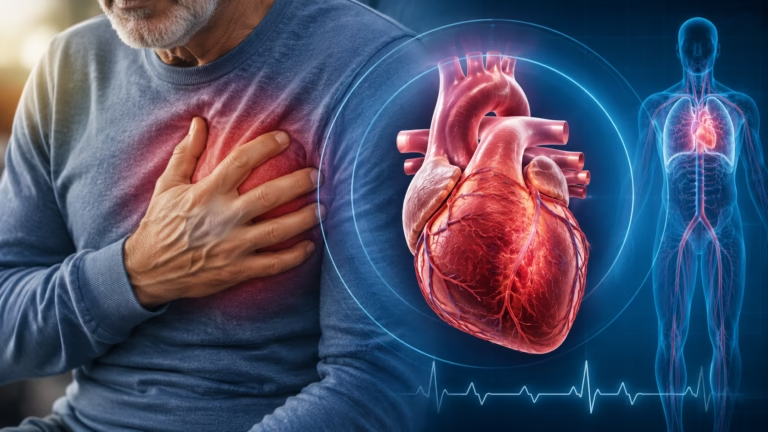
Parkinson’s disease (PD) is best known for its hallmark motor symptoms, tremors, rigidity, bradykinesia, and postural instability. But beyond the classic movement challenges, PD can have far-reaching effects on the body’s systems, including the heart. Congestive heart failure (CHF) is a condition in which the heart can’t pump blood effectively, leading to fluid buildup, fatigue, and shortness of breath. While Parkinson’s and CHF affect different organ systems, emerging research suggests important connections between them. In this post, we’ll explore whether—and how—Parkinson’s disease can contribute to or exacerbate congestive heart failure.
Understanding the Basics
What Is Parkinson’s Disease?
• A progressive neurodegenerative disorder
• Loss of dopamine-producing neurons in the substantia nigra
• Key symptoms: tremor at rest, muscle stiffness, slowed movement
What Is Congestive Heart Failure?
• Chronic condition of the heart muscle
• Inadequate pumping leads to fluid retention in lungs, legs, and abdomen
• Symptoms:
– Shortness of breath (especially when lying down)
– Swelling in ankles, feet, or abdomen
– Persistent coughing or wheezing
– Fatigue and weakness
Shared Risk Factors and Comorbidities
Parkinson’s and CHF often occur in similar patient populations, and not purely by coincidence. Shared risk factors include:
• Age: Both conditions primarily affect older adults.
• Sedentary Lifestyle: Motor symptoms in PD may limit physical activity, increasing cardiovascular risk.
• Hypertension and Diabetes: Common comorbidities that raise the likelihood of heart failure.
Mechanisms Linking Parkinson’s to Heart Dysfunction
Autonomic Nervous System (ANS) Dysfunction
Parkinson’s disease frequently disrupts the ANS, which regulates heart rate, blood pressure, and vascular tone. Key points:
• Orthostatic Hypotension: Sudden drops in blood pressure when standing can strain the heart.
• Impaired Heart Rate Variability: Reduced adaptability to stress or exertion may contribute to CHF progression.
Alpha-Synuclein Aggregates in Cardiac Tissue
Emerging studies reveal that alpha-synuclein, the protein that accumulates in Parkinson’s, can deposit in cardiac nerves. While research is ongoing:
• These deposits may impair nerve signals that control heart function.
• Altered nerve supply can lead to arrhythmias or reduced contractility.
Medication Effects on the Heart
Levodopa, dopamine agonists, and other PD treatments greatly improve motor symptoms but can sometimes affect cardiovascular health:
• Levodopa-induced Hypotension: May exacerbate orthostatic episodes.
• Dopamine Agonists: Linked to fluid retention in some patients.
• MAO-B Inhibitors: Rarely associated with hypertensive episodes if dietary precautions aren’t followed.
Clinical Evidence and Case Studies
• Observational Studies: PD patients show higher rates of hospitalization for heart failure compared to age-matched controls.
• Autopsy Reports: Some autopsies have detected cardiac alpha-synuclein in people with Parkinson’s, hinting at a direct pathological link.
• Small Cohort Trials: Highlight improved cardiovascular outcomes when PD-related autonomic dysfunction is aggressively managed.
Managing Cardiovascular Health in Parkinson’s
Proactive strategies can minimize the risk of CHF in PD patients:
- Regular Cardiovascular Screening
– Echocardiograms to assess cardiac function
– 24-hour blood pressure and heart rate monitoring - Physical Therapy and Exercise
– Tailored regimens to maintain mobility and cardiovascular fitness
– Activities like walking, swimming, or cycling under supervision - Medication Review
– Coordinate with neurologists and cardiologists to balance PD control and heart safety
– Adjust dosages or switch drugs if orthostatic hypotension or fluid retention develops - Diet and Lifestyle
– Low-sodium, heart-healthy diet
– Adequate hydration to reduce orthostatic drops
– Smoking cessation and moderation of alcohol intake - Autonomic Support
– Compression stockings to prevent blood pooling
– Gradual position changes to reduce dizziness and falls
When to Seek Medical Advice
If you or a loved one has Parkinson’s and experiences any of the following, prompt evaluation is critical:
• Unexplained weight gain or swelling in the legs
• Persistent breathlessness, especially at rest
• Rapid heartbeat or palpitations
• Severe dizziness upon standing
Conclusion
While Parkinson’s disease doesn’t directly “cause” congestive heart failure in the way coronary artery disease or hypertension might, it does carry factors that can heighten CHF risk. Autonomic dysfunction, nerve deposits, medication side effects, and a sedentary lifestyle all contribute to cardiovascular strain in PD patients. Fortunately, awareness, early screening, and coordinated care between neurologists, cardiologists, and primary care providers can significantly reduce complications. If you’re managing Parkinson’s disease, don’t overlook your heart—monitoring and maintaining cardiovascular health is a vital part of the journey to better quality of life.
Concerned about your heart health with Parkinson’s? Talk to your healthcare team about comprehensive cardiac screening and personalized management plans. Early intervention can make all the difference!
Was this page helpful?
Thanks for your feedback! What could we improve?
Thank you! Your feedback helps us improve our articles.
Medically reviewed by
Dr. Bernard ReynoldsPhysician with experience in patient care and preventive medicine, focused on early detection, disease prevention and long-term wellness.
True Impact Health articles are written by our editorial team and based on reliable sources such as public health agencies, clinical guidelines and peer-reviewed research. This article has been checked by a doctor on our review panel. Read our editorial process.
This content is for general information and is not a substitute for professional medical advice, diagnosis or treatment.