








Nursing Diagnosis Congestive Heart Failure
Learn essential nursing diagnoses for congestive heart failure, assessment tips, SMART goals, and interventions to improve outcomes and reduce readmissions.
By True Impact Health Editorial Team

Medical doctor and clinical researcher focused on preventive medicine, chronic disease and clear, evidence-based health communication.
Reviewed this article on October 9, 2026.
View profile How we reviewUpdated on March 23, 2026 4 min read

Table of Contents
Introduction
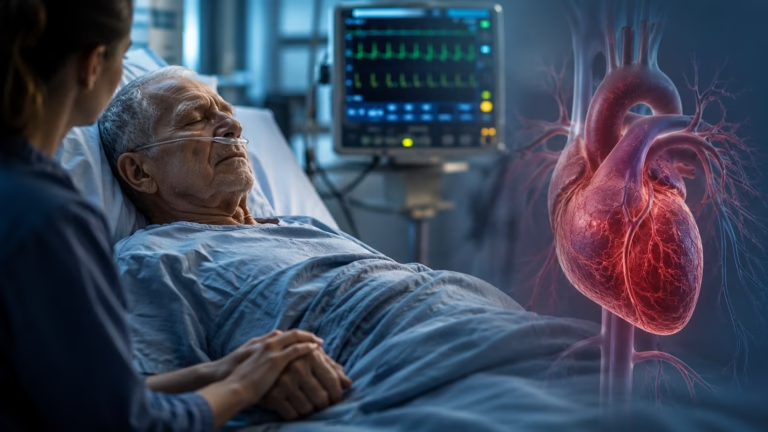
Congestive heart failure (CHF) affects millions of people worldwide and poses significant challenges for both patients and healthcare providers. As frontline caregivers, nurses play a pivotal role in identifying, planning, and managing nursing diagnoses that optimize patient outcomes. In this post, we’ll dive into the core nursing diagnoses associated with CHF, explore assessment strategies, and outline targeted interventions, all in a conversational yet professional tone that’s easy to digest and implement.
 HEART FAILURE" width="600" height="450" srcset="https://trueimpacthealth.com/wp-content/uploads/2025/12/CONGESTIVE-HEART-FAILURE-300x225.avif 300w, https://trueimpacthealth.com/wp-content/uploads/2025/12/CONGESTIVE-HEART-FAILURE.avif 512w" sizes="(max-width: 600px) 100vw, 600px" />
Understanding Congestive Heart Failure
Before we delve into nursing diagnoses, let’s briefly review CHF fundamentals.
• Definition: CHF is a chronic condition in which the heart’s ability to pump or fill with blood is compromised, leading to fluid buildup in lungs and peripheral tissues.
• Types:
– Systolic dysfunction (reduced ejection fraction)
– Diastolic dysfunction (preserved ejection fraction)
• Common risk factors: coronary artery disease, hypertension, diabetes, obesity, valvular disorders.
Why is this important for nurses? Because the signs, symptoms, and patient responses vary widely, a structured nursing approach is essential to identify problems early and prevent exacerbations.
The Nursing Process Applied to CHF

The nursing process, assessment, diagnosis, planning, implementation, and evaluation, provides a systematic framework. In CHF care, this means:
• Rapidly recognizing subtle changes in respiratory status or fluid balance
• Prioritizing patient safety and comfort
• Coordinating with the interdisciplinary team
Key Nursing Diagnoses for CHF
Here are the most common NANDA-approved nursing diagnoses you’ll encounter:
- Excess Fluid Volume
– R/T decreased cardiac output and renal perfusion
– AEB peripheral edema, weight gain, dyspnea, crackles on auscultation - Decreased Cardiac Output
– R/T altered contractility, preload, afterload
– AEB weak pulses, hypotension, dizziness, cool clammy skin - Impaired Gas Exchange
– R/T alveolar-capillary membrane changes
– AEB tachypnea, orthopnea, oxygen saturation < 90%, use of accessory muscles - Activity Intolerance
– R/T imbalance between oxygen supply and demand
– AEB fatigue, dyspnea on exertion, changes in vital signs with activity - Anxiety
– R/T fear of dyspnea or sudden decompensation
– AEB restlessness, verbalization of worry, tachycardia - Assessment & Data Collection
A thorough and ongoing assessment is key to accurate nursing diagnoses. Include:
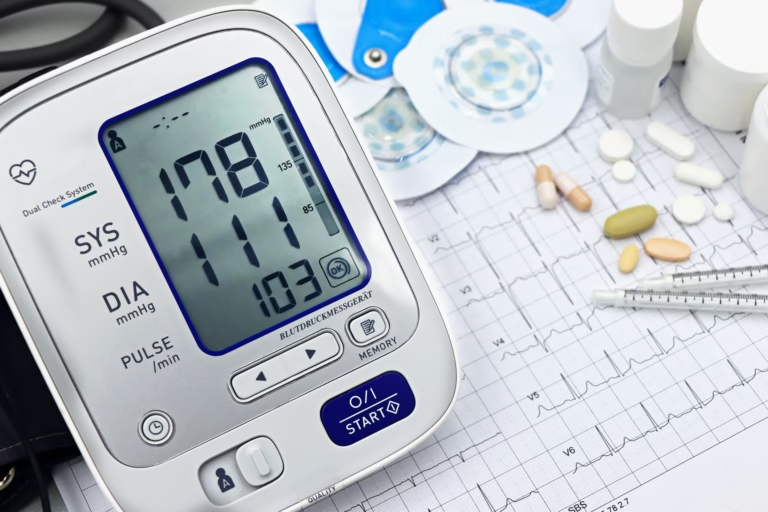
• Vital signs: BP, HR, RR, temperature, SpO₂
• Daily weights: an increase of 0.5–1 kg in 24 hours may indicate fluid retention
• Respiratory assessment: lung sounds, cough, sputum characteristics
• Cardiac assessment: jugular venous distention, peripheral pulses, capillary refill
• Fluid balance: I&O, edema grading, skin turgor
• Activity tolerance: record ADL performance, six-minute walk test if available
• Psychosocial status: support systems, coping strategies, understanding of condition - Planning & Goal Setting
Use SMART goals (Specific, Measurable, Achievable, Relevant, Time-bound) to guide care. Examples:
• By Day 3, patient will demonstrate less than 1 kg weight gain per day through diet and medication adherence.
• Within 24 hours, patient’s SpO₂ will remain above 92% on prescribed oxygen settings.
• Prior to discharge, patient will verbalize two strategies for energy conservation during ADLs. - Nursing Interventions
Here’s where your critical thinking and hands-on skills shine. Tailor interventions to each diagnosis: - Excess Fluid Volume
• Monitor daily weights and intake/output strictly.
• Administer diuretics as prescribed; watch for orthostatic hypotension and electrolyte imbalances.
• Restrict sodium and fluid intake per physician’s orders.
• Elevate edematous extremities and encourage frequent position changes. - Decreased Cardiac Output
• Assess heart sounds and peripheral perfusion every shift.
• Administer ACE inhibitors, beta-blockers, or other cardiac medications.
• Educate patient about medication adherence and side effect monitoring. - Impaired Gas Exchange
• Position patient in high-Fowler’s or tripod position to maximize lung expansion.
• Provide supplemental oxygen, titrate to maintain target saturation.
• Encourage deep breathing, incentive spirometry, and coughing exercises. - Activity Intolerance
• Pace activities; plan rest periods between tasks.
• Teach energy conservation techniques (e.g., sitting while dressing, shower chairs).
• Collaborate with physical therapy for a graded exercise program. - Anxiety
• Offer clear, concise explanations about procedures and expected outcomes.
• Encourage verbalization of fears; use active listening.
• Teach relaxation techniques such as guided imagery or progressive muscle relaxation. - Evaluation & Documentation
Regularly assess patient responses to interventions:
• Has the patient’s weight stabilized?
• Are breath sounds clearer?
• Can the patient complete ADLs with less dyspnea?
• Document findings, care provided, and any modifications to the plan.
If goals aren’t met, revisit each step of the nursing process. Perhaps the patient needs more education, dose adjustments, or stronger psychosocial support.
- Patient Education & Discharge Planning
Empowering patients and families is crucial to preventing readmissions:
• Medication teaching: purpose, dosage, side effects, what to report
• Diet and lifestyle: low-sodium meal planning, fluid restrictions, weight monitoring
• Symptom recognition: when to call the provider (e.g., sudden weight gain, increased dyspnea, swelling)
• Follow-up care: scheduling outpatient appointments, home health referrals, cardiac rehabilitation programs
Conclusion
Managing congestive heart failure is a dynamic, multifaceted nursing challenge. By mastering targeted nursing diagnoses such as Excess Fluid Volume, Decreased Cardiac Output, and Impaired Gas Exchange, you can create robust care plans that improve quality of life and reduce hospital readmissions. Remember to couple clinical expertise with patient education and emotional support. With a structured nursing process, collaborative teamwork, and a patient-centered approach, you’ll be well on your way to making a profound difference in the lives of those living with CHF.
Was this page helpful?
Thanks for your feedback! What could we improve?
Thank you! Your feedback helps us improve our articles.
Medically reviewed by
Dr. Daniel HarringtonMedical doctor and clinical researcher focused on preventive medicine, chronic disease and clear, evidence-based health communication.
True Impact Health articles are written by our editorial team and based on reliable sources such as public health agencies, clinical guidelines and peer-reviewed research. This article has been checked by a doctor on our review panel. Read our editorial process.
This content is for general information and is not a substitute for professional medical advice, diagnosis or treatment.