















The Best Core Exercises for All Fitness Levels
A strong core does more than give you a sculpted midsection, it’s the foundation for better posture, improved balance, and injury-free movement in...
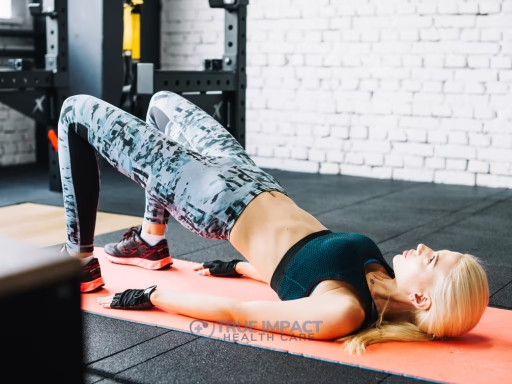
Table of Contents
Introduction
A strong core does more than give you a sculpted midsection, it’s the foundation for better posture, improved balance, and injury-free movement in everyday life and sport. Whether you’re just starting your fitness journey or you’re a seasoned athlete, incorporating targeted core exercises into your workout routine will boost performance and make daily activities easier (and safer). In this post, we’ll explain why core strength matters, break down the key muscles involved, and share the best exercises, categorized for beginners, intermediates, and advanced trainees. Ready to rock your core? Let’s dive in!
Why Core Strength Matters
Before we jump into the moves, let’s look at three big benefits of a rock-solid core:
• Posture & Alignment: A stable core supports your spine, reducing slouching and lower-back pain.
• Functional Fitness: From lifting groceries to playing sports, you’ll move more efficiently.
• Injury Prevention: A strong midsection takes pressure off your back and hips, lowering your risk of strains and sprains.
Anatomy 101: The Core Muscles You Need to Know
Your “core” is more than just abs. It includes:
• Rectus Abdominis (six-pack muscle)
• Transverse Abdominis (deep stabilizer)
• Internal & External Obliques (side muscles for rotation)
• Erector Spinae (muscles along your spine)
• Glutes & Hip Flexors (key players in pelvic stability)
Understanding how these muscles work together will help you choose exercises that address stability, rotation, and anti-extension.
Best Core Exercises for All Fitness Levels
- Beginner-Friendly Moves
If you’re new to core work, focus on foundational exercises that train stability without creating too much strain. - Bird-Dog
– How to: On hands and knees, extend opposite arm and leg, keeping hips square.
– Benefits: Teaches anti-rotation and balance. - Dead Bug
– How to: Lie on your back, arms straight toward the ceiling. Lower opposite arm and leg while bracing your abs.
– Benefits: Builds deep core activation with minimal spinal load. - Knee-Supported Plank
– How to: From a forearm plank, drop your knees and hold a straight line from shoulders to knees.
– Benefits: Teaches proper plank form with less intensity. - Glute Bridge
– How to: Lie on your back, knees bent. Drive through your heels, lifting hips until your body is in a straight line.
– Benefits: Engages your posterior chain, indirectly strengthening the core. - Intermediate Core Builders
Once you’ve mastered the basics, ramp up the challenge with these moves. - Standard Plank
– How to: On forearms and toes, keep a neutral spine and pull your belly button toward your spine.
– Progression tip: Increase hold time in 10-second increments. - Side Plank
– How to: One forearm on the floor, legs stacked. Lift hips so your body forms a straight line.
– Variation: Add hip dips to work obliques. - Russian Twist
– How to: Sit with knees bent, lean back slightly. Rotate your torso side to side, optionally holding a weight.
– Benefits: Targets obliques and rotational strength. - Bicycle Crunch
– How to: Lying on your back, pedal legs in the air while bringing opposite elbow to knee.
– Tip: Keep shoulders off the mat and move slowly for maximum tension. - Mountain Climbers
– How to: From high plank, drive one knee at a time toward your chest in a controlled manner.
– Benefits: Combines cardio with core stabilization. - Advanced Core Challenges
Ready to up the ante? These exercises demand serious core control, strength, and sometimes equipment. - Hanging Leg Raise
– How to: Hang from a pull-up bar. Keeping legs straight (or bent for a beginner variation), raise them to hip height or higher.
– Key cue: Brace your core to avoid swinging. - Dragon Flag
– How to: Lie on a bench, grasp behind your head. Lift your body in a straight line and lower with control.
– Note: This move requires impressive core and hip flexor strength. - Stability Ball Roll-Out
– How to: Kneel facing a stability ball, place forearms on the ball, and roll forward, extending your body.
– Focus: Prevent your lower back from sagging as you roll. - L-Sit
– How to: On parallel bars or two sturdy chairs, lift your body while holding legs straight out in front, forming an “L.”
– Benefit: Combines anti-extension with hip flexor/quad strength. - Weighted Russian Twist (Medicine Ball)
– How to: Perform a standard Russian twist with a heavy medicine ball for added resistance.
– Pro tip: Keep movements controlled—don’t just “fling” the weight side to side.
Tips for Core Training Success
• Consistency Over Intensity: It’s better to do 3×30-second planks three times a week than a single one-hour core blast.
• Focus on Form: Quality beats quantity. If you feel your lower back arching or shoulders rounding, dial back.
• Breathe Properly: Exhale on the hard phase of each rep (e.g., when lifting or crunching).
• Progress Gradually: Add reps, time under tension, or resistance slowly to avoid overuse injuries.
• Pair with Full-Body Work: A plank is great, but compound moves like squats and deadlifts also demand core stability.
Common Core Training Mistakes
• Overloading Too Quickly: Jumping into advanced moves without building a base can lead to injury.
• Neglecting Posterior Chain: A strong back and glutes are critical to a truly “balanced” core.
• Skipping Warm-Ups: Always mobilize your hips, spine, and shoulders before core work.
Conclusion
Whether you’re just getting started or you’re chasing a six-pack, the key to a bulletproof core is consistent, well-structured training. By selecting exercises that match your current fitness level—and progressing safely—you’ll unlock better athletic performance, stronger posture, and fewer aches and pains. Bookmark this guide, plug these moves into your weekly routine, and watch your core strength soar!
Ready to strengthen your midsection? Try one exercise from each level this week, and let us know how you feel in the comments below. If you found this post helpful, please share it with your fitness community!
Was this page helpful?
Thanks for your feedback! What could we improve?
Thank you! Your feedback helps us improve our articles.
True Impact Health articles are written by our editorial team and based on reliable sources such as public health agencies, clinical guidelines and peer-reviewed research. This article has not yet been medically reviewed. Read our editorial process.
This content is for general information and is not a substitute for professional medical advice, diagnosis or treatment.