Triple‑Negative Breast Cancer: Understanding an Aggressive but Treatable Form of Breast Cancer
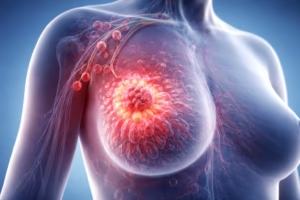
Breast cancer is not a single disease—it includes several subtypes with different biological characteristics and treatment approaches. One of the most complex and often misunderstood types is triple‑negative breast cancer (TNBC). Although it accounts for a smaller percentage of breast cancers, TNBC tends to behave more aggressively and has fewer targeted treatment options compared to other forms.
This article provides a clear, evidence-based overview of triple‑negative breast cancer, including its definition, risk factors, symptoms, diagnosis, treatment options, and prevention considerations.
Overview / Definition
Triple‑negative breast cancer is a subtype of invasive breast cancer defined by what it lacks. Specifically, TNBC cells:
- Do not express estrogen receptors (ER-negative)
- Do not express progesterone receptors (PR-negative)
- Do not overexpress the HER2 protein (HER2-negative)
Many breast cancers rely on one or more of these receptors to grow. Targeted treatments—such as hormone therapy (tamoxifen, aromatase inhibitors) or HER2-targeted drugs (like trastuzumab)—work by blocking these pathways. However, because TNBC lacks these receptors, these treatments are ineffective, limiting therapeutic options.
Key Facts
- Accounts for approximately 10–15% of all breast cancers
- More common in:
- Women under age 50
- Black women
- Individuals with BRCA1 gene mutations
- Often higher grade and more aggressive than hormone-receptor–positive breast cancers
Despite these challenges, outcomes have improved significantly in recent years due to advances in chemotherapy, immunotherapy, and targeted treatments.
Causes or Risk Factors
The exact cause of triple‑negative breast cancer is not fully understood. Like other cancers, it results from genetic mutations that cause abnormal cell growth in breast tissue.
Established Risk Factors
- Inherited genetic mutations, especially:
- BRCA1 (strongly associated)
- BRCA2 (less commonly)
- Family history of breast or ovarian cancer
- Younger age at diagnosis
- Race and ethnicity (higher incidence in Black and Hispanic women)
- Obesity and metabolic factors (particularly in premenopausal women)
Unlike hormone receptor–positive breast cancers, TNBC is not strongly linked to prolonged estrogen exposure.
Symptoms or Clinical Presentation
Triple‑negative breast cancer typically presents similarly to other types of breast cancer. It often develops quickly and may grow faster than other subtypes.
Common Signs and Symptoms
- A new lump or thickening in the breast or underarm
- Breast swelling or change in size
- Skin dimpling (peau d’orange appearance)
- Nipple retraction or discharge
- Redness, warmth, or skin irritation
- Persistent breast pain (less common but possible)
Because TNBC can progress more rapidly, timely evaluation of any new breast changes is important.
In some cases, TNBC is discovered during routine screening before symptoms arise.
Diagnosis or Screening
Screening
Screening recommendations for TNBC are the same as for other types of breast cancer and generally include:
- Mammography, starting at age 40–50 depending on guidelines and risk profile
- Earlier or more frequent imaging for high-risk individuals (e.g., BRCA mutation carriers)
It is important to note that TNBC can sometimes be detected between routine mammograms due to its rapid growth.
Diagnostic Process
If a suspicious lesion is found:
- Imaging tests
- Diagnostic mammogram
- Breast ultrasound
- MRI (for high-risk or complex cases)
- Breast biopsy
- Core needle biopsy confirms the diagnosis
- Laboratory testing identifies receptor status (ER, PR, HER2)
- Staging evaluation
- Determines whether cancer has spread to lymph nodes or distant organs
- May include imaging such as CT scans, PET scans, or bone scans
Staging ranges from Stage I (localized) to Stage IV (metastatic).
Treatment or Management Options
Treatment for triple‑negative breast cancer depends on stage, tumor size, lymph node involvement, and patient-specific factors. Management often involves a combination of therapies.
1. Surgery
- Lumpectomy (breast-conserving surgery) or
- Mastectomy
Lymph node evaluation is typically performed at the time of surgery.
2. Chemotherapy
Chemotherapy is a cornerstone of TNBC treatment, often used:
- Before surgery (neoadjuvant therapy) to shrink tumors
- After surgery (adjuvant therapy) to reduce recurrence risk
TNBC often responds well to chemotherapy compared to some other breast cancer subtypes.
3. Immunotherapy
Recent advances have introduced immune checkpoint inhibitors, particularly in:
- Advanced or metastatic TNBC
- Early-stage high-risk TNBC (combined with chemotherapy)
These medications stimulate the immune system to recognize and destroy cancer cells.
4. Targeted Therapy
While TNBC lacks hormone or HER2 targets, newer therapies focus on other vulnerabilities:
- PARP inhibitors (e.g., olaparib) for individuals with BRCA mutations
- Antibody-drug conjugates (e.g., sacituzumab govitecan) for certain advanced cases
These therapies have significantly improved outcomes in selected patients.
5. Radiation Therapy
Radiation is often recommended:
- After lumpectomy
- After mastectomy in higher-risk cases
Prognosis Considerations
TNBC has a higher risk of recurrence within the first 3–5 years after treatment. However:
- Risk declines substantially after five years
- Many individuals achieve long-term remission
- Outcomes are improving due to newer treatment strategies
Prevention or Lifestyle Considerations
There is no guaranteed way to prevent triple‑negative breast cancer. However, certain measures may help reduce overall breast cancer risk.
General Risk-Reduction Strategies
- Maintain a healthy weight
- Engage in regular physical activity
- Limit alcohol consumption
- Avoid tobacco use
- Adhere to recommended screening schedules
Genetic Counseling and Testing
Individuals with:
- Strong family history
- Early-onset breast cancer
- Ovarian cancer in the family
May benefit from genetic counseling and BRCA testing.
For high-risk individuals, preventive strategies may include:
- Enhanced surveillance (earlier and more frequent imaging)
- Risk-reducing medications (depending on subtype risk)
- Preventive (prophylactic) surgery in selected cases
These decisions require careful evaluation with healthcare professionals.
Living with Triple‑Negative Breast Cancer
A diagnosis of TNBC can be emotionally challenging due to its aggressive reputation. However, it is important to understand:
- Treatment outcomes are steadily improving
- Clinical trials are expanding options
- Multidisciplinary care (oncology, surgery, genetics, psychosocial support) significantly enhances management
Support groups, counseling, and survivorship programs can play an essential role in recovery and quality of life.
Conclusion
Triple‑negative breast cancer is a distinct and biologically aggressive subtype of breast cancer defined by the absence of estrogen, progesterone, and HER2 receptors. Although it does not respond to hormone or HER2-targeted therapies, advances in chemotherapy, immunotherapy, and targeted treatments have significantly improved patient outcomes.
Early detection, accurate diagnosis, and personalized, evidence-based treatment are critical. Ongoing research continues to refine therapies and enhance survival rates for those affected by TNBC.
Disclaimer:
This article is intended for informational and educational purposes only and does not constitute medical advice. If you have concerns about breast health or risk factors, please consult a qualified healthcare professional for personalized evaluation and guidance.