Thyroid Cancer: Understanding the Signs, Risks, and Treatment Options
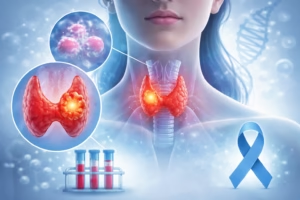
Thyroid cancer is a type of cancer that begins in the thyroid gland—a small, butterfly-shaped gland located at the front of the neck. Although it accounts for a relatively small percentage of all cancers, its incidence has increased over the past few decades. Fortunately, most types of thyroid cancer are highly treatable, especially when detected early.
This article provides a clear, medically accurate overview of thyroid cancer, including its causes, symptoms, diagnosis, treatment options, and preventive considerations.
Overview / Definition
The thyroid gland plays a crucial role in regulating metabolism, heart rate, body temperature, and energy production by releasing thyroid hormones (T3 and T4).
Thyroid cancer occurs when abnormal cells in the gland grow uncontrollably, forming a malignant tumor. There are several types, each with distinct characteristics:
- Papillary thyroid carcinoma (PTC): The most common type (about 80% of cases); typically slow-growing and often highly treatable.
- Follicular thyroid carcinoma (FTC): Accounts for about 10–15% of cases; may spread through the bloodstream.
- Medullary thyroid carcinoma (MTC): Develops from C cells that produce calcitonin; may be inherited in some cases.
- Anaplastic thyroid carcinoma: Rare but aggressive and fast-growing.
Prognosis depends on the type, stage, and age of the individual at diagnosis.
Causes and Risk Factors
The exact cause of thyroid cancer is not always clear, but several risk factors are known to increase the likelihood of developing it:
1. Radiation Exposure
- Previous radiation therapy to the head, neck, or chest
- High levels of environmental radiation (especially during childhood)
2. Genetic Factors
- Family history of thyroid cancer
- Inherited syndromes such as:
- Multiple endocrine neoplasia (MEN) types 2A and 2B
- Familial medullary thyroid carcinoma
3. Gender and Age
- More common in women than men
- Typically diagnosed between ages 30 and 60
4. Iodine Imbalance
- Both iodine deficiency and excess may influence risk in certain populations
While having one or more risk factors increases probability, many individuals diagnosed with thyroid cancer have no known risk factors.
Symptoms and Clinical Presentation
In its early stages, thyroid cancer may cause no noticeable symptoms. In many cases, it is discovered during a routine physical examination or imaging study performed for another reason.
Common signs and symptoms may include:
- A painless lump or swelling in the neck
- Enlarged lymph nodes
- Hoarseness or voice changes that persist
- Difficulty swallowing
- Neck or throat pain
- Persistent cough not related to a cold
It is important to note that most thyroid nodules are benign (non-cancerous). However, any new or growing neck lump should be evaluated by a healthcare professional.
Diagnosis and Screening
There is no routine screening program for thyroid cancer in people without symptoms or risk factors. Diagnosis typically involves several steps:
1. Physical Examination
A healthcare provider checks for any lumps or enlargement in the thyroid or nearby lymph nodes.
2. Ultrasound Imaging
Ultrasound helps determine the size, structure, and characteristics of thyroid nodules.
3. Fine-Needle Aspiration (FNA) Biopsy
If a suspicious nodule is identified, a thin needle is used to collect cells for microscopic evaluation. This is the most accurate and commonly used diagnostic test.
4. Blood Tests
Blood tests may measure:
- Thyroid-stimulating hormone (TSH)
- Calcitonin (particularly in suspected medullary thyroid carcinoma)
5. Additional Imaging
In confirmed cases, CT scans, MRI, or radioactive iodine scans may assess whether cancer has spread.
Early detection significantly improves treatment outcomes.
Treatment and Management Options
Treatment depends on the cancer type, size, stage, and overall health of the patient. Common approaches include:
1. Surgery
The primary treatment for most thyroid cancers involves removal of:
- Part of the thyroid (lobectomy), or
- The entire thyroid (total thyroidectomy)
Nearby lymph nodes may also be removed if cancer has spread.
2. Radioactive Iodine Therapy
After surgery, radioactive iodine (RAI) may be used to destroy remaining thyroid tissue or microscopic cancer cells.
3. Thyroid Hormone Therapy
Following total thyroidectomy, patients require lifelong thyroid hormone replacement. This medication:
- Replaces normal hormone function
- Suppresses TSH, which could otherwise stimulate cancer growth
4. External Beam Radiation Therapy
Used in certain high-risk or inoperable cases.
5. Targeted Therapy and Chemotherapy
Advanced or aggressive forms, such as anaplastic thyroid cancer, may require targeted drugs or systemic therapy.
The majority of papillary and follicular thyroid cancers have excellent long-term survival rates, particularly when treated early.
Prevention and Lifestyle Considerations
There is no guaranteed way to prevent thyroid cancer, but certain strategies may reduce risk:
Radiation Safety
- Avoid unnecessary medical radiation
- Use appropriate protective measures during imaging procedures
Genetic Counseling
- Individuals with a strong family history or known inherited syndromes may benefit from genetic testing and counseling.
Iodine Intake
- Maintain adequate dietary iodine through balanced nutrition (especially in regions with known deficiency)
General Health Maintenance
- Regular physical examinations
- Prompt evaluation of new neck lumps or persistent symptoms
Routine thyroid cancer screening in asymptomatic individuals is not generally recommended, as overdiagnosis of small, low-risk tumors can occur.
Conclusion
Thyroid cancer is a relatively common endocrine malignancy, but it is often highly treatable, especially when detected early. Understanding the risk factors, recognizing potential symptoms, and seeking timely medical evaluation are key to positive outcomes. Advances in diagnostic techniques and targeted treatments have significantly improved survival rates for most forms of this cancer.
If you notice persistent neck swelling, voice changes, or other concerning symptoms, consult a qualified healthcare provider for proper evaluation.
Disclaimer: This article is intended for educational purposes only and does not constitute medical advice. For personalized guidance regarding diagnosis or treatment, please consult a licensed healthcare professional.