Spinal Muscular Atrophy (SMA): Understanding Causes, Symptoms, and Treatment Options
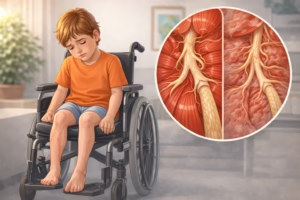
Spinal Muscular Atrophy (SMA) is a rare but serious genetic disorder that affects the muscles responsible for movement. While historically associated with high infant mortality, recent breakthroughs in genetic medicine have significantly improved outcomes and quality of life for many individuals living with SMA. Increased awareness, newborn screening, and early intervention now play crucial roles in managing the condition.
In this article, we’ll explore what SMA is, what causes it, how it’s diagnosed, and the treatment options available today—all explained in clear, accessible language.
Overview / Definition
Spinal Muscular Atrophy (SMA) is a genetic neuromuscular disorder characterized by the progressive loss of motor neurons. These specialized nerve cells, located in the spinal cord and brainstem, control voluntary muscle movements such as:
- Crawling
- Walking
- Sitting
- Swallowing
- Breathing
When motor neurons degenerate or die, muscles become weak and waste away (a process known as atrophy).
Types of SMA
SMA is classified into several types based on the age of onset and the highest physical milestone achieved:
- Type 0 – Severe, prenatal onset
- Type 1 (Werdnig-Hoffmann disease) – Onset before 6 months; severe muscle weakness
- Type 2 – Onset between 6 and 18 months; can sit but may not walk
- Type 3 (Kugelberg-Welander disease) – Childhood or adolescence onset; milder symptoms
- Type 4 – Adult-onset; typically mildest form
The severity generally decreases as the age of onset increases.
Causes or Risk Factors
SMA is caused by mutations in the SMN1 (Survival Motor Neuron 1) gene. This gene is responsible for producing a protein essential for the survival of motor neurons.
Genetic Mechanism
- Individuals with SMA inherit two defective copies of the SMN1 gene—one from each parent.
- Parents who carry one faulty copy are known as carriers.
- When both parents are carriers:
- 25% chance the child will have SMA
- 50% chance the child will be a carrier
- 25% chance the child will not inherit the mutation
Another gene, SMN2, also plays a role. It produces a small amount of functional SMN protein. The number of SMN2 copies a person has can influence disease severity—more copies are often associated with milder symptoms.
Risk Factors
- Family history of SMA
- Parents known to be genetic carriers
- Certain populations may have higher carrier frequencies
Carrier screening is available and increasingly recommended during family planning.
Symptoms or Clinical Presentation
The hallmark of SMA is progressive muscle weakness, particularly affecting muscles closest to the center of the body (proximal muscles).
Common Symptoms Include:
- Floppy or weak limbs in infants
- Delayed motor milestones (e.g., sitting, crawling)
- Difficulty feeding or swallowing
- Shallow breathing
- Tremors in fingers or hands
- Muscle wasting
- Reduced or absent reflexes
Importantly, cognitive development is typically normal in individuals with SMA.
Severity and progression vary widely depending on the type of SMA and timing of treatment initiation.
Diagnosis or Screening
Early diagnosis is critical, particularly because newer therapies are most effective when started early.
Diagnostic Methods
- Genetic testing (blood test): Confirms deletion or mutation of the SMN1 gene
- Newborn screening: Increasingly included in routine screening panels in many countries
- Electromyography (EMG): May assess electrical activity of muscles
- Muscle biopsy (rarely needed today): Previously used before genetic testing became standard
Newborn screening has dramatically changed SMA outcomes by identifying affected infants before symptoms appear.
Treatment or Management Options
Until recently, SMA was considered untreatable. Today, multiple disease-modifying therapies have transformed care.
FDA-Approved Treatments
- Nusinersen (Spinraza®)
- Administered via spinal injection
- Increases production of functional SMN protein
- Onasemnogene abeparvovec (Zolgensma®)
- Gene therapy delivered as a one-time intravenous infusion
- Replaces the defective SMN1 gene
- Risdiplam (Evrysdi®)
- Oral medication
- Enhances SMN protein production
These therapies aim to stop or significantly slow motor neuron loss. Early treatment—ideally before symptom onset—provides the best outcomes.
Supportive Care
Comprehensive care often involves a multidisciplinary team:
- Neurologists
- Pulmonologists
- Physical and occupational therapists
- Nutrition specialists
- Orthopedic specialists
Supportive measures may include:
- Respiratory support
- Nutritional assistance or feeding tubes
- Physical therapy
- Orthopedic interventions for scoliosis
Modern care approaches have significantly improved life expectancy and quality of life.
Prevention or Lifestyle Considerations
SMA itself cannot be prevented once inherited, but proactive steps may reduce risk or improve outcomes.
Preventive & Proactive Measures
- Carrier screening for prospective parents
- Genetic counseling for families with a history of SMA
- Newborn screening participation
- Early initiation of treatment upon diagnosis
For individuals living with SMA:
- Regular follow-up care is essential
- Respiratory monitoring helps prevent complications
- Physical therapy supports mobility and strength
Because SMA affects muscles but not intelligence, many individuals lead fulfilling academic and professional lives with proper support.
Conclusion
Spinal Muscular Atrophy (SMA) is a genetic neuromuscular disorder that causes progressive muscle weakness due to the loss of motor neurons. Caused by mutations in the SMN1 gene, SMA ranges from severe infant-onset forms to milder adult-onset types.
The introduction of groundbreaking gene-based therapies has dramatically reshaped the outlook for individuals with SMA. Early diagnosis—particularly through newborn screening—combined with disease-modifying treatments and comprehensive supportive care can significantly improve outcomes.
As research continues, the future for individuals affected by SMA is more promising than ever before.
Disclaimer
This article is intended for educational and informational purposes only. It is not a substitute for professional medical advice, diagnosis, or treatment. If you have concerns about Spinal Muscular Atrophy or genetic conditions, please consult a qualified healthcare professional or genetic specialist for personalized guidance.