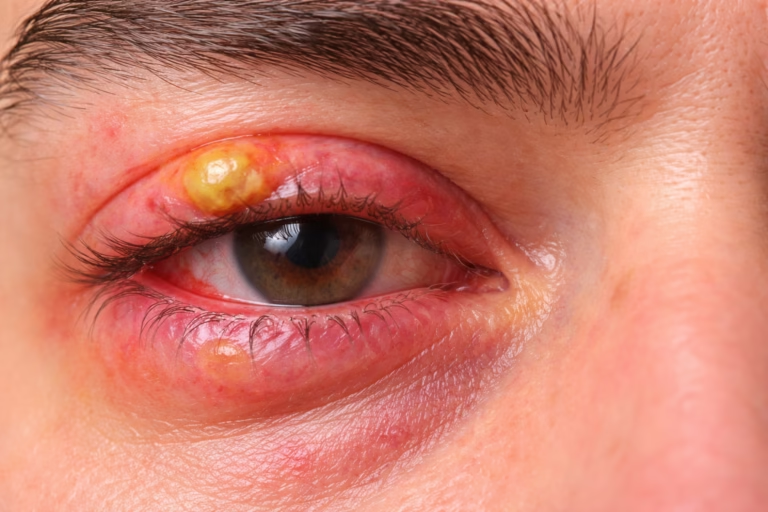
Pancreatic Cancer: Understanding a Complex and Serious Disease
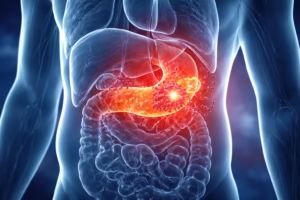
Pancreatic cancer is one of the most challenging forms of cancer to diagnose and treat. Often called a “silent” disease, it may not cause noticeable symptoms in its early stages, which contributes to delayed diagnosis and poorer outcomes compared to many other cancers. Despite these challenges, advances in research, imaging, and treatment are steadily improving our understanding and management of this condition.
This article provides a clear, evidence-based overview of pancreatic cancer, including its causes, symptoms, diagnosis, treatment options, and prevention considerations.
Overview / Definition
Pancreatic cancer occurs when abnormal cells in the pancreas grow uncontrollably and form a tumor. The pancreas is a gland located deep in the abdomen, behind the stomach. It plays two major roles:
- Digestive function (exocrine): Produces enzymes that help break down fats, proteins, and carbohydrates.
- Hormonal function (endocrine): Produces hormones such as insulin and glucagon, which regulate blood sugar.
Types of Pancreatic Cancer
The majority of pancreatic cancers are:
- Pancreatic ductal adenocarcinoma (PDAC) – Accounts for about 90% of cases and begins in the ducts that carry digestive enzymes.
Less common types include:
- Pancreatic neuroendocrine tumors (NETs) – Arise from hormone-producing cells and generally have a different prognosis and treatment approach.
Causes and Risk Factors
The exact cause of pancreatic cancer is not fully understood. It typically develops when genetic mutations accumulate in pancreatic cells, leading to uncontrolled growth.
Several risk factors are associated with increased likelihood of developing pancreatic cancer:
Non-Modifiable Risk Factors
- Age (most common after age 60)
- Family history of pancreatic cancer
- Inherited genetic syndromes, such as:
- BRCA1 and BRCA2 mutations
- Lynch syndrome
- Peutz-Jeghers syndrome
- Chronic pancreatitis
- Certain hereditary cancer syndromes
Modifiable Risk Factors
- Cigarette smoking (one of the strongest risk factors)
- Obesity
- Type 2 diabetes
- Heavy alcohol use (particularly when associated with chronic pancreatitis)
- Diets high in processed or red meats
Having one or more risk factors does not mean a person will develop pancreatic cancer, but it may increase overall risk.
Symptoms and Clinical Presentation
Pancreatic cancer often produces few or nonspecific symptoms in its early stages. As the disease progresses, symptoms may become more apparent.
Common Symptoms
- Abdominal or back pain
- Unexplained weight loss
- Loss of appetite
- Fatigue
- Jaundice (yellowing of skin and eyes)
- Dark urine and pale stools
- Nausea and vomiting
Additional features may include:
- New-onset diabetes, especially in older adults without traditional risk factors
- Blood clots
- Enlarged gallbladder
Symptoms can vary depending on the tumor’s location within the pancreas.
Diagnosis and Screening
Diagnostic Evaluation
If pancreatic cancer is suspected, healthcare providers may use:
- Imaging tests
- CT (computed tomography) scan
- MRI (magnetic resonance imaging)
- Endoscopic ultrasound (EUS)
- Biopsy
- A tissue sample is obtained, often through endoscopic ultrasound-guided fine-needle aspiration.
- Blood tests
- Tumor markers such as CA 19-9 may be elevated, though they are not specific enough for screening.
Screening
Routine screening for pancreatic cancer is not recommended for the general population, as there is no widely accepted, effective screening method for average-risk individuals.
However, screening may be considered in:
- Individuals with strong family history
- People with inherited genetic syndromes known to increase risk
In these high-risk groups, specialized centers may use MRI and/or endoscopic ultrasound for surveillance.
Treatment and Management Options
Treatment depends on several factors, including:
- Tumor stage
- Tumor location
- Overall health of the patient
- Whether the cancer has spread (metastasized)
Surgery
Surgical removal offers the only potential cure and is possible primarily in early-stage disease.
Common procedures include:
- Whipple procedure (pancreaticoduodenectomy) – For tumors in the head of the pancreas
- Distal pancreatectomy – For tumors in the body or tail
- Total pancreatectomy – Removal of the entire pancreas (less common)
Chemotherapy
Chemotherapy may be used:
- After surgery (adjuvant therapy)
- Before surgery (neoadjuvant therapy)
- As primary treatment in advanced disease
Common regimens include combination therapies to improve effectiveness.
Radiation Therapy
Sometimes used along with chemotherapy to shrink tumors or relieve symptoms.
Targeted Therapy and Immunotherapy
For selected patients with specific genetic mutations (e.g., BRCA mutations), targeted drugs may be used. Immunotherapy is currently more limited but may benefit certain individuals.
Palliative Care
For advanced cases, the focus may shift to improving quality of life by managing:
- Pain
- Obstruction of bile ducts
- Digestive issues
- Nutritional needs
Palliative care can be integrated at any stage of disease.
Prevention and Lifestyle Considerations
While pancreatic cancer cannot always be prevented, certain strategies may help reduce risk:
- Quit smoking
- Maintain a healthy weight
- Engage in regular physical activity
- Manage diabetes effectively
- Limit alcohol consumption
- Adopt a balanced diet rich in fruits, vegetables, and whole grains
For individuals with strong family history or known genetic risks, genetic counseling may be beneficial.
Prognosis
Pancreatic cancer has historically been associated with lower survival rates compared to many other cancers. This is largely due to late diagnosis and early spread of disease. However:
- Outcomes are improving with advances in surgical techniques.
- New chemotherapy combinations are increasing survival in some cases.
- Genetic research is leading to more personalized treatment approaches.
Early detection significantly improves surgical eligibility and survival outcomes.
Conclusion
Pancreatic cancer is a serious and complex disease that often presents with subtle symptoms. Understanding its risk factors, warning signs, and treatment options is crucial for early recognition and appropriate care. Although challenges remain, ongoing research continues to improve outcomes and expand therapeutic options.
If you have persistent unexplained symptoms or risk factors associated with pancreatic cancer, it is important to seek medical evaluation promptly.
Disclaimer: This article is intended for educational purposes only and does not constitute medical advice. Always consult a qualified healthcare professional for personalized medical guidance, diagnosis, or treatment.