
Ovarian Cancer: Symptoms, Risk Factors, Diagnosis, and Treatment Options
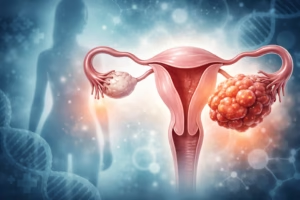
Ovarian cancer is a serious and often challenging condition that affects the ovaries—two small, almond-shaped organs located on either side of the uterus. The ovaries play a crucial role in reproductive health by producing eggs and hormones such as estrogen and progesterone.
Although ovarian cancer is less common than some other cancers, it remains one of the leading causes of cancer-related deaths among women because it is frequently diagnosed at a later stage. Understanding its symptoms, risk factors, and treatment options can help promote early detection and informed healthcare decisions.
Overview / Definition
Ovarian cancer refers to the abnormal growth of cells in or around the ovaries. These cells multiply uncontrollably and can invade nearby tissues or spread (metastasize) to other parts of the body.
There are several types of ovarian cancer, classified based on the type of cell where the cancer begins:
- Epithelial tumors (most common): Originate from the outer surface of the ovary.
- Germ cell tumors: Develop from cells that produce eggs.
- Stromal tumors: Arise from connective tissue cells that produce hormones.
- Primary peritoneal and fallopian tube cancers: Closely related cancers that may behave similarly to ovarian cancer.
Epithelial ovarian cancer accounts for approximately 90% of diagnosed cases.
Causes and Risk Factors
The exact cause of ovarian cancer is not fully understood. However, several factors have been identified that may increase the risk.
Genetic Factors
- BRCA1 and BRCA2 gene mutations (also linked to breast cancer)
- Lynch syndrome (hereditary nonpolyposis colorectal cancer)
- Family history of ovarian, breast, or colorectal cancer
Women with inherited BRCA mutations face a significantly increased lifetime risk.
Hormonal and Reproductive Factors
- Early onset of menstruation (before age 12)
- Late menopause (after age 50)
- Never having been pregnant
- Infertility or use of certain fertility treatments (in some cases)
Age
- Risk increases with age.
- Most cases occur after menopause, typically in women over 50.
Other Possible Risk Factors
- Endometriosis
- Obesity
- Hormone replacement therapy (long-term use)
- Smoking (particularly linked to mucinous ovarian tumors)
Protective Factors
Certain factors may reduce risk:
- Use of oral contraceptives (birth control pills)
- Pregnancy and breastfeeding
- Tubal ligation or hysterectomy in some cases
Symptoms and Clinical Presentation
Ovarian cancer has been called a “silent disease” because early symptoms can be subtle and easily mistaken for common digestive or hormonal issues.
However, persistent symptoms should not be ignored.
Common Symptoms Include:
- Abdominal bloating or swelling
- Pelvic or abdominal pain
- Feeling full quickly when eating
- Frequent or urgent urination
Additional Symptoms May Include:
- Fatigue
- Back pain
- Changes in bowel habits (constipation)
- Unexplained weight loss
- Menstrual irregularities (especially in younger women)
Symptoms are often persistent, occur more than 12 times per month, and represent a change from normal patterns. Late-stage disease may involve fluid accumulation in the abdomen (ascites) or unintended weight changes.
Diagnosis and Screening
Currently, there is no reliable, widely recommended screening test for ovarian cancer in women at average risk.
Screening (High-Risk Individuals Only)
For women at increased genetic risk, physicians may recommend:
- Transvaginal ultrasound (TVUS)
- CA-125 blood test (a tumor marker)
However, these tests are not sufficiently accurate for general population screening because they can produce false-positive or false-negative results.
Diagnostic Methods
If ovarian cancer is suspected, evaluation may include:
- Pelvic examination
- Transvaginal or abdominal ultrasound
- Blood tests (including CA-125 levels)
- CT scan or MRI
- Definitive diagnosis by biopsy, often performed during surgery
Staging is determined after surgical evaluation and indicates how far the cancer has spread. Stages range from Stage I (confined to ovaries) to Stage IV (spread to distant organs).
Early-stage detection significantly improves outcomes.
Treatment and Management Options
Treatment depends on several factors:
- Cancer type and stage
- Tumor characteristics
- Overall patient health
- Genetic profile of the tumor
Most patients require a combination of surgery and chemotherapy.
1. Surgery
Surgery is typically the first step and may involve:
- Removal of one or both ovaries
- Removal of fallopian tubes
- Hysterectomy
- Removal of lymph nodes and nearby tissue
In early-stage cases, fertility-preserving surgery may be possible for select patients.
2. Chemotherapy
Chemotherapy is commonly used:
- After surgery (adjuvant therapy)
- Before surgery (neoadjuvant therapy)
- For recurrent disease
It is usually administered intravenously, though some cases use intraperitoneal delivery (directly into the abdomen).
3. Targeted Therapy
These medications specifically target cancer cell pathways. Examples include:
- PARP inhibitors (especially for BRCA mutation carriers)
- Bevacizumab (an anti-angiogenesis drug that limits blood supply to tumors)
Targeted therapies have significantly improved outcomes in certain patient groups.
4. Immunotherapy
Research is ongoing. Some immunotherapies are being studied, though their role in standard ovarian cancer treatment continues to evolve.
Prevention and Lifestyle Considerations
While ovarian cancer cannot be completely prevented, certain strategies may reduce risk.
For Women at Average Risk
- Maintaining a healthy weight
- Staying physically active
- Discussing the risks and benefits of hormonal therapies with a doctor
- Awareness of persistent symptoms
For Women at High Genetic Risk
Those with BRCA mutations or strong family history may consider:
- Genetic counseling and testing
- Risk-reducing salpingo-oophorectomy (removal of fallopian tubes and ovaries after childbearing)
- Increased surveillance
Oral contraceptives have been shown to reduce ovarian cancer risk when used for several years, though they may carry other risks that should be discussed with a healthcare professional.
Prognosis and Outlook
Prognosis depends heavily on stage at diagnosis:
- Stage I (early stage): High 5-year survival rate
- Advanced stages (III or IV): Lower survival rates but improving treatments
Advances in genetic testing, targeted therapy, and personalized medicine continue to improve patient outcomes.
Early recognition of symptoms and appropriate medical evaluation play a crucial role in survival.
Conclusion
Ovarian cancer is a complex and potentially life-threatening disease that often presents with subtle symptoms. Understanding the risk factors, recognizing persistent warning signs, and seeking prompt medical evaluation can improve the likelihood of early detection.
Treatment typically involves surgery and chemotherapy, with newer targeted therapies offering hope for improved outcomes, especially for individuals with specific genetic profiles. While there is no routine screening test for the general population, genetic counseling and preventive strategies may benefit those at increased risk.
If you experience persistent or unusual symptoms, professional medical evaluation is essential.
Disclaimer
This article is intended for educational purposes only and does not constitute medical advice. If you have concerns about ovarian cancer or related symptoms, please consult a qualified healthcare professional for proper evaluation and personalized guidance.