
Non‑Small Cell Lung Cancer
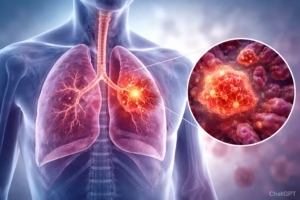
Lung cancer remains one of the most common and serious cancers worldwide. Among its types, Non‑Small Cell Lung Cancer (NSCLC) accounts for approximately 85% of all lung cancer cases. While the diagnosis can feel overwhelming, advances in early detection, molecular testing, and targeted therapies have significantly improved outcomes in recent years.
This article provides a clear, medically accurate overview of NSCLC — including what it is, risk factors, symptoms, diagnostic methods, treatment options, and preventive strategies.
Overview / Definition
Non‑Small Cell Lung Cancer (NSCLC) is a group of lung cancers that behave and respond to treatment differently than small cell lung cancer (SCLC), which is less common but generally more aggressive.
NSCLC is classified into three main subtypes:
- Adenocarcinoma
- Most common subtype
- Often found in the outer areas of the lungs
- More frequent in non-smokers and younger individuals compared to other types
- Squamous Cell Carcinoma
- Usually develops in the central airways (bronchi)
- Strongly associated with smoking
- Large Cell Carcinoma
- Less common
- Can occur in any part of the lung
- Tends to grow and spread quickly
NSCLC typically grows more slowly than small cell lung cancer, which influences treatment planning and prognosis.
Causes and Risk Factors
Several factors increase the risk of developing NSCLC. The most significant risk factor is tobacco exposure, but non-smokers can also develop lung cancer.
Major Risk Factors
- Cigarette smoking
- Responsible for the majority of cases
- Risk increases with duration and intensity of smoking
- Secondhand smoke exposure
- Radon gas exposure
- A naturally occurring radioactive gas that can accumulate in homes
- Occupational exposures
- Asbestos
- Arsenic
- Chromium
- Nickel
- Air pollution
- Previous radiation therapy to the chest
- Family history of lung cancer
Although smoking remains the leading cause, approximately 10–20% of lung cancer cases occur in people who have never smoked.
Symptoms and Clinical Presentation
In early stages, NSCLC may not cause noticeable symptoms. As the cancer grows, symptoms may develop due to airway obstruction, spread to surrounding tissue, or metastasis (spread to other organs).
Common Symptoms
- Persistent cough
- Coughing up blood (hemoptysis)
- Shortness of breath
- Chest pain
- Hoarseness
- Unexplained weight loss
- Fatigue
- Recurrent respiratory infections (e.g., pneumonia)
Symptoms of Advanced Disease
If cancer spreads beyond the lungs, symptoms may include:
- Bone pain
- Headaches or neurological symptoms
- Jaundice
- Swelling of the face or arms
- Enlarged lymph nodes
Because early-stage lung cancer may be silent, screening in high-risk individuals plays an important role in early detection.
Diagnosis and Screening
Screening
For high-risk individuals, screening can reduce mortality from lung cancer.
Current guidelines generally recommend:
- Annual low-dose computed tomography (LDCT) scans
- For adults aged approximately 50–80 years
- With a significant smoking history (e.g., 20 pack-years or more)
- Who currently smoke or have quit within the past 15 years
Screening can detect lung cancer at earlier, more treatable stages.
Diagnostic Evaluation
If lung cancer is suspected, evaluation may include:
- Imaging Tests
- Chest X-ray
- CT scan
- PET scan (to assess spread)
- Biopsy
- Bronchoscopy
- Needle biopsy (guided by CT or ultrasound)
- Surgical biopsy (if needed)
- Confirms cancer type and subtype
- Molecular and Genetic Testing
- Identifies genetic mutations such as:
- EGFR
- ALK
- ROS1
- BRAF
- KRAS
- Determines eligibility for targeted therapy
- Identifies genetic mutations such as:
- Staging
NSCLC is staged from Stage I to Stage IV based on:- Tumor size
- Lymph node involvement
- Presence of metastasis
Accurate staging is essential to develop an appropriate treatment plan.
Treatment and Management Options
Treatment for NSCLC depends on several factors:
- Cancer stage
- Tumor characteristics
- Molecular profile
- Overall health status
- Patient preferences
Common treatment approaches include:
1. Surgery
Often used in early-stage (Stage I or II) disease.
Types of surgery:
- Lobectomy (removal of one lung lobe)
- Segmentectomy or wedge resection (smaller portion removed)
- Pneumonectomy (entire lung removed in rare cases)
Surgery may be combined with chemotherapy before or after the procedure.
2. Radiation Therapy
Uses high-energy beams to kill cancer cells. It may be used:
- As primary treatment when surgery is not possible
- After surgery to reduce recurrence risk
- For symptom relief in advanced disease
Advanced techniques such as stereotactic body radiation therapy (SBRT) allow precise targeting with minimal damage to surrounding tissue.
3. Chemotherapy
Chemotherapy uses systemic anti-cancer drugs to destroy rapidly dividing cells. It may be used:
- After surgery (adjuvant therapy)
- Before surgery (neoadjuvant therapy)
- As a primary treatment in advanced stages
- In combination with radiation
4. Targeted Therapy
Targeted drugs act on specific genetic mutations or molecular pathways involved in cancer growth. These therapies often have fewer side effects than traditional chemotherapy.
Examples include:
- EGFR inhibitors
- ALK inhibitors
- KRAS inhibitors
Molecular testing is critical before initiating targeted therapy.
5. Immunotherapy
Immunotherapy enhances the immune system’s ability to recognize and attack cancer cells.
Checkpoint inhibitors targeting:
- PD-1
- PD-L1
- CTLA-4
Immunotherapy has significantly improved survival in certain patients with advanced NSCLC.
6. Palliative and Supportive Care
In advanced cases, treatment may focus on:
- Symptom relief
- Pain management
- Improving quality of life
- Emotional and psychosocial support
Palliative care can be integrated at any stage of the disease.
Prevention and Lifestyle Considerations
While not all cases of NSCLC are preventable, risk can be significantly reduced through lifestyle and environmental measures.
Key Preventive Strategies
- Avoid smoking
- Quitting smoking reduces risk over time
- Limit exposure to secondhand smoke
- Test homes for radon
- Use protective equipment in hazardous workplaces
- Reduce air pollution exposure when possible
- Maintain a balanced diet and regular physical activity to support overall health
Smoking cessation remains the single most effective preventive measure.
Prognosis
Prognosis depends heavily on:
- Stage at diagnosis
- Molecular characteristics
- Overall health
- Response to treatment
Early-stage NSCLC has a significantly better survival rate compared to advanced stages. The increasing use of targeted therapy and immunotherapy continues to improve long-term outcomes.
Conclusion
Non‑Small Cell Lung Cancer is the most common form of lung cancer and encompasses several subtypes with varying characteristics and treatment responses. While smoking remains the leading risk factor, early detection through screening and advances in molecular testing have transformed management strategies.
Key takeaways include:
- NSCLC often presents with subtle or no symptoms in early stages.
- Screening with low-dose CT can detect cancer early in high-risk individuals.
- Treatment options include surgery, radiation, chemotherapy, targeted therapy, and immunotherapy.
- Smoking cessation and environmental risk reduction remain critical preventive steps.
If you have symptoms, risk factors, or concerns about lung cancer, seeking evaluation from a qualified healthcare provider is essential.
Disclaimer
This article is intended for informational and educational purposes only. It does not provide personalized medical advice. For diagnosis, treatment decisions, or specific medical concerns, please consult a licensed healthcare professional.