LASIK Eye Surgery: A Comprehensive Guide to Clearer Vision
Vision plays a vital role in everyday life—whether you’re reading a book, driving at night, or working on a computer. For millions of people who rely on glasses or contact lenses, LASIK eye surgery offers a potential long-term solution for clearer vision.
LASIK, short for Laser-Assisted In Situ Keratomileusis, is one of the most commonly performed elective surgeries worldwide. It reshapes the cornea—the clear front portion of the eye—to improve how light is focused onto the retina, enhancing visual clarity.
In this article, we’ll explore what LASIK involves, who may benefit from it, the risks and benefits, and what to expect before and after the procedure.
Overview / Definition
LASIK is a refractive surgical procedure designed to correct common vision problems, including:
- Myopia (nearsightedness) – Difficulty seeing distant objects clearly
- Hyperopia (farsightedness) – Difficulty seeing nearby objects
- Astigmatism – Blurred or distorted vision caused by an irregularly shaped cornea
How LASIK Works
The cornea helps focus light onto the retina at the back of the eye. If the cornea’s shape is imperfect, light doesn’t focus correctly, leading to blurry vision.
During LASIK:
- A thin flap is created in the cornea.
- A specialized laser reshapes the underlying corneal tissue.
- The flap is repositioned to heal naturally.
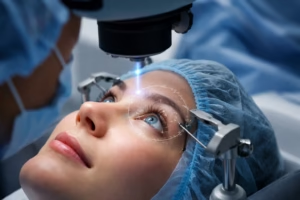
The procedure is typically completed in about 15–30 minutes for both eyes and is usually performed on an outpatient basis.
Causes or Risk Factors (Why LASIK May Be Considered)
LASIK does not treat a disease but corrects refractive errors, which are often caused by:
- Genetic factors
- Irregular corneal shape
- Changes in eye structure during growth
Ideal Candidates for LASIK
Not everyone is a suitable candidate. Patients are generally considered eligible if they:
- Are 18 years or older (often 21+)
- Have stable vision for at least one year
- Have a sufficient corneal thickness
- Do not have certain eye diseases (e.g., keratoconus, severe dry eye)
- Are not pregnant or breastfeeding
People with autoimmune diseases, uncontrolled diabetes, or certain corneal conditions may not be suitable candidates.
Symptoms or Clinical Presentation
Since LASIK corrects refractive errors, symptoms that may prompt consideration of surgery include:
- Blurry distance or near vision
- Frequent squinting
- Headaches related to eye strain
- Dependence on corrective eyewear
- Distorted or doubled images (in astigmatism)
An ophthalmologist evaluates these symptoms during a comprehensive eye exam to determine if LASIK is appropriate.
Diagnosis or Screening
Before LASIK, a detailed preoperative assessment is essential to ensure safety and predict good outcomes.
Pre-Surgical Evaluation May Include:
- Refraction test to measure prescription
- Corneal topography to map corneal shape
- Pachymetry to measure corneal thickness
- Tear film assessment for dry eye
- Pupil size measurement
These tests help determine whether the cornea can safely undergo reshaping. Screening is critical because inappropriate candidates are at higher risk of complications.
Treatment or Procedure Details
What Happens During LASIK?
- Numbing eye drops are applied.
- A device keeps the eyelids open.
- A femtosecond laser or microkeratome creates a corneal flap.
- An excimer laser reshapes the corneal tissue.
- The flap is repositioned without stitches.
Most patients experience improved vision within 24–48 hours.
Benefits of LASIK
- Rapid visual recovery
- Minimal discomfort
- Long-term reduction in dependence on glasses or contacts
- High satisfaction rates (reported above 90% in studies)
Risks and Potential Complications
While LASIK is considered safe for appropriate candidates, possible side effects include:
- Dry eyes
- Glare, halos, or starbursts around lights
- Undercorrection or overcorrection
- Flap complications
- Rarely, infection or vision loss
Most side effects are temporary and resolve within weeks to months.
Recovery and Post-Operative Care
After surgery, patients are usually advised to:
- Use prescribed antibiotic and anti-inflammatory eye drops
- Avoid rubbing the eyes
- Wear protective shields while sleeping for several days
- Limit swimming and eye makeup temporarily
- Attend follow-up appointments
Vision may fluctuate slightly during the healing period.
Prevention or Lifestyle Considerations
LASIK permanently alters the corneal shape, but it does not prevent age-related vision changes, such as presbyopia (difficulty reading up close after age 40). Some individuals may still need reading glasses later in life.
To maintain optimal eye health:
- Schedule regular eye examinations
- Protect eyes from UV exposure
- Manage chronic conditions such as diabetes
- Practice good screen habits to reduce eye strain
Who Should Avoid LASIK?
LASIK may not be recommended for individuals with:
- Keratoconus or thinning corneas
- Severe chronic dry eye
- Autoimmune disorders affecting healing
- Unstable vision prescriptions
- Certain retinal diseases
Alternative vision correction options include PRK (Photorefractive Keratectomy), SMILE (Small Incision Lenticule Extraction), implantable contact lenses, or continued use of glasses and contacts.
Conclusion
LASIK eye surgery is a widely performed and generally safe procedure that can significantly reduce dependence on glasses or contact lenses. By reshaping the cornea, it improves how light focuses on the retina, correcting common refractive errors like myopia, hyperopia, and astigmatism.
However, careful screening and realistic expectations are essential. While outcomes are highly favorable for many patients, LASIK is not suitable for everyone and carries potential risks.
If you are considering LASIK, consult a qualified ophthalmologist for a comprehensive evaluation and personalized recommendations.
Disclaimer: This article is for educational purposes only and does not constitute medical advice. For individual assessment, diagnosis, or treatment options, please consult a licensed eye care professional or healthcare provider.