Hip Replacement Surgery: What You Need to Know
Hip pain can significantly affect mobility, independence, and quality of life. When conservative treatments fail to relieve chronic discomfort or disability, hip replacement surgery—also known as total hip arthroplasty—may offer lasting relief. This widely performed orthopedic procedure has transformed the lives of millions by restoring mobility and reducing pain.
In this article, we’ll explore what hip replacement surgery involves, why it’s performed, who may need it, and what to expect before and after the procedure.
Overview: What Is Hip Replacement Surgery?
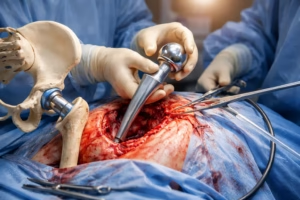
Hip replacement surgery is a procedure in which a damaged or diseased hip joint is replaced with artificial components (prostheses). The hip is a ball-and-socket joint, where:
- The femoral head (ball) sits at the top of the thighbone (femur)
- The acetabulum (socket) is part of the pelvis
In a total hip replacement:
- The damaged femoral head is removed and replaced with a metal or ceramic ball attached to a stem inserted into the femur.
- The damaged cartilage in the socket is replaced with a metal shell, often lined with a plastic, ceramic, or metal insert.
This artificial joint is designed to reduce pain, improve motion, and restore function.
Causes and Risk Factors
Hip replacement is most commonly performed due to conditions that damage the joint cartilage and surrounding bone.
Common Causes
- Osteoarthritis (most common): Age-related wear and tear leading to cartilage breakdown
- Rheumatoid arthritis: An autoimmune condition causing chronic joint inflammation
- Post-traumatic arthritis: Arthritis following a fracture or injury
- Avascular necrosis: Loss of blood supply to the femoral head, leading to bone collapse
- Hip fractures (particularly in older adults)
- Congenital or developmental hip disorders
Risk Factors
- Advancing age
- Obesity
- Prior joint injury
- Family history of arthritis
- Repetitive joint stress (certain occupations or sports)
Symptoms and Clinical Presentation
People who may benefit from hip replacement typically experience persistent symptoms that interfere with daily function.
Common symptoms include:
- Chronic hip or groin pain
- Pain that worsens with activity or weight-bearing
- Stiffness limiting range of motion
- Difficulty walking, climbing stairs, or standing from a seated position
- Night pain that disrupts sleep
- Reduced quality of life due to pain or disability
Symptoms often progress gradually but may worsen rapidly in cases such as fractures or avascular necrosis.
Diagnosis and Evaluation
A thorough evaluation is essential to determine whether hip replacement is appropriate.
Clinical Assessment
A healthcare provider will:
- Review medical history
- Perform a physical examination
- Assess range of motion and strength
- Evaluate walking pattern (gait)
Imaging and Tests
- X-rays: Primary imaging to assess joint damage
- MRI or CT scans (if needed): Detailed evaluation of bone and soft tissue
- Blood tests (if inflammatory arthritis is suspected)
Surgery is typically considered when:
- Pain persists despite conservative treatment
- Imaging confirms significant joint damage
- Daily activities are severely limited
Treatment and Management Options
Hip replacement is usually recommended after non-surgical treatments fail to provide adequate relief.
Conservative (Non-Surgical) Treatments
- Physical therapy
- Anti-inflammatory medications (NSAIDs)
- Corticosteroid injections
- Weight management
- Assistive devices (canes or walkers)
- Activity modification
If these measures no longer control symptoms, surgery may be considered.
Types of Hip Replacement Surgery
Several surgical approaches and implant types exist:
1. Total Hip Replacement (THR)
- Replaces both the ball and socket
- Most common type
2. Partial Hip Replacement
- Replaces only the femoral head
- Often performed after certain hip fractures
3. Minimally Invasive Approaches
- Smaller incisions
- Potentially quicker recovery
- Not suitable for all patients
Your surgeon determines the best option based on age, anatomy, activity level, and overall health.
Recovery and Rehabilitation
Recovery is a critical component of success after hip replacement.
Immediately After Surgery
- Most patients begin standing or walking with assistance within 1–2 days.
- Hospital stay typically ranges from 1 to 3 days (sometimes same-day discharge).
Rehabilitation Includes:
- Physical therapy to restore strength and mobility
- Gradual return to daily activities
- Use of walking aids during early recovery
Recovery Timeline (General Overview)
- 3–6 weeks: Return to many normal activities
- 3 months: Significant improvement in strength and mobility
- 6–12 months: Continued healing and adaptation
Full recovery varies by individual health status and adherence to rehabilitation.
Risks and Potential Complications
Hip replacement is generally safe and highly successful, but risks exist, including:
- Infection
- Blood clots (deep vein thrombosis)
- Implant loosening or wear over time
- Dislocation
- Nerve or blood vessel injury
Advances in surgical technique and implant design have significantly improved long-term outcomes. Many modern hip replacements last 15–20 years or longer, especially with proper care.
Prevention and Lifestyle Considerations
While not all causes of hip damage are preventable, certain lifestyle practices may reduce risk or delay surgery:
- Maintain a healthy body weight
- Engage in regular low-impact exercise (e.g., swimming, cycling)
- Strengthen hip and core muscles
- Prevent falls through home safety measures
- Seek early treatment for hip injuries
After surgery, maintaining an active, healthy lifestyle can help prolong implant longevity.
Who Is a Candidate for Hip Replacement?
There is no strict age cutoff. Candidates often include:
- Adults with severe hip arthritis
- Individuals whose pain significantly limits function
- Patients who have not responded to conservative treatments
Younger patients may undergo hip replacement when symptoms severely impair quality of life, though implant longevity is an important consideration.
Conclusion
Hip replacement surgery is a highly effective procedure for relieving chronic hip pain and restoring mobility when other treatments fail. By replacing damaged joint structures with durable prosthetic components, this surgery can dramatically improve quality of life.
Advances in surgical techniques, implant materials, and rehabilitation protocols have made hip replacement safer and more successful than ever before. However, the decision to proceed with surgery should be made after careful evaluation and discussion with a qualified orthopedic specialist.
Disclaimer:
This article is intended for educational purposes only and does not constitute medical advice. If you are experiencing hip pain or considering hip replacement surgery, please consult a qualified healthcare professional for personalized evaluation and treatment recommendations.