Global Disease Trends: Understanding Shifts in the World’s Health Landscape
Introduction
In an increasingly interconnected world, patterns of illness no longer follow local boundaries. From the surge in chronic conditions to the sudden emergence of new viruses, global disease trends shape economies, influence policies and affect millions of lives every day. In this post, we’ll explore the major forces driving changes in global health, examine pressing challenges such as antibiotic resistance and climate-related outbreaks, and highlight the innovative strategies helping us stay one step ahead. Whether you’re a public health professional, a policy-maker or simply curious about how diseases evolve on a global scale, understanding these trends is the first step toward a healthier future.
The Rise of Non-Communicable Diseases (NCDs)
Once considered “diseases of affluence,” NCDs, like heart disease, diabetes and cancer, are now a leading cause of death in both high- and low-income countries. According to the World Health Organization (WHO), NCDs account for nearly 74% of all deaths worldwide.
Key Drivers
• Aging populations: Advances in medicine mean more people live to older ages where NCD risk is higher.
• Urbanization & sedentary lifestyles: Less physical activity, more processed foods.
• Tobacco & alcohol use: Continued prevalence fuels cardiovascular and respiratory illnesses.
Impact on Healthcare Systems
• Rising treatment costs strain public budgets and insurance schemes.
• Shift from acute to long-term care: Hospitals and clinics adapt to chronic disease management.
• Loss of productivity: Working-age adults affected by NCD complications reduce workforce participation.
Emerging Infectious Diseases: A Continuing Threat
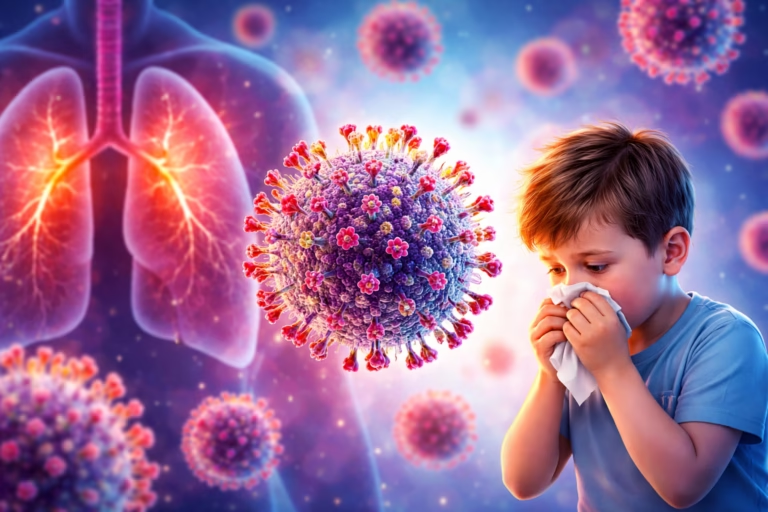
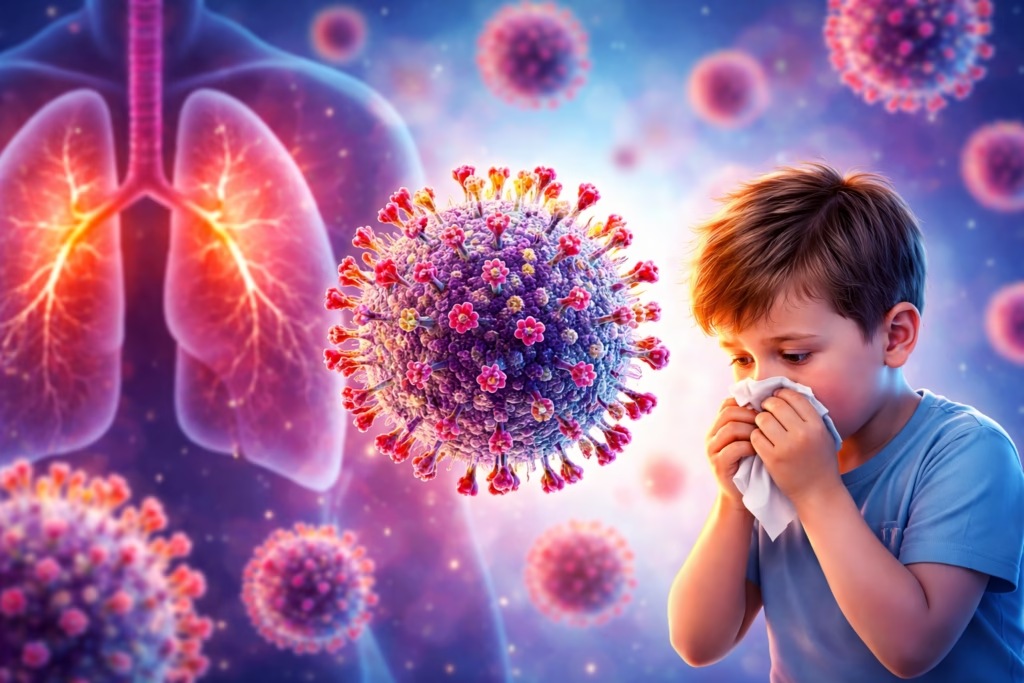
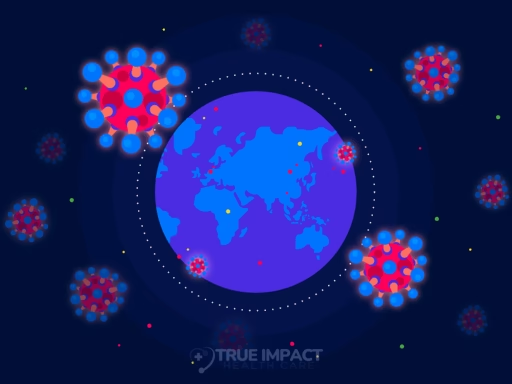
The COVID-19 pandemic reminded us how quickly a novel pathogen can disrupt global life. But it’s far from the only example.
Notable Recent Outbreaks
• SARS (2002–03) and MERS (2012–present): Coronaviruses that jumped from animals to humans.
• Ebola (West Africa, 2014–16; DRC, periodic): High fatality rates, local health infrastructure challenges.
• Zika (2015–16): Birth defects in newborns highlighted mosquito-borne risks.
Underlying Causes
• Zoonotic spillover: Increased human-wildlife contact in agriculture and deforestation.
• Global travel & trade: Pathogens hitch rides on planes, ships and commodities.
• Weak healthcare infrastructure: Delayed detection and containment in resource-limited settings.
Climate Change and Vector-Borne Diseases
Rising temperatures and shifting rainfall patterns are expanding the habitats of mosquitoes, ticks and other vectors. As a result, diseases once confined to the tropics are moving northward.
Examples of Shifting Patterns
• Dengue & chikungunya: Reported in southern Europe and the southern United States.
• Lyme disease: Extended seasons and geographic expansion in North America and Europe.
• West Nile virus: Periodic outbreaks in North America, Europe and the Middle East.
Adaptation Strategies
• Enhanced surveillance in newly at-risk regions.
• Community engagement: Reducing standing water, educating on protective clothing.
• Vaccine development: Ongoing efforts for dengue and malaria immunization.
The Growing Crisis of Antibiotic Resistance
Antimicrobial resistance (AMR) threatens to push modern medicine back to the pre-antibiotic era. WHO estimates that drug-resistant infections cause at least 700,000 deaths annually—a number projected to rise without urgent action.
Main Contributors
• Overuse and misuse in human medicine: Inappropriate prescriptions for viral illnesses.
• Agricultural practices: Antibiotics used for growth promotion in livestock.
• Limited new drug development: High R&D costs and low return on investment.
Global Response
• Stewardship programs: Guidelines to optimize antibiotic use in clinics.
• Research incentives: Public–private partnerships to develop novel antimicrobials.
• Awareness campaigns: Educating healthcare providers and the public on AMR risks.
Leveraging Technology for Disease Surveillance and Response
Advancements in data science, mobile technology and genomics are revolutionizing how we detect, track and respond to health threats.
Key Innovations
• Digital epidemiology: Mining social media, search trends and mobile data for early outbreak signals.
• Genomic sequencing: Rapid identification of variants and transmission pathways (e.g., COVID-19 strains).
• Geographic Information Systems (GIS): Mapping disease hotspots and predicting spread.
Benefits and Challenges
• Faster detection = quicker response, containment and resource allocation.
• Data privacy and interoperability concerns must be addressed.
• Capacity building: Training local public health workers to use and interpret new tools.
Global Collaboration and Preparedness
No single country can combat global disease trends alone. Organizations like WHO, the Coalition for Epidemic Preparedness Innovations (CEPI) and Gavi, the Vaccine Alliance work to coordinate research, funding and on-the-ground interventions.
Pillars of a Strong Global Response
• One Health approach: Integrating human, animal and environmental health strategies.
• Equitable vaccine distribution: Ensuring low-income countries aren’t left behind.
• Emergency preparedness exercises: Simulating outbreaks to test and improve response plans.
Conclusion
Global disease trends are shaped by a complex interplay of social, environmental and technological factors. As we’ve seen, from the steady rise of non-communicable diseases to the unpredictability of emerging infections, the challenges are vast but not insurmountable. By investing in surveillance technology, strengthening health systems, promoting responsible antibiotic use and fostering international collaboration, we can build resilience against current threats and those on the horizon. Staying informed and proactive isn’t just the responsibility of policymakers and researchers, it’s something each of us can support through healthy lifestyle choices, community engagement and advocacy for stronger public health initiatives. Together, we can turn the tide on global disease trends and create a healthier world for future generations.