












Health A–Z guide
Parkinson’s Disease
Parkinson’s Disease: Understanding Symptoms, Causes, and Treatment Options
Parkinson’s disease is a progressive neurological disorder that affects movement and coordination. It develops gradually and can significantly impact daily life over time. Although it is commonly associated with tremors,…
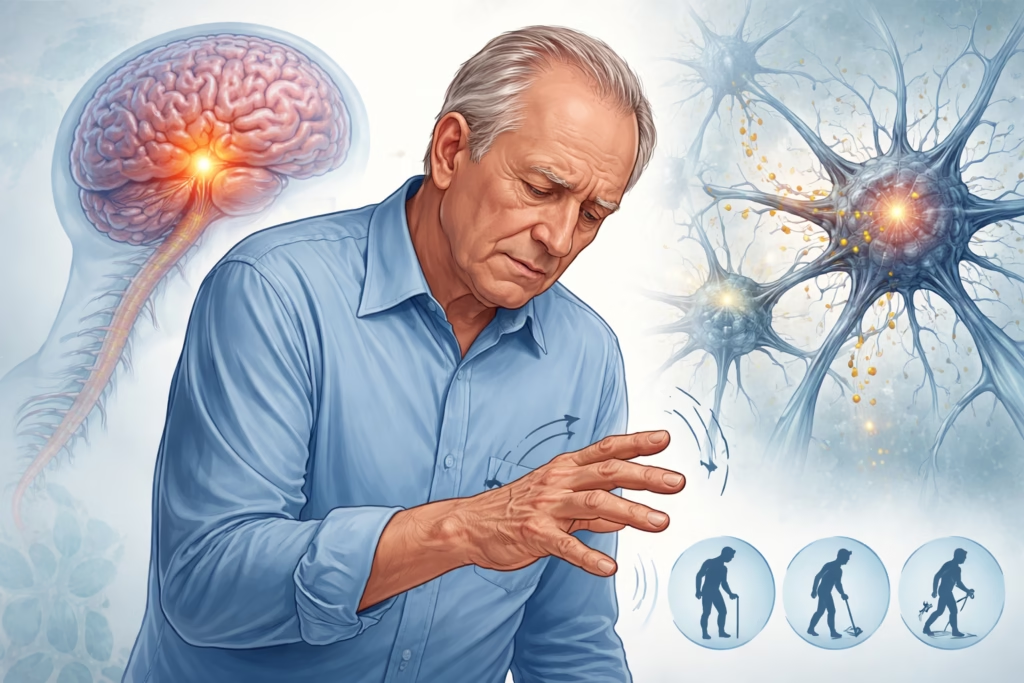
Table of Contents
Parkinson’s disease is a progressive neurological disorder that affects movement and coordination. It develops gradually and can significantly impact daily life over time. Although it is commonly associated with tremors, Parkinson’s disease involves a broader range of motor and non-motor symptoms that affect both physical and mental well-being.
With growing awareness and evolving treatment strategies, early recognition and proper management can greatly improve quality of life. This article explores the causes, symptoms, diagnosis, and treatment options for Parkinson’s disease in clear, evidence-based terms.
Overview / Definition
Parkinson’s disease (PD) is a chronic and progressive disorder of the nervous system. It primarily affects motor function due to the gradual loss of dopamine-producing neurons in a region of the brain called the substantia nigra.
Dopamine is a neurotransmitter responsible for coordinating smooth and controlled muscle movements. As dopamine levels decrease, movement becomes slower, stiffer, and less coordinated.
Parkinson’s disease is:
- The second most common neurodegenerative disorder after Alzheimer’s disease
- Most commonly diagnosed in people over the age of 60
- A long-term condition without a known cure, but manageable with treatment
Causes and Risk Factors
The exact cause of Parkinson’s disease is not fully understood. It is believed to result from a combination of genetic and environmental factors.
Potential Causes
- Degeneration of dopamine-producing neurons
- Abnormal accumulation of proteins (alpha-synuclein) forming clumps known as Lewy bodies in brain cells
- Inflammatory and oxidative stress mechanisms contributing to neuronal damage
Risk Factors
Several factors may increase the likelihood of developing Parkinson’s:
- Age: Risk increases significantly after age 60
- Genetics: Certain gene mutations can raise susceptibility
- Family history: Having a close relative with PD slightly increases risk
- Environmental exposures: Long-term exposure to pesticides or toxins may contribute
- Male sex: Parkinson’s is more common in men than women
It is important to note that many individuals with risk factors never develop the disease, and some diagnosed patients have no known risk factors.
Symptoms and Clinical Presentation
Parkinson’s disease symptoms develop gradually and often begin subtly on one side of the body. They are generally divided into motor and non-motor symptoms.
Motor Symptoms
The hallmark motor features include:
- Resting tremor: Often described as a “pill-rolling” tremor in the hands
- Bradykinesia: Slowness of movement
- Muscle rigidity: Stiffness in limbs or trunk
- Postural instability: Impaired balance and coordination
Other motor-related features may include:
- Decreased facial expression (“masked face”)
- Softer speech
- Smaller handwriting (micrographia)
- Shuffling gait
Non-Motor Symptoms
Non-motor symptoms can appear years before motor symptoms and significantly affect quality of life:
- Depression and anxiety
- Sleep disturbances
- Constipation
- Loss of sense of smell (anosmia)
- Cognitive impairment in later stages
- Fatigue
Recognizing both motor and non-motor symptoms is crucial for early identification and management.
Diagnosis and Screening
There is currently no single laboratory test that definitively diagnoses Parkinson’s disease. Diagnosis is primarily clinical and based on:
- Medical history
- Neurological examination
- Observation of characteristic motor symptoms
A neurologist may assess:
- Tremor characteristics
- Muscle tone
- Movement speed
- Reflexes and balance
Supporting Tests
While not diagnostic on their own, certain tests may help rule out other conditions:
- MRI or CT scans to exclude structural causes
- DaTscan (dopamine transporter imaging) to evaluate dopamine activity
- Blood tests to rule out metabolic causes
A positive response to Parkinson’s medication (such as levodopa) may also support the diagnosis.
Treatment and Management Options
Although there is no cure for Parkinson’s disease, multiple therapies help control symptoms and improve daily functioning.
1. Medications
Medications aim to increase or mimic dopamine levels in the brain.
Common options include:
- Levodopa (combined with carbidopa): The most effective treatment for motor symptoms
- Dopamine agonists: Stimulate dopamine receptors
- MAO-B inhibitors: Slow the breakdown of dopamine
- COMT inhibitors: Prolong the effect of levodopa
- Anticholinergics: May reduce tremor in select patients
Medication regimens are tailored individually and often adjusted over time.
2. Surgical Treatment
For patients with significant motor fluctuations not adequately controlled with medication:
- Deep Brain Stimulation (DBS):
- Electrodes are implanted in specific brain areas
- Delivers electrical impulses to regulate abnormal brain activity
- Can significantly reduce tremor and medication needs
3. Rehabilitation and Supportive Therapies
Non-drug approaches play a critical role:
- Physical therapy: Improves mobility and balance
- Occupational therapy: Supports daily activities
- Speech therapy: Addresses speech and swallowing difficulties
- Mental health support: Manages depression or anxiety
Early integration of multidisciplinary care often delivers the best outcomes.
Prevention and Lifestyle Considerations
Currently, there is no proven method to prevent Parkinson’s disease. However, certain lifestyle factors may support brain health and possibly reduce risk or slow progression.
Brain-Healthy Strategies
- Regular exercise: Aerobic activity has strong evidence for improving motor function and possibly slowing progression
- Balanced diet: Mediterranean-style diets rich in fruits, vegetables, whole grains, and healthy fats
- Adequate sleep
- Social engagement and cognitive stimulation
- Avoiding exposure to environmental toxins when possible
Exercise, in particular, is consistently associated with improved mobility, mood, and overall quality of life in individuals with PD.
Living with Parkinson’s Disease
Parkinson’s disease is a chronic condition that progresses over years. While symptoms typically worsen gradually, many individuals continue to live active and fulfilling lives with appropriate management.
Early treatment, supportive therapies, medication adjustments, and emotional support significantly influence quality of life.
Ongoing research into neuroprotective treatments, genetics, and disease-modifying therapies continues to offer hope for improved future outcomes.
Conclusion
Parkinson’s disease is a progressive neurological disorder characterized primarily by motor symptoms such as tremor, rigidity, and slowed movement, along with significant non-motor features. Although its exact cause remains unclear, both genetic and environmental factors likely contribute.
While there is no cure, a combination of medication, rehabilitation therapies, and in some cases surgery can effectively manage symptoms. Regular exercise and supportive care are essential components of treatment.
Early diagnosis and a comprehensive care approach can help individuals maintain independence and quality of life for many years.
Medical Disclaimer
This article is intended for educational purposes only and does not constitute medical advice. If you or someone you know is experiencing symptoms suggestive of Parkinson’s disease, please consult a qualified healthcare professional for proper evaluation, diagnosis, and personalized treatment guidance.
Was this page helpful?
Thanks for your feedback! What could we improve?
Thank you! Your feedback helps us improve our guides.
Our Health A–Z guides are written by the True Impact Health Editorial Team and based on reliable sources such as public health agencies, clinical guidelines and peer-reviewed research. This guide has not yet been medically reviewed. Read our editorial process.
This content is for general information and is not a substitute for professional medical advice, diagnosis or treatment.