













Health A–Z guide
Genetic Disorders
Genetic Disorders: Understanding Causes, Symptoms, and Modern Management
Genetic disorders are medical conditions caused by changes or abnormalities in an individual’s DNA. These conditions can affect nearly any system in the body and range from mild to life-threatening.…
Table of Contents
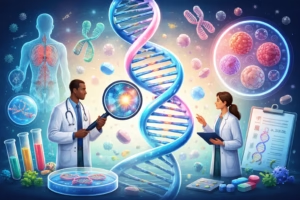
Genetic disorders are medical conditions caused by changes or abnormalities in an individual’s DNA. These conditions can affect nearly any system in the body and range from mild to life-threatening. While some genetic disorders are inherited from parents, others occur spontaneously due to new genetic changes.
Advances in medical research and genetic testing have significantly improved our understanding of these conditions, allowing for earlier diagnosis, better treatment, and more informed healthcare decisions. This article explores genetic disorders in a clear and accessible way, covering their causes, symptoms, diagnosis, and management options.
Overview / Definition
A genetic disorder is a disease or condition caused by abnormalities in a person’s genetic material (DNA). DNA contains instructions that guide how the body grows, develops, and functions. When these instructions are altered, health problems can occur.
Genetic disorders generally fall into three main categories:
- Single-gene (monogenic) disorders – Caused by mutations in a single gene
Examples: Cystic fibrosis, sickle cell disease, Huntington’s disease - Chromosomal disorders – Result from structural changes or abnormal numbers of chromosomes
Examples: Down syndrome (Trisomy 21), Turner syndrome - Multifactorial (complex) disorders – Caused by a combination of genetic and environmental factors
Examples: Type 2 diabetes, heart disease, certain cancers
Some genetic disorders appear at birth, while others develop later in life.
Causes and Risk Factors
Genetic disorders arise due to changes (mutations) in DNA. These changes can be:
1. Inherited Mutations
Passed from parents to their children. Inheritance patterns include:
- Autosomal dominant – One copy of the altered gene is sufficient to cause the disorder
- Autosomal recessive – Two copies (one from each parent) are required
- X-linked – Associated with genes on the X chromosome
2. New (De Novo) Mutations
These occur spontaneously during the formation of reproductive cells or early fetal development and are not inherited from parents.
3. Chromosomal Abnormalities
Caused by:
- Extra or missing chromosomes
- Structural rearrangements (duplications, deletions, translocations)
Risk Factors
While genetic disorders can occur in any family, certain factors may increase risk:
- Family history of a specific condition
- Advanced maternal age (associated with increased chromosomal abnormalities)
- Consanguinity (parents who are closely related biologically)
- Certain ethnic backgrounds (e.g., higher rates of sickle cell disease in individuals of African descent)
Symptoms or Clinical Presentation
Symptoms of genetic disorders vary widely depending on the specific condition. They may affect:
- Physical development
- Cognitive function
- Metabolism
- Organ systems (heart, lungs, nervous system)
Common signs may include:
- Developmental delays
- Intellectual disability
- Distinct facial or physical features
- Recurrent infections
- Growth abnormalities
- Muscle weakness
- Seizures
- Chronic medical problems
Some genetic disorders are apparent at birth, while others may not become noticeable until childhood or adulthood.
Diagnosis and Screening
Early and accurate diagnosis is essential for appropriate management and family planning.
1. Prenatal Screening and Testing
- Ultrasound examinations
- Maternal blood screening
- Non-invasive prenatal testing (NIPT)
- Amniocentesis or chorionic villus sampling (CVS) for definitive diagnosis
2. Newborn Screening
Many countries perform routine newborn screening to detect treatable genetic conditions early, such as:
- Phenylketonuria (PKU)
- Congenital hypothyroidism
3. Genetic Testing
Advanced laboratory techniques can identify:
- Single-gene mutations
- Chromosomal abnormalities
- Whole-genome or whole-exome variations
4. Genetic Counseling
Genetic counselors help individuals and families:
- Understand test results
- Assess inheritance patterns
- Make informed reproductive decisions
Treatment and Management Options
While many genetic disorders cannot be cured, modern medicine offers a range of treatment and management strategies aimed at improving quality of life and reducing complications.
Treatment approaches may include:
1. Medications
- Enzyme replacement therapy (e.g., for some metabolic disorders)
- Symptom-control medications
- Hormonal therapies
2. Surgical Interventions
Corrective surgeries may be necessary for structural abnormalities (e.g., congenital heart defects).
3. Gene Therapy (Emerging Field)
Gene therapy aims to correct faulty genes and has shown promise in certain conditions, such as:
- Spinal muscular atrophy (SMA)
- Certain inherited blindness disorders
4. Supportive and Multidisciplinary Care
- Physical therapy
- Occupational therapy
- Speech therapy
- Special education support
- Nutritional management
A coordinated approach involving specialists often provides the best outcomes.
Prevention and Lifestyle Considerations
While not all genetic disorders can be prevented, several steps can reduce risk or support early detection:
Genetic Counseling Before Pregnancy
Individuals with family history or known genetic conditions may benefit from preconception counseling.
Carrier Screening
Prospective parents can undergo testing to determine if they carry genes for specific inherited disorders.
Prenatal Care
Regular prenatal visits can help monitor fetal development and detect potential issues early.
Healthy Lifestyle Choices
Though lifestyle choices cannot eliminate genetic mutations, maintaining overall health can help reduce complications associated with complex genetic conditions.
Conclusion
Genetic disorders encompass a wide range of conditions caused by alterations in DNA. They may be inherited or occur spontaneously, and their severity can vary significantly—from manageable conditions to serious, lifelong diseases.
Advances in genetic research, testing, and targeted therapies have dramatically improved early detection and management. While many genetic disorders cannot be cured, effective treatment strategies, early screening, and supportive care can significantly enhance quality of life.
If you have concerns about genetic conditions in your family, consulting a qualified healthcare professional or genetic counselor can provide personalized information and appropriate guidance.
Disclaimer:
This article is for educational purposes only and is not a substitute for professional medical advice, diagnosis, or treatment. Always consult a qualified healthcare provider or genetic specialist regarding any questions or concerns about genetic conditions or health decisions.
Was this page helpful?
Thanks for your feedback! What could we improve?
Thank you! Your feedback helps us improve our guides.
Our Health A–Z guides are written by the True Impact Health Editorial Team and based on reliable sources such as public health agencies, clinical guidelines and peer-reviewed research. This guide has not yet been medically reviewed. Read our editorial process.
This content is for general information and is not a substitute for professional medical advice, diagnosis or treatment.